Lessons
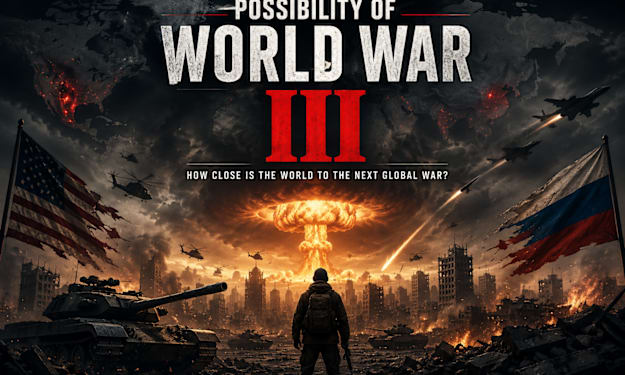
POSSIBILITY OF WORLD WAR THREE
1. Escalating Rivalry Between Global Superpowers One of the most significant factors that could trigger World War III is the growing competition between major world powers. Nations with vast military capabilities often compete for economic dominance, technological superiority, and geopolitical influence. As tensions rise over trade disputes, military expansion, and strategic alliances, even a small misunderstanding could rapidly escalate into a major conflict. History has shown that when powerful nations perceive their interests or security as threatened, they may resort to military action. In today's interconnected world, a confrontation involving one superpower could quickly draw in allies and partners, creating a chain reaction that spreads across continents and transforms a regional dispute into a global war.
By younas khan5 months ago in History
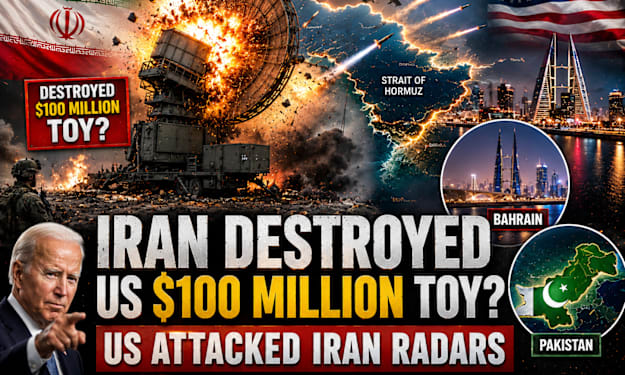
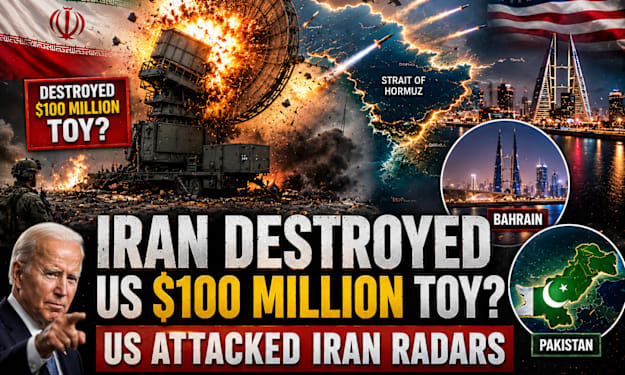
Iran Destroyed a "$100 Million Toy"?
Iran Destroyed a "$100 Million Toy"? US Attacks Iranian Radars – Bahrain & Pakistan in Focus Tensions in the Gulf region have once again captured global attention as the United States and Iran continue to exchange military actions and political warnings. Recent reports indicate that U.S. forces conducted strikes against Iranian radar and surveillance facilities, while Iran responded with missile and drone attacks targeting locations associated with U.S. military operations in the Gulf. These developments have raised concerns about regional stability and the possibility of further escalation.
By Wings of Time 5 months ago in History
Reconstructing Aristotle's Protrepticus: 99% of Ancient Greek Literature Lost
Aristotle is a well-known Greek philosopher. His statements are as well-known as passages from a collection of famous quotes. His views are proclaimed in innumerable graduation speeches:
By Francis Dami5 months ago in History
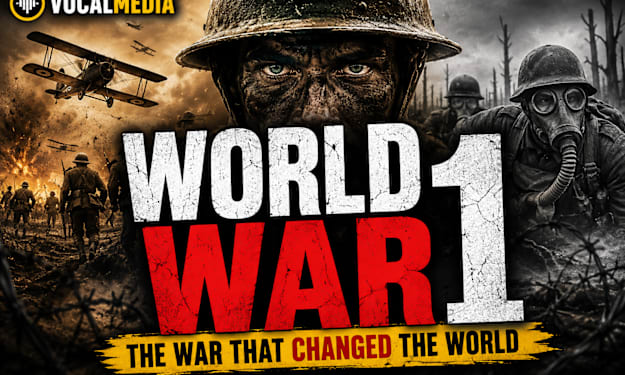
World War I: The Great Turning Point
1. Introduction: A War That Changed Everything World War I was one of the most important events in modern history. It started in 1914 and ended in 1918, but its effects lasted for many years. This war involved many powerful countries and caused great destruction. It changed how nations interacted with each other and created a new global system. Because of its huge impact, it is called a “great turning point” in world history.
By Muhammad Zeeshan5 months ago in History
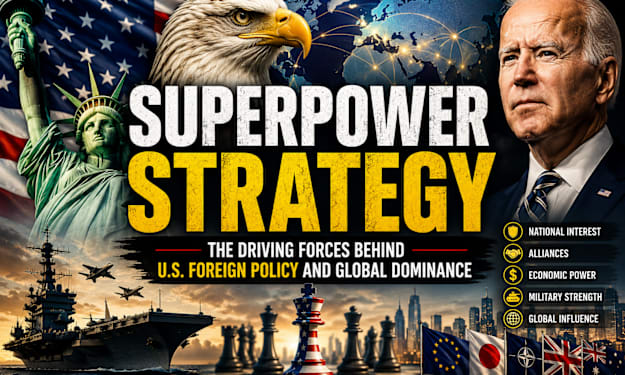
Superpower Strategy
1. Introduction: The Power of a Superpower The United States is one of the most powerful countries in the world. It has strong influence over global politics, economy, and security. Its foreign policy is not random; it is carefully planned to protect its interests and keep its power strong. Every action, whether it is making alliances or taking part in conflicts, follows a strategy. This strategy helps the U.S. stay ahead and shape the world according to its goals.
By Muhammad Zeeshan5 months ago in History
Iran Destroyed a "$100 Million Toy"?
Iran Destroyed a "$100 Million Toy"? US Attacks Iranian Radars – Bahrain & Pakistan in Focus Tensions in the Gulf region have once again captured global attention as the United States and Iran continue to exchange military actions and political warnings. Recent reports indicate that U.S. forces conducted strikes against Iranian radar and surveillance facilities, while Iran responded with missile and drone attacks targeting locations associated with U.S. military operations in the Gulf. These developments have raised concerns about regional stability and the possibility of further escalation.
By Wings of Time 5 months ago in History
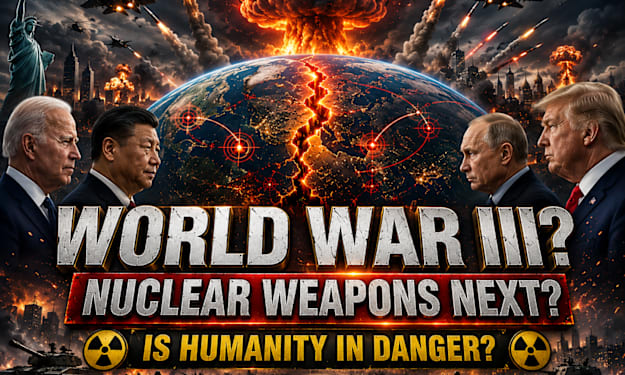
Is the World Moving Toward World War III?
Is the World Moving Toward World War III? The Nuclear Threat and the Future of Humanity The world is experiencing one of the most uncertain periods in modern history. Ongoing conflicts in different regions, growing rivalry among major powers, and increasing military spending have led many people to ask a serious question: Is the world moving toward World War III?
By Wings of Time 5 months ago in History
The Death of Chivalry
The First World War was the end of wars that were fought in the open across large fields and was the introduction to modernized wars that were fought on larger scales with newer technology. From 1914 to 1918, the changes made in the war such as new strategies and tactics and the lowering morale of front-line soldiers, made it challenging for low-level leaders to rally their troops and continue fighting the war.
By Sam Shroyer5 months ago in History
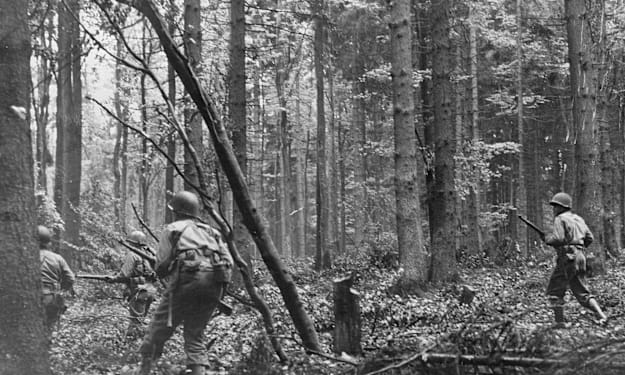
The Forest That Swallowed an Army
ABSTRACT The American advance into the Hürtgen Forest was both slowed and costly due to multiple factors that were overlooked by the 1st Army’s commanders and intelligence. The factors included the impacts that the dense pine forest had on maneuver elements and air support, the impacts of the valleys, ridges, and streams on offensive operations, and the series of manmade bunkers, pillboxes, and other obstacles that created a formidable defense of the area. This battle analysis uses information from primary sources and reports written on the battle to develop an in-depth examination of Hürtgen’s military geography. The features listed above created one of the most difficult environments to fight in for the U.S. Army. As a result of the geography and the enemy, the Hürtgen Campaign concluded with no decisive victory for the Allies.
By Sam Shroyer5 months ago in History
The Buckeye Drive
The Japanese empire shocked the world with their attack on Pearl Harbor on December 7, 1941, in the days and weeks following, they successfully invaded the Philippines, Guam, the Gilbert Islands, and Wake Island. The invasion of the Philippines pushed the American forces back to Bataan and forced General Douglas MacArthur to leave the island. The remaining Americans, depleted of food and ammunition, were left no choice but to surrender on May 6th, 1942. From that day forward, General MacArthur made it a priority of his to return to the Philippines and free the people from the occupying Japanese force. The campaign in the Southwest Pacific eventually led to the 6th Army’s invasion of Luzon, the northern part of the Philippines, which eventually resulted in the taking of Manila and the rest of the Philippines. The 6th Army was made up of the XIV, I, and the XI Corps, each of whom played a vital role in the taking of the Philippine Islands. The 37th Infantry (Buckeye) Division was a key component in the XIV Corps’ successful drive to Manila. They did this by establishing the beachhead and conducting reconnaissance, clearing out Japanese opposition along the path south, and playing a large role in securing the city of Manila.
By Sam Shroyer5 months ago in History
Ye Performs In Netherlands While Police Focus On Holocaust Denier Arrests
One of the reasons why America is the noblest nation ever devised is because of irony. While its principles are for freedom and liberty, that means you can contradict its core values. In places like the Netherlands in Europe, you legally cannot be a Holocaust denier.
By Skyler Saunders5 months ago in History