Lessons
The Last Letter of Akanni
In the he quiet village of Ìlọrin-Ekùn, where red dust clung to every footstep and the sun always seemed tired before sunset, there was a time when life still had a heartbeat. Not the kind measured by clocks or screens… but the kind felt in voices, footsteps, and shared silence. That was where Akanni lived. He was thirteen, thin like a dry branch, with eyes that always looked like they were waiting for something far away. He lived with his grandmother, Iya Bose, a woman whose face carried wrinkles like written history. She had seen wars of hunger, seasons of plenty, and the slow disappearance of things that once made life whole. But what she had not seen… was the return of Akanni’s parents. They left when he was too young to remember their faces. Only stories remained. “They will come back,” Iya Bose always said, adjusting her faded wrapper as she stirred palm oil soup. “Your father is working in the city. Your mother is taking care of him.” Akanni never argued. He only nodded. But deep inside, something in him stopped believing long ago. Every evening, he would sit under the iroko tree outside their small mud house. That tree had become his companion, its branches stretching like tired arms over his head. It never answered him, but it never left either. That was enough. Until the day everything began to change. A rumor came to the village—carried by traders and strangers—that a communication center had been built in the next town. They said you could now speak to anyone in the city without traveling. Just speak into a device, and your voice would fly like a bird. The village changed overnight. Hope returned like rain after drought. That night, Iya Bose did something unusual. She opened an old wooden box hidden under her bed. Inside were wrinkled cloth, old beads… and money carefully wrapped in paper. She counted it slowly. Then she placed it in Akanni’s hand. “Go,” she said softly. “Find your father.” Akanni froze. “Grandmother… what if—” “Go,” she repeated, her voice firmer now, but her eyes trembling. So he went. The journey to the town felt longer than anything he had ever known. Dust swallowed his feet. The sun pressed hard on his shoulders. But something inside him kept walking—hope, or maybe fear disguised as hope. When he arrived, the communication center looked like another world. Bright walls. Strange machines. People sitting in front of glowing screens, speaking and crying and laughing at invisible voices. Akanni hesitated. Then he stepped forward. A man behind the counter asked for the number. Akanni repeated it exactly as his grandmother had taught him—like a sacred chant. The machine rang. Once. Twice. Then— A voice answered. “Hello?” Akanni’s heart stopped. “Hello… please,” he whispered, voice shaking. “Are you my father?” Silence. Then the voice said gently, “I think you have the wrong number.” The line disconnected. Just like that. No warning. No explanation. Only silence. Akanni stood still for a long time, as if the world had forgotten to continue moving around him. That night, he returned home without speaking a word. Iya Bose was waiting under the iroko tree. She looked at his face and already understood. “He didn’t come?” she asked quietly. Akanni shook his head. For the first time, Iya Bose did not try to explain anything. She only sat beside him and said nothing. Later that night, Akanni discovered something he had never seen before. A wooden box. Inside it were letters. Dozens of them. All written in Iya Bose’s handwriting. He picked one up carefully. “We are still waiting. Akanni asks about you every day. The house still remembers your footsteps.” His hands shook. “Grandmother…” he whispered. “Why didn’t you stop writing?” She smiled faintly, eyes wet but steady. “Because sometimes,” she said, “love must continue… even when it is not answered.” Days passed. Then weeks. Iya Bose grew weaker. Her voice became softer, like wind passing through dry leaves. One evening, she called Akanni under the iroko tree. “I don’t think I will see another season,” she said calmly. Akanni shook his head quickly. “No. You will.” But she only smiled. “I want you to keep writing the letters,” she said. “Even if no one replies.” That night, she passed away. Under the same tree where stories were told and hope once lived. No noise. No drama. Only silence… and wind moving through leaves. Years later, Akanni became a writer of letters. People came to him from distant places—those who had lost parents, lovers, children, voices. He wrote for them. Not because the people would return. But because the waiting deserved words. And every time he wrote, he remembered the lesson the iroko tree never spoke, but always showed: Some voices never come back. But love… if written… never disappears.
By Rahina Umaru3 months ago in History
The Man Who Returned $50,000 He Found on the Road. AI-Generated.
The Man Who Returned $50,000 He Found on the Road John Miller was an ordinary man living in a small town. He worked as a delivery driver and earned enough money to support his wife and two children. Life was not always easy for him. Bills had to be paid, the car often needed repairs, and sometimes money was very tight. Even though he faced many challenges, John believed in being honest and treating others with respect. One Monday morning, John started his day like any other. He woke up early, had breakfast with his family, and left for work. The weather was clear, and the roads were quiet. As he drove toward his first delivery location, he noticed something unusual lying near the side of the road. At first, he thought it was a piece of trash or an old bag. However, as he got closer, he realized it was a black briefcase. Curious, John stopped his vehicle and picked it up. The briefcase looked expensive and was surprisingly heavy. John placed it in his truck and continued driving until he found a safe place to stop. He opened the briefcase carefully. What he saw inside shocked him. The briefcase was filled with stacks of cash. John stared at the money in disbelief. He counted several bundles and quickly realized there was a huge amount inside. Later, he would learn that the total was nearly $50,000. For a moment, many thoughts rushed through his mind. His family needed money. His car needed repairs. His children would soon need school supplies. This money could solve many problems. But John knew one important thing. The money did not belong to him. He closed the briefcase and sat quietly. He imagined how worried the owner must be. Someone somewhere was probably searching desperately for the missing briefcase. John decided to do the right thing. After finishing his delivery route, he drove to the local police station. He explained where he had found the briefcase and handed it over to the officers. The police were surprised. Cases like this were rare. They thanked John and began investigating. Inside the briefcase, officers found documents that helped identify the owner. The money belonged to a local business owner named Robert Harris. Robert owned a construction company. Earlier that morning, he had withdrawn the money from a bank to pay workers and suppliers. While loading items into his vehicle, he accidentally left the briefcase on top of his car. As he drove away, it fell onto the road without him noticing. When Robert discovered the loss, he became extremely worried. He searched everywhere but could not find it. Losing such a large amount of money could seriously affect his business. Later that day, the police contacted him. When Robert arrived at the station and saw the briefcase, he could hardly believe it. Every dollar was still there. He immediately asked who had found it. The officers told him about John. Robert wanted to meet the honest man who had returned the money. The next day, they met at the police station. Robert shook John's hand and thanked him repeatedly. "You have no idea what this means to me," Robert said. "Many people would have kept the money." John smiled. "It wasn't mine," he replied. "Returning it was the right thing to do." Robert was deeply impressed by John's honesty. As a reward, he offered John several thousand dollars. At first, John refused. He had not returned the money expecting a reward. He believed honesty should not depend on receiving something in return. However, Robert insisted. Finally, John accepted a small portion as a gesture of gratitude. News of the story quickly spread throughout the town. Local newspapers wrote articles about John's actions. Radio stations discussed the story. People admired his honesty and integrity. Many residents stopped John on the street to congratulate him. Parents told their children about the story as an example of good character. Teachers discussed it in classrooms. Community leaders praised him during local events. John suddenly became well known, but he remained humble. He continued working as a delivery driver and living his normal life. One evening, a reporter asked him why he had returned the money. John answered with simple words. "My parents taught me that honesty is more valuable than money. You can lose money and earn it again. But if you lose your character, it is much harder to get it back." His words touched many people. Several weeks later, something unexpected happened. Robert Harris contacted John again. During their earlier conversations, Robert had learned that John was hardworking, responsible, and trustworthy. Robert's construction company was growing, and he needed a new operations manager. He offered the position to John. The new job came with better pay, health benefits, and opportunities for advancement. John was surprised. "I don't have management experience," he said. Robert smiled. "Skills can be learned," he replied. "Honesty and integrity are much harder to find." After discussing the opportunity with his family, John accepted the offer. Over the next few years, he worked hard and learned everything he could. His dedication impressed everyone around him. Eventually, he became one of the company's most respected managers. Looking back, John often reflected on the day he found the briefcase. Some people believed he had sacrificed a chance to become rich overnight. But John saw things differently. Keeping the money might have provided temporary comfort. Returning it gave him something much greater: self-respect, trust, and new opportunities. His decision also inspired others. Several people later shared stories of returning lost items after hearing about John's example. Small acts of honesty began creating positive changes throughout the community. Years later, the story was still remembered. Whenever people discussed integrity and good character, John's name often came up. His actions proved that doing the right thing is not always the easiest choice, but it is often the most rewarding. The briefcase filled with money could have changed John's life in one way. His honesty changed it in a much better way. And that is why his story continues to inspire people today. It reminds us that true success is not measured by how much money we have, but by the choices we make when nobody is watching. In a world where temptation can appear unexpectedly, John's decision serves as a powerful reminder that honesty still matters. One simple choice on an ordinary morning became an example that touched an entire community and changed a man's future forever.
By Hafiz afridi3 months ago in History
Finally! US & Iran Deal Reached – Is the War Really Over?
Finally! US & Iran Deal Reached – Is the War Really Over? After months of military confrontation, diplomatic pressure, and growing fears of a wider regional conflict, the United States and Iran have announced a framework peace agreement that could mark a turning point in one of the most dangerous crises of recent years. The announcement has generated hope across the world, but many analysts caution that the path to lasting peace remains uncertain.
By Wings of Time 3 months ago in History
The Ghost of the Steppe
The wind did not howl across the Khentii Mountains; it screamed, a jagged, mournful sound that tore through the felt walls of Noyan Batu’s command tent. Outside, the night was a void of suffocating blackness, broken only by the shivering orange embers of a dying campfire. Batu sat motionless, his fingers tracing the topography of a silk map spread across a low wooden table.
By shahid khan3 months ago in History
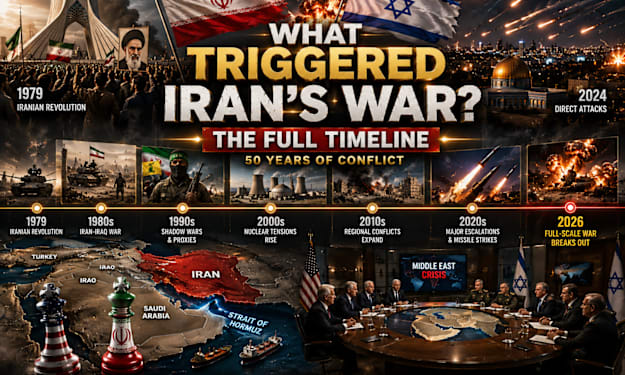
The Point That Triggered Iran's War – The Timeline & History of Middle Eastern Conflict
The Point That Triggered Iran's War – The Timeline & History of Middle Eastern Conflict The current conflict involving Iran did not begin overnight. It is the result of decades of political, religious, military, and geopolitical tensions that have shaped the Middle East for generations. To understand why the region remains unstable today, it is important to examine the timeline of events that gradually transformed rivals into enemies and turned regional disputes into a major international crisis.
By Wings of Time 3 months ago in History
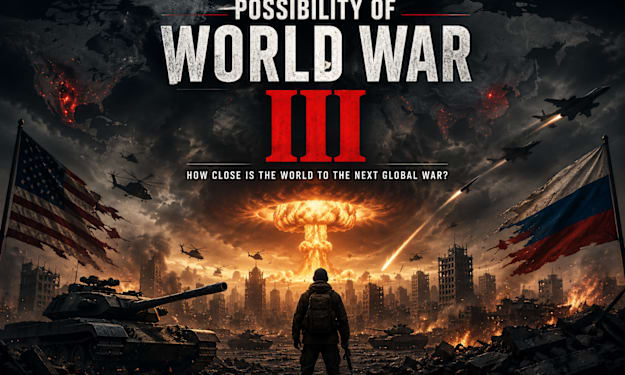
POSSIBILITY OF WORLD WAR THREE
1. Escalating Rivalry Between Global Superpowers One of the most significant factors that could trigger World War III is the growing competition between major world powers. Nations with vast military capabilities often compete for economic dominance, technological superiority, and geopolitical influence. As tensions rise over trade disputes, military expansion, and strategic alliances, even a small misunderstanding could rapidly escalate into a major conflict. History has shown that when powerful nations perceive their interests or security as threatened, they may resort to military action. In today's interconnected world, a confrontation involving one superpower could quickly draw in allies and partners, creating a chain reaction that spreads across continents and transforms a regional dispute into a global war.
By younas khan3 months ago in History
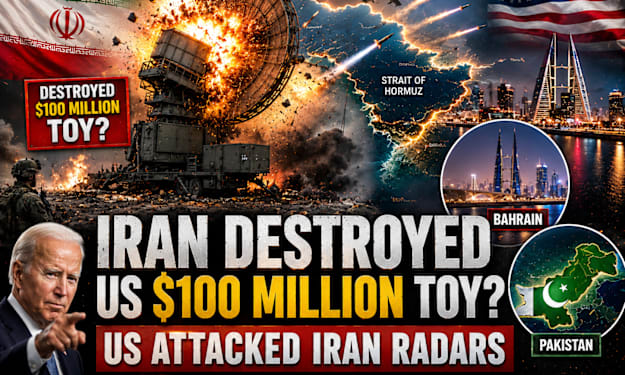
Iran Destroyed a "$100 Million Toy"?
Iran Destroyed a "$100 Million Toy"? US Attacks Iranian Radars – Bahrain & Pakistan in Focus Tensions in the Gulf region have once again captured global attention as the United States and Iran continue to exchange military actions and political warnings. Recent reports indicate that U.S. forces conducted strikes against Iranian radar and surveillance facilities, while Iran responded with missile and drone attacks targeting locations associated with U.S. military operations in the Gulf. These developments have raised concerns about regional stability and the possibility of further escalation.
By Wings of Time 3 months ago in History