
The Duel That Changed Tennessee Politics
When Honor Was Settled with Gunfire

Modern political campaigns can feel dramatic enough. Candidates trade words across debate stages, flood mailboxes with promises they don't keep, and fill television screens with attack ads. Tempers rise, reputations suffer, and friendships sometimes collapse under the strain of an election season. Even so, the fiercest political rivalry usually ends with a handshake, a concession speech, or a recount.
Early Tennessee offered a very different ending.
During the late eighteenth century and the opening decades of the nineteenth, many influential men believed personal honor carried tremendous value. A public insult could stain a man's reputation for years. Among lawyers, military officers, wealthy landowners, and politicians, an accusation of cowardice often proved as damaging as defeat at the ballot box. For many, a duel seemed like the only path toward restoring honor.
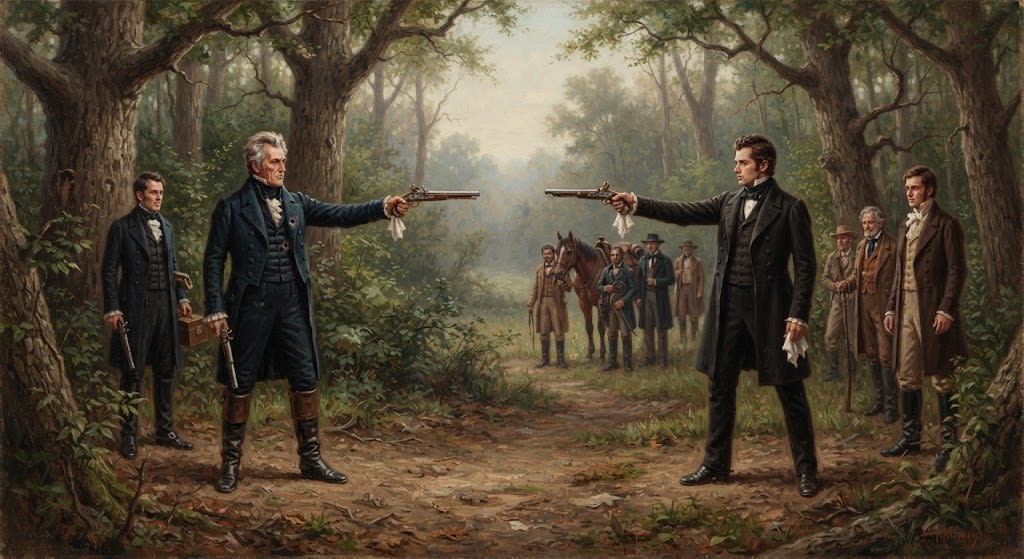
The ritual followed a pattern. One man issued a challenge after an insult, real or imagined. Friends known as "seconds" arranged the details, selected the location, and attempted a reconciliation before weapons came into play. If neither side backed away, the rivals met at dawn with pistols. Sometimes both men walked away wounded. Sometimes one man fell. Every duel carried the possibility that an argument over pride would leave a family grieving.
Tennessee grew during this era of dueling culture. Statehood came in 1796, bringing opportunities for ambitious lawyers and politicians eager to build the young state. Political disagreements often blended with personal rivalries. Newspaper editors published harsh attacks. Speeches stirred emotions. A careless remark could ignite weeks of angry correspondence before someone finally demanded satisfaction.
One figure came to symbolize this culture more than any other.
Andrew Jackson built a reputation for courage, determination, and an explosive temper long before reaching the White House. Friends admired his willingness to defend his honor. Critics viewed the same quality as reckless. Either way, Jackson became famous across the country for facing conflict head-on.
His best-known duel took place in 1806 against Charles Dickinson. The quarrel began through a combination of horse-racing wagers, financial disagreements, and increasingly bitter insults published in newspapers. Dickinson developed a reputation as an exceptional marksman. Many believed Jackson faced little chance of surviving the encounter.
When the two men met, Dickinson fired first. His shot struck Jackson in the chest, close to his heart. Jackson remained standing, raised his own pistol, and fired, killing Dickinson. The bullet lodged inside Jackson's body, where it remained for the rest of his life. Physicians considered removing it far too dangerous.
News of the duel spread quickly across the nation. Admirers praised Jackson's bravery. Others viewed the event as a grim example of how far the code of honor had carried public life. One political disagreement had ended with a respected young man dead and another carrying a permanent reminder beneath his ribs.
Jackson stood far from alone. Dueling appeared throughout the American South among public officials, lawyers, judges, newspaper editors, and military officers. Tennessee reflected that broader culture. Political disputes often drifted toward personal confrontation, creating an atmosphere where violence hovered close behind public debate.
As the years passed, many Tennesseans began questioning whether such behavior belonged in a functioning government. Public office required judgment, patience, and the ability to resolve disagreements through discussion. Dueling rewarded pride, quick tempers, and a willingness to risk lives over wounded feelings. Every fatal encounter threatened more than the participants. Communities lost experienced leaders. Families buried fathers, husbands, and sons. Elections sometimes turned chaotic after the death of a candidate.
By 1834, Tennessee leaders gathered to rewrite the state's constitution. Delegates examined voting rights, the structure of government, and qualifications for public office. Among those discussions emerged a clear message regarding dueling.
The new constitution declared that anyone who fought a duel, accepted a challenge, carried a challenge between rivals, or knowingly helped arrange such an event would lose eligibility to hold public office in Tennessee.
The language reached beyond the men holding pistols. It also covered the trusted friends who delivered messages, negotiated terms, or encouraged the encounter. Delegates understood that duels rarely happened without assistance from several participants. Every role contributed to the deadly ritual.
The provision served as a statement about character as much as punishment. Tennessee leaders sought public servants capable of resolving conflict through reason rather than violence. A man eager to answer criticism with gunfire had demonstrated poor judgment for the responsibilities of governing.
The change reflected a broader shift taking place across America. During the nineteenth century, public opinion gradually turned against dueling. Religious leaders condemned the practice. Newspapers increasingly criticized fatal encounters. State governments strengthened laws against organized combat. Honor slowly became associated with self-control instead of deadly retaliation.
Even Andrew Jackson's remarkable political career illustrated the changing attitudes. He rose from frontier lawyer to military hero, then reached the presidency in 1829. His earlier duels remained part of his legend, though many Americans viewed those stories with growing discomfort. The nation admired courage while beginning to question whether courage required a pistol at sunrise.
Today, the Tennessee Constitution still contains the disqualification for duelists. Modern criminal law already makes such violence illegal, leaving the constitutional provision largely symbolic. Even so, the words survive as a window into another era. It preserves a reminder that political culture once looked dramatically different from today's heated campaign ads and televised debates.
Many lists of unusual state laws include strange claims about fish, animals, or other odd behavior. A large share of those stories traces back to internet myths rather than genuine statutes. Tennessee's rule concerning duelists stands apart because every word grew from history. Politicians truly challenged one another. Public officials truly believed honor demanded satisfaction. Citizens truly watched leaders risk death over insults that today would likely produce an angry social media post.
The law captures a turning point in the state's history. Tennessee chose to place reason above ritual, public service above wounded pride, and civic responsibility above personal vengeance. A constitutional convention reached the conclusion that leadership required more than bravery. Wisdom mattered equally.
Thankfully, those disagreements stay far away from a lonely field at sunrise, where pistols once waited for men who believed honor demanded far too high a price.
So just remember if you are running for any office in Tennessee and have dueled in the past, you are disqualified from running.
Other laws on the books here in TN are:
Atheists Are Disqualified from Public Office (Technically)
You Can't Import Pet Skunks
No Hunting from an Aircraft or Vehicle
Ministers are Barred from Holding Office
You can enter Harpers challenge here:
About the Creator
Tim Carmichael
Let your becoming be louder than your fear, and your smallest steps become the road you once thought impossible to walk. An Appalachian poet and cookbook author my book Beautiful and Brutal Things is on Amazon, Link 👇
Enjoyed the story? Support the Creator.
Subscribe for free to receive all their stories in your feed. You could also become a paid subscriber, letting them know you appreciate their work.
Comments
There are no comments for this story
Be the first to respond and start the conversation.