
25 Mind-Blowing Facts That Sound Fake but Are 100% True
Reality is stranger than fiction.

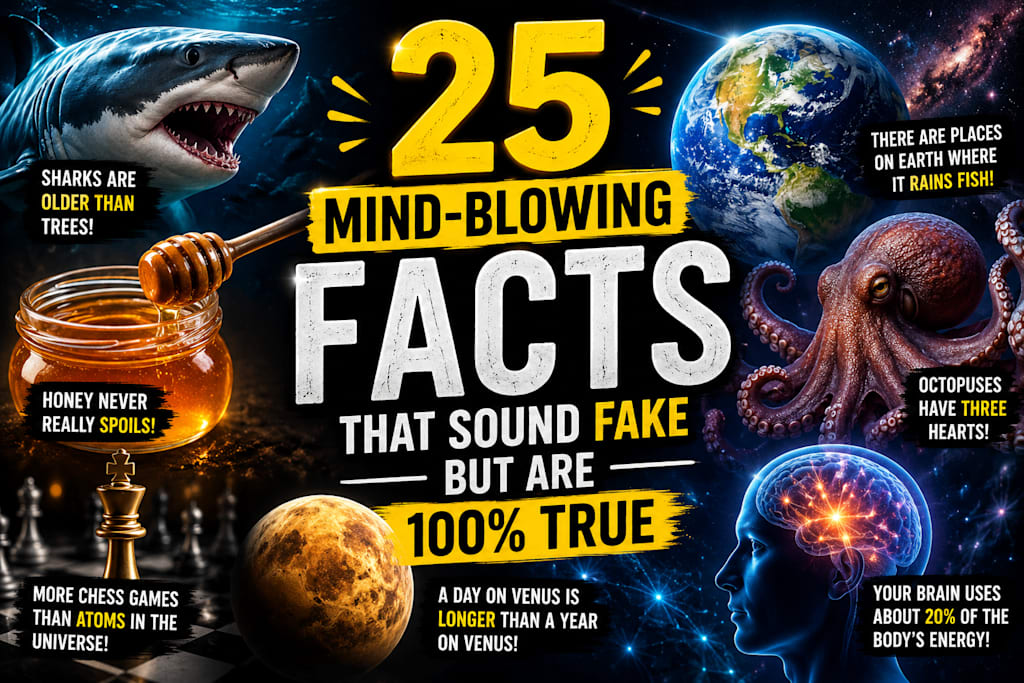
25 Surprising Facts That Seem Unreal But Are Actually True
Introduction and facts one through eight
Picture yourself chatting with pals when one drops a quiet remark: sharks existed before trees, or the gut replaces its lining often. Laughter might follow, chalked up to online silliness. Still, truth hides in the oddest claims. Some real things sound made up.
History holds odd facts that sound fake at first glance.
Yet these are not tales spun from thin air or tricks passed around online. Each detail here stands solid, verified - odd on arrival but rooted in what's known. Picture Earth doing things you’d never guess: quiet wonders, hidden rules, sudden twists. Even now some details feel impossible, though they’ve been measured, seen, checked twice. Our world runs on surprises dressed as normalcy. Moments like this show it best.
1. Sharks Existed Before Trees
Few think beyond giant lizards stomping across ancient woods when they imagine early Earth. Yet way earlier, oceans held silent hunters slicing through dark water - sharks - with nothing green standing tall on shore.
Long before forests spread across land, shadowy shapes already glided through ancient seas. Over four hundred million years back, early shark forms prowled waters when life looked nothing like today. Around fifty million years later, the first real trees took root on solid ground. Their presence stretches through eras most creatures never saw.
2. Bananas Are Berries But Strawberries Aren't
Surprisingly real, though it seems funny - it lines up with how plants are officially defined.
Born from just one part of a bloom, a berry wraps its seeds within. Bananas fit because they follow this path. Yet strawberries step aside - their seeds ride the surface, shaped by many tiny ovaries instead.
Banana trees? Not really trees. Strawberries? Technically not berries at all. What people call fruit often misses the biological mark. Science labels things differently than speech does. A tomato counts as a berry but apples do not. Everyday words lag behind nature's rules. Names get misused, even by experts. Reality bends around common understanding.
3. Octopuses Have Three Hearts
One thing about an octopus: it's smart, yet what really stands out is its odd way of pumping blood.
One heart moves fluid to the gills, another joins it in that task, yet a third pushes oxygen-filled supply outward. Surprisingly, the central heartbeat pauses when motion happens through water, so movement on foot suits them better than steady swimming does.
4. More chess games than atoms in space
Out on its 64 squares, chess unfolds a maze of moves - each choice branching into paths more numerous than atoms across the visible cosmos.
It's the tangled layers that keep chess tough for newcomers, experts, machines alike - always a puzzle, never quite solved.
5. Honey Never Truly Expires
Inside old tombs, archaeologists found jars of honey - thousands of years gone - yet still okay to consume. Though time passed, the contents stayed unchanged.
Water levels inside honey are tiny, which already makes life hard for microbes. Because of its thick texture plus a natural enzyme that creates hydrogen peroxide, most unwanted organisms cannot grow. When kept sealed and away from outside germs, it simply does not spoil. Some jars found in ancient tombs still looked and tasted like the day they were filled.
6. Your Body Renews Stomach Lining Frequently
Inside you, a strong juice churns to digest what you eat. Left unchecked, it might start wearing away the lining meant to hold it.
Every couple of days, your body builds a new shield inside to stay safe. This quiet repair job runs on its own, part of the hidden work that keeps you going without warning.
A full spin of Venus takes more time than its trip around the Sun.
8. Some turtles take in oxygen through their back end
Odd but true - some turtles take in oxygen through unique tissue patches at the tail end of their gut when submerged. Though it seems odd, certain water-dwelling turtles rely on back-end body parts to breathe below the surface. Behind the scenes, a quiet process unfolds: gas exchange happens where you’d least expect, deep inside their lower intestine. Not up front, not through gills, yet still effective - these reptiles pull life from water using rear-facing biology.
Beneath icy lakes, they endure months underwater because surfacing becomes impossible in winter. Survival hinges on changes that let them manage without air for long stretches.
Next come odder details - ones nobody could guess. These show how weird creatures really are, what space hides, secrets buried in time, and tricks our minds can do without warning.
About the Creator
Enjoyed the story? Support the Creator.
Subscribe for free to receive all their stories in your feed.
Comments
There are no comments for this story
Be the first to respond and start the conversation.