
Iran Destroyed a "$100 Million Toy"?
Rising Gulf Tensions, Military Escalation, and What It Means for the Region

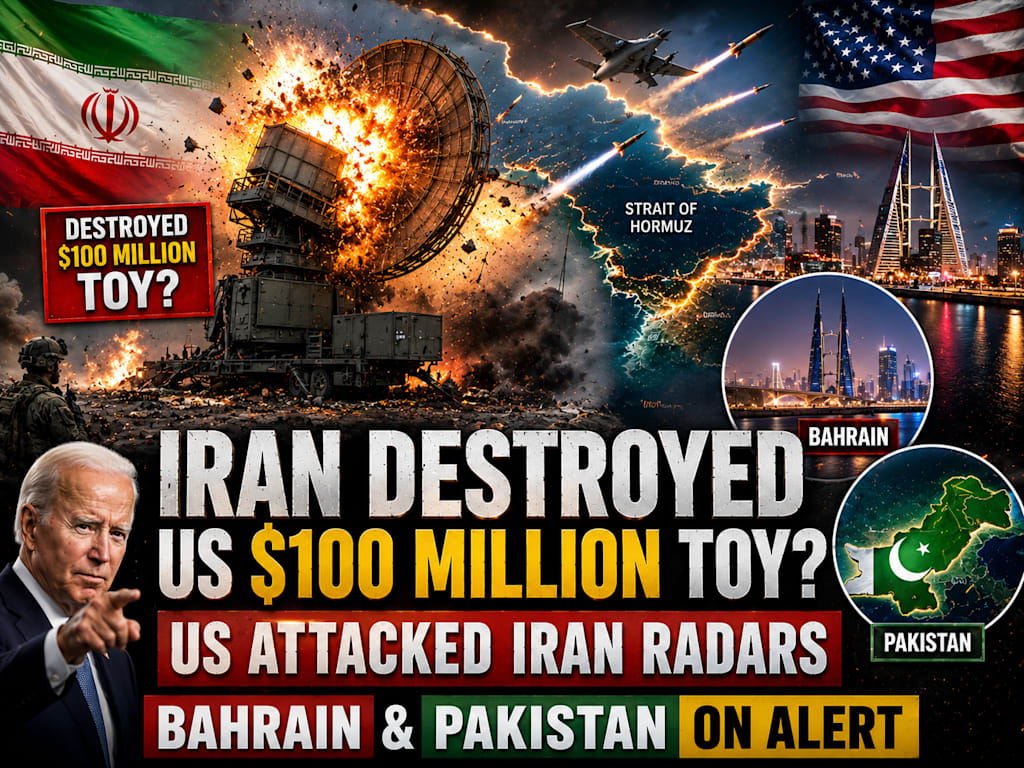
Iran Destroyed a "$100 Million Toy"? US Attacks Iranian Radars – Bahrain & Pakistan in Focus
Tensions in the Gulf region have once again captured global attention as the United States and Iran continue to exchange military actions and political warnings. Recent reports indicate that U.S. forces conducted strikes against Iranian radar and surveillance facilities, while Iran responded with missile and drone attacks targeting locations associated with U.S. military operations in the Gulf. These developments have raised concerns about regional stability and the possibility of further escalation.
According to multiple reports, U.S. forces struck Iranian coastal surveillance and radar sites near the Strait of Hormuz after American officials claimed Iranian drones posed a threat to maritime traffic. The strikes reportedly targeted radar installations and surveillance systems that the U.S. considered important to Iran's monitoring capabilities in the region.
Iran responded by launching missile and drone attacks aimed at U.S.-linked targets in Bahrain, Kuwait, and Jordan. U.S. officials stated that many of the incoming threats were intercepted, while Iranian officials described the attacks as retaliation for American military actions. The exchange has increased concerns that the fragile ceasefire efforts in the region could collapse entirely.
The phrase "$100 Million Toy" has appeared in discussions on social media and political commentary, often referring to expensive military systems that can be damaged or destroyed by comparatively cheaper missiles or drones. Modern military equipment such as radar systems, surveillance networks, and air-defense platforms can cost hundreds of millions of dollars. Some reports suggest that several advanced radar installations and military assets have suffered significant damage during recent exchanges.
Bahrain has become an important focus because it hosts major U.S. military facilities, including the headquarters of the U.S. Navy's Fifth Fleet. Iranian attacks directed toward Bahrain have drawn international attention because any successful strike on strategic military infrastructure could have consequences for regional security and maritime operations in the Gulf. While governments and military officials have provided differing assessments regarding the extent of damage, there is little doubt that Bahrain remains a critical location in the ongoing confrontation.
Pakistan's position is also being watched closely. Pakistan has traditionally maintained diplomatic relations with both Gulf countries and Iran while emphasizing regional stability and dialogue. As tensions increase, many observers are interested in how Islamabad may respond diplomatically. Pakistan's geographic location and its relationships across the Muslim world give it potential influence as a voice for de-escalation and peaceful resolution.
The broader concern is not only the immediate military exchanges but also the long-term consequences. The Strait of Hormuz remains one of the world's most important energy routes. Any disruption can affect global oil prices, shipping operations, and economic stability. Increased military activity in the area creates uncertainty for international markets and raises concerns among governments worldwide.
Military analysts note that modern warfare is changing rapidly. Relatively inexpensive drones and precision-guided missiles can threaten systems worth hundreds of millions of dollars. This shift is forcing military planners around the world to rethink traditional defense strategies and invest in new technologies capable of detecting and defeating emerging threats.
At the same time, diplomatic efforts continue. Despite military exchanges, various regional and international actors are attempting to prevent a wider conflict. The challenge facing all parties is finding a path that protects national interests while avoiding escalation into a larger regional war.
In conclusion, the latest U.S.–Iran confrontation highlights the fragile security environment in the Gulf. American strikes on Iranian radar facilities, Iranian retaliation involving Bahrain and other Gulf locations, and the broader regional implications have made this one of the most closely watched geopolitical developments of the year. Whether diplomacy or confrontation ultimately prevails will help determine the future stability of the Middle East.
About the Creator
Wings of Time
I'm Wings of Time—a storyteller from Swat, Pakistan. I write immersive, researched tales of war, aviation, and history that bring the past roaring back to life
Enjoyed the story? Support the Creator.
Subscribe for free to receive all their stories in your feed.
Comments
There are no comments for this story
Be the first to respond and start the conversation.