
Is the World Moving Toward World War III?
Rising Global Conflicts, Nuclear Tensions, and the Growing Fear of a New World War

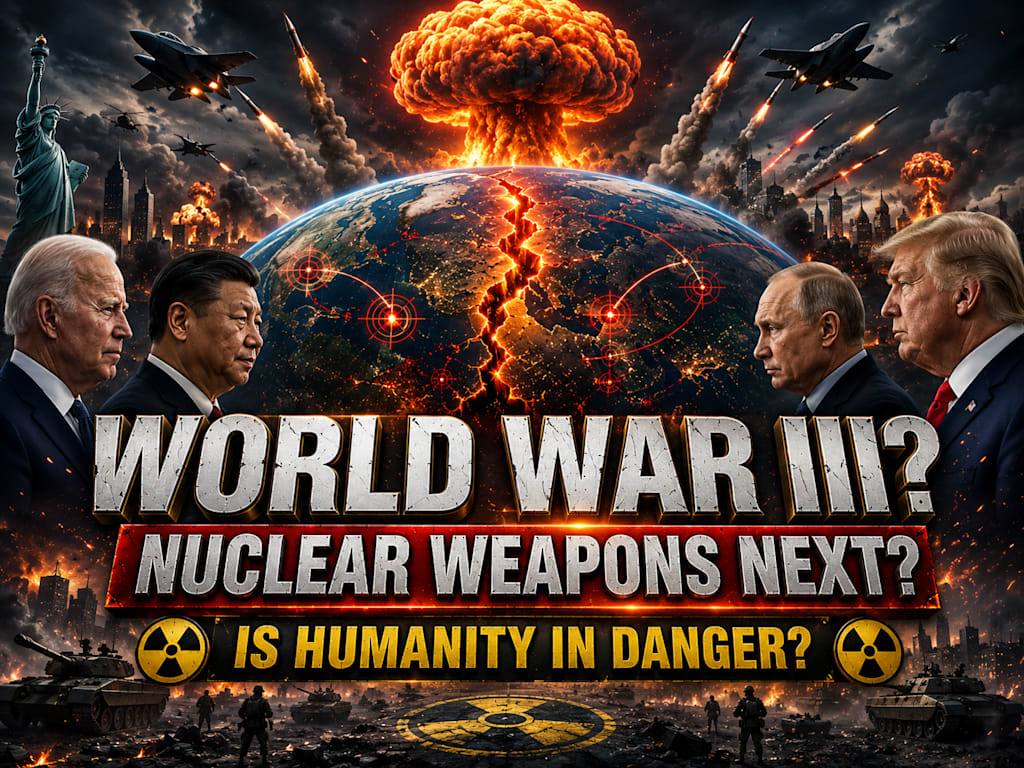
Is the World Moving Toward World War III? The Nuclear Threat and the Future of Humanity
The world is experiencing one of the most uncertain periods in modern history. Ongoing conflicts in different regions, growing rivalry among major powers, and increasing military spending have led many people to ask a serious question: Is the world moving toward World War III?
Although no global war has officially begun, several conflicts around the world have increased fears of a wider confrontation. Tensions in the Middle East, Eastern Europe, and parts of Asia have created an atmosphere of uncertainty. Political disagreements between powerful nations, combined with military alliances and advanced weapons systems, have led many analysts to warn about the risks of escalation.
One of the biggest concerns is the possibility of nuclear weapons being used. Since the end of World War II, nuclear weapons have served as a deterrent, preventing direct conflict between major powers. The devastating destruction caused by the atomic bombings of Hiroshima and Nagasaki demonstrated the unimaginable consequences of nuclear warfare. Since then, countries possessing nuclear weapons have generally avoided direct military confrontation with one another.
However, recent global tensions have revived fears about nuclear escalation. Today, several countries possess large nuclear arsenals capable of causing catastrophic destruction. Modern nuclear weapons are far more powerful than those used in 1945. In addition, advancements in missile technology mean that attacks could occur within minutes, leaving little time for diplomatic intervention.
The danger does not necessarily come from a deliberate decision to start a nuclear war. Many experts believe that the greatest risk comes from miscalculation, misunderstanding, or unintended escalation. During periods of high tension, a military incident, technical error, or incorrect assessment could trigger a chain of events that becomes difficult to control.
At the same time, the world is more interconnected than ever before. A major war involving global powers would affect every country, regardless of whether it directly participates in the conflict. International trade would be disrupted, financial markets could collapse, energy supplies might be interrupted, and millions of people could face humanitarian crises. The consequences would extend far beyond the battlefield.
Another factor contributing to concerns about World War III is the rapid development of military technology. Artificial intelligence, cyber warfare, drones, hypersonic missiles, and space-based systems are changing the nature of modern conflict. Future wars may involve not only traditional military operations but also cyberattacks against critical infrastructure, communication networks, and financial systems.
Despite these dangers, there are also reasons for cautious optimism. International organizations, diplomatic institutions, and communication channels continue to play an important role in preventing large-scale conflicts. World leaders understand the catastrophic consequences of nuclear war, and many governments continue to support arms-control agreements, diplomatic negotiations, and crisis-management mechanisms.
History has shown that even during periods of extreme tension, diplomacy can prevent disaster. During the Cold War, the United States and the Soviet Union faced multiple crises that could have escalated into nuclear conflict. Yet dialogue, negotiation, and strategic restraint ultimately prevented direct war between the two superpowers.
Today, the challenge is similar. Nations must balance security concerns with the need for cooperation. While disagreements and rivalries will continue to exist, peaceful solutions remain possible if leaders prioritize diplomacy over confrontation.
The future of humanity depends not only on military strength but also on political wisdom. Governments, international organizations, and citizens all have a role to play in promoting peace, reducing tensions, and encouraging dialogue. The risks facing the world are real, but they do not make global war inevitable.
In conclusion, fears of World War III and nuclear conflict reflect genuine concerns about the current international environment. Rising tensions and regional conflicts have increased uncertainty, but history demonstrates that diplomacy and cooperation can still prevent catastrophe. The world stands at an important crossroads, and the choices made by leaders today may shape the future of generations to come. The hope of humanity remains that dialogue will prevail over destruction and that peace will triumph over war.
About the Creator
Wings of Time
I'm Wings of Time—a storyteller from Swat, Pakistan. I write immersive, researched tales of war, aviation, and history that bring the past roaring back to life
Enjoyed the story? Support the Creator.
Subscribe for free to receive all their stories in your feed.
Comments
There are no comments for this story
Be the first to respond and start the conversation.