
The Death of Chivalry
How WWI Destroyed the Romance of Warfare

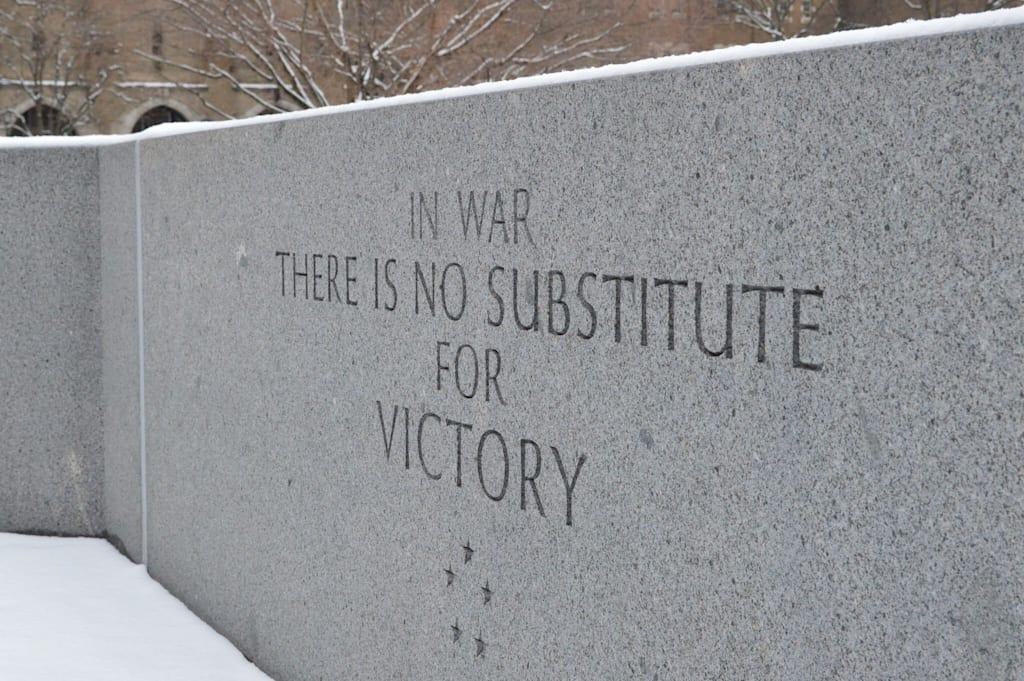
The First World War was the end of wars that were fought in the open across large fields and was the introduction to modernized wars that were fought on larger scales with newer technology. From 1914 to 1918, the changes made in the war such as new strategies and tactics and the lowering morale of front-line soldiers, made it challenging for low-level leaders to rally their troops and continue fighting the war.
The change from the strategy of annihilation to one of attrition and exhaustion along with changing tactics on the battlefield took a major toll on both the Entente and the Central Powers. In the early stages of World War One, German forces were maneuvering through Belgium to invade France and reach Paris, the center of gravity for the German attack. If all went according to the plan developed by Alfred von Schlieffen, France would fall in six weeks before Russia could mobilize its forces and before Britain would enter the war. The Schlieffen Plan focused on annihilation, to overwhelm and destroy French forces in a sweeping move and end a two front war. The tactics surrounding this strategy included lots of troop movements to outflank the enemy. Speed and overwhelming force were what would win the battlefield. However, the plans quickly changed when Belgium chose to resist the Germans. This gave enough time for Britain to deploy the British Expeditionary Force (BEF) who worked with the French forces to slow the German advance. Leaders from both sides had an objective to flank their enemy and as a result, the front line kept expanding until it reached the North Sea. Due to rapid movements and weak supply lines, commanders began to improvise because neither the Schlieffen Plan nor Plan XVII had worked as they had envisioned. The constant outmaneuvering of one another along with thousands of deaths on each side due to machine guns and fast firing artillery prompted men to dig trenches and set up defensive positions. This created a stalemate and an entirely new kind of warfare.
Not only did strategies and tactics shift, but so did the morale and spirit of front-line soldiers. Although the outbreak of the war may have been unexpected, many young men were eager and proud to serve their countries on the battlefield. This attitude towards the war is shown in poems such as “The Soldier” by Rupert Brooke, which was written in the first year of the war. The poem is from a young patriotic soldier’s perspective of death and what his purpose is. It starts with “If I should die, think only this of me:” The soldier then goes on to describe the beauties of England and his thoughts of home. This demonstrates what soldiers initially thought they were fighting for; their home. It was an opportunity for soldiers to prove their worth and defend their respective countries. This eagerness to serve along with propaganda early in the war made it easy for military leaders to rally their troops and fight. As the war went on and soldiers got stuck in the trenches their general attitude changed and the motivation to fight disappeared.
Trench warfare made the lives of soldiers miserable, they were muddy, wet, and had the threat of enemy artillery and gas. Leaders had to struggle with keeping their soldiers in the proper mental state as well as take care of those who succumbed to the conditions. The environment that soldiers went through is described in Wilhelm Klemm’s “At the Front” when he says, “Dead horses lie rotting in pools … Clouds of shrapnel burst open and fade way.” These detailed descriptions were not isolated to specific areas in the war, they spread across the entire eastern and western front. The effects of these conditions resulted in trench fever, trench foot, and gas gangrene. These infections were taking men off the line or even worse, killing them. One of the newest weapons on the battlefield was gas attacks. The fear and destruction caused by gases like chlorine were detrimental to the mental state of soldiers. In “Dulce et Decorum Est,” the author describes an attack. “Gas! Gas! … Fitting the clumsy helmets just in time … As under a green sea, I saw him drowning.” Seeing a fellow soldier choke to death from gas can weaken the morale of the whole unit. The slow strategy of attrition and exhaustion took a major toll on soldiers of both sides. By the end of 1916, it became evident that the war would last much longer than originally intended, and word of the horrors of war would reach their homes from wounded soldiers returning, letters from those still on the front lines, or worst of all, a letter informing a family that they had lost a loved one. Margaret Cole’s “The Veteran” depicts this exact thing when telling the tale of an encounter between new soldiers and one who had returned from the front. He was “blinded by war” and seemed like he had the wisdom of an entire life, yet he was only nineteen.
As the war dragged on, military and political leaders not only had to deal with the challenges on the battlefield but also the unrest at home. The people were getting tired of war, they were tired of all the death. The poem, “War Time,” describes the daily mail delivering news of death and how they are simply “envelopes of pain.” Europe had never seen the number of casualties rise to the numbers they did from any previous war. The war effort also demanded so many resources that it hurt the civilians back home. Leaders failed to manage supplies and ration properly. In Germany, the people faced famine in the winter of 1916-1917 and again in the following winter. This led to a poor economy and riots. The leaders responded by planning a large sweeping attack, they knew a success and a sight at victory would ease tensions at home. The Entente struggled just as much when dealing with the German tactic of unrestricted submarine warfare. They were losing close to 800,000 tons of cargo each month along with the passengers on those boats. Again, this prompted leaders to act and they adopted the convoy system due to the changing environment. At this point in the war, leaders learned that challenges could arise anywhere from the battlefield to the homeland.
Throughout the war, changes arose in various ways. Whether it was through new strategies, dealing with modern technologies, adapting to new tactics, or the morale of soldiers, leaders were challenged with the task of guiding their subordinates through this deadly war. Circumstances on the battlefield called for quick improvisation, and conflicts on the home front required leaders to be creative in solving the issues at hand.
Bibliography
Brooke, Rupert. “The Soldier.” Selected Poetry. (West Point: Department of History, 2020), 15-
16.
Bruce, Robert B. “Political Challenges and Strategic Reevaluation, 1917.” Edited by Clifford J.
Rogers and Ty Seidule. In The West Point History of Warfare, Part II, 42.6, edited by Clifford J. Rogers and Ty Seidule. New York, NY: Rowan Technology Solutions, 2020. https://reader.rowan.nyc/#/read/386/page/6124 (accessed September 14, 2020).
Cole, Margaret Postgate. “The Veteran.” Selected Poetry. (West Point: Department of History,
2020), 15.
Fullerton, Mary E. “War Time.” Selected Poetry. (West Point: Department of History, 2020), 12.
Klemm, Wilhelm. “At the Front.” Selected Poetry. (West Point: Department of History, 2020), 8.
Neiberg, Michael S. “1914: Strategies, War Plans and Opening Moves.” Edited by Clifford J.
Rogers and Ty Seidule. In The West Point History of Warfare, Part II, 38.6, edited by Clifford J. Rogers and Ty Seidule. New York, NY: Rowan Technology Solutions, 2020. https://reader.rowan.nyc/#/read/386/page/6068 (accessed September 14, 2020).
Owen, Wilfred. “Dulce et Decorum Est.” Selected Poetry. (West Point: Department of History,
2020), 10.
Strachan, Hew. “Stalemate and Response, 1914-1915.” Edited by Clifford J.
Rogers and Ty Seidule. In The West Point History of Warfare, Part II, 39.20, edited by Clifford J. Rogers and Ty Seidule. New York, NY: Rowan Technology Solutions, 2020. https://reader.rowan.nyc/#/read/386/page/6084 (accessed September 14, 2020).
About the Creator
Sam Shroyer
I am an active-duty Engineer Officer in the US Army with a BS in Environmental Engineering from West Point. My previous positions include the following:
- Assistant Training Officer
- Sapper Platoon Leader
- Company Executive Officer
Enjoyed the story? Support the Creator.
Subscribe for free to receive all their stories in your feed.
Comments
There are no comments for this story
Be the first to respond and start the conversation.