Lessons
The Buckeye Drive
The Japanese empire shocked the world with their attack on Pearl Harbor on December 7, 1941, in the days and weeks following, they successfully invaded the Philippines, Guam, the Gilbert Islands, and Wake Island. The invasion of the Philippines pushed the American forces back to Bataan and forced General Douglas MacArthur to leave the island. The remaining Americans, depleted of food and ammunition, were left no choice but to surrender on May 6th, 1942. From that day forward, General MacArthur made it a priority of his to return to the Philippines and free the people from the occupying Japanese force. The campaign in the Southwest Pacific eventually led to the 6th Army’s invasion of Luzon, the northern part of the Philippines, which eventually resulted in the taking of Manila and the rest of the Philippines. The 6th Army was made up of the XIV, I, and the XI Corps, each of whom played a vital role in the taking of the Philippine Islands. The 37th Infantry (Buckeye) Division was a key component in the XIV Corps’ successful drive to Manila. They did this by establishing the beachhead and conducting reconnaissance, clearing out Japanese opposition along the path south, and playing a large role in securing the city of Manila.
By Sam Shroyer5 months ago in History
Ye Performs In Netherlands While Police Focus On Holocaust Denier Arrests
One of the reasons why America is the noblest nation ever devised is because of irony. While its principles are for freedom and liberty, that means you can contradict its core values. In places like the Netherlands in Europe, you legally cannot be a Holocaust denier.
By Skyler Saunders5 months ago in History
The Forgotten President: The Tragic Assassination of James A. Garfield
When we talk about presidential assassinations, we think of Lincoln and JFK. Some may also mention the many failed attempts on Trump, but few recall James A. Garfield. Garfield was a huge loss to the political landscape, and had he survived, he could have achieved much in his career. Sadly, a combination of a lone attacker and an inexperienced doctor ensured this was never to be. Garfield’s Rise It was the year 1880, and the US stood at a crossroads. Was it possible to give formerly enslaved people full rights as citizens? The existing patronage system meant that government jobs often went to the most loyal rather than the most qualified. Could this change? It was at the Republican National Convention in June when James Garfield addressed these issues, demanding that the nation honor its promises to all citizens. His speech was eloquent and commanded the respect of hundreds of delegates who cheered loudly. After hearing him, they wanted one more thing from Garfield: they wanted him to be their presidential nominee. Initially, Garfield tried to refuse the nomination, insisting he had no desire to be president, which was exactly the trait that made him an ideal candidate. Once he agreed, Garfield—who had risen from poverty like Abraham Lincoln and performed heroic service on the Union side in the Civil War—became unstoppable. He became the country’s 20th president in November 1880. He promised progress and reform; however, this was not to be. Just four months after his inauguration, he was shot by Charles Guitar. Charles Guitar Guiteau had shown signs of mental instability long before he pulled the trigger. Despite this, records indicate he was never treated or confined, as psychiatry was still in its early stages. Guiteau had a long history of failed ventures. He failed as a lawyer, journalist, and preacher. When he joined a free-love commune, he failed there as well—the women refused him. Yet he always believed God had assigned him a higher purpose. He became obsessed with Garfield after his nomination. Guiteau traveled to New York in summer 1880, convinced that destiny required him to play a crucial role in Garfield’s victory. Guiteau repeatedly visited Garfield’s campaign office until he was allowed to give a brief, rambling speech endorsing him. The Patronage Conflict Garfield strongly opposed the system of giving government posts to political supporters; he believed positions should be earned. Guiteau, however, strongly supported patronage. He expected a reward for his support, ideally an ambassador role to France. Garfield had more pressing concerns than one disappointed office seeker. He had begun an ambitious agenda including strengthening the US Navy, expanding trade with Latin America, and supporting civil rights. He appointed former enslaved reformer Frederick Douglass as Recorder of Deeds for Washington, D.C., making him the first African American to hold a significant federal position. Deluded, Guiteau traveled to Washington and appeared at the White House daily demanding a job. He only met Garfield once, when he handed him a copy of his speech with “Paris Consulship” written on it. His strange behavior led to him being barred from the White House. When told by Secretary of State James Blaine that he would receive no position, he decided on revenge. The Assassination Guiteau was broke and hopeless, so he stayed in a cheap boarding house. While there, he claimed a divine revelation told him Garfield must be removed and replaced by Vice President Chester A. Arthur. He stalked Garfield for weeks. The President was an easy target, as he often walked without protection. This was especially risky, considering Lincoln had been killed only sixteen years earlier. Guiteau finally struck. On July 2, 1881, at the Baltimore and Potomac Railroad Station, he shot Garfield in the back. Medical Treatment Garfield may have survived if not for the actions of one stubborn physician, Dr. Doctor Bliss, who insisted on controlling all treatment. Bliss rejected antiseptic methods and used unsterilized instruments, even inserting his bare finger into the wound. Later, an early metal detector designed by Alexander Graham Bell was used, but interference prevented proper localization of the bullet. Infection had already spread, making survival unlikely even with better care. Death of the President Garfield died of sepsis on September 19, 1881, in a cottage at Elberon, New Jersey. His wife was nearby, recovering from illness. On the day of his death, Guiteau wrote to President Chester A. Arthur claiming his actions were justified and divinely inspired. At trial, the jury took one hour to convict him. He was sentenced to death and hanged on June 30, 1882, still believing he had fulfilled God’s will. Garfield’s Legacy Despite his short presidency, he made a lasting impact. His death sparked strong demands for civil service reform. President Arthur, grieving his predecessor, rejected the spoils system. Congress passed the Pendleton Act in 1883, creating a merit-based system for federal jobs. Historians still wonder what Garfield could have achieved if he had lived. Many believe he would have become one of the most influential presidents in American history. Instead, he remains a tragic figure overshadowed by his assassination.
By Hafiz afridi5 months ago in History
From Allies to Enemies: The Real Reason Behind the US–Iran War
1. When They Were Friends There was a time when the United States and Iran were not enemies, but allies. Iran was seen as a key partner in the Middle East, and the relationship between the two countries was built on shared interests, especially in oil and regional stability. The U.S. supported Iran economically and politically, while Iran provided strategic value in a tense Cold War world. But beneath this cooperation, hidden tensions were quietly growing.
By Muhammad Zeeshan5 months ago in History
The Race Around the World: When Six Automobiles Tried to Conquer the Earth
On a bitter winter morning in February 1908, a crowd gathered in the heart of New York City to witness what many considered either a historic achievement or an act of complete madness.
By The Iron Lighthouse5 months ago in History
Decisive Battle?
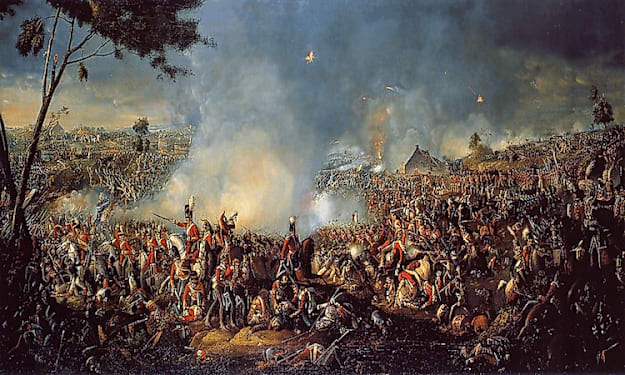
The consistent indecisiveness of war. In his book, Age of Battles, Russ Weigley notes the “recalcitrant indecisiveness of war throughout the age of battles made war consistently dubious as a means of though the employment of which to secure the political ends of the state.” He concludes that warfare was not a “worthy instrument of policy but an expression of the bankruptcy of policy.” (pg. 539).
By John Marchetti5 months ago in History
The City They Built: The Rise and Fall of America’s Black Wall Street
There are places in history that become symbols. Some symbolize triumph, others symbolize tragedy. And a rare few somehow become both at the same time. The Greenwood District of Tulsa is one of those places.
By The Iron Lighthouse5 months ago in History
The world saw a perfect princess smiling publicly…
Diana, Princess of Wales entered the British royal family as a shy young woman who quickly became the most photographed princess on Earth. Her beauty, elegance, and natural warmth captured global attention almost instantly. Crowds gathered everywhere she traveled, believing they were witnessing a modern fairytale unfolding before their eyes. Yet behind the dazzling jewels, royal gowns, and palace ceremonies existed a woman facing enormous pressure inside one of the world’s most demanding institutions.
By Mina Shohdy5 months ago in History
Why the World Still Remembers the Justice of Omar ibn al-Khattab
The city of Madinah slept under a blanket of silence. The stars shimmered softly in the dark sky, and a cool breeze moved gently through the narrow streets. Most people were resting after a long day—but not the leader of the المسلمين.
By Nasibullah Temor5 months ago in History
George Washington: The Man Who Built America. AI-Generated.
George Washington: The Man Who Built a Nation: Few people in history have shaped a country the way George Washington shaped the United States. Called the “Father of His Country,” Washington was not only America’s first president, but also the military leader who helped win independence from Britain and the man who voluntarily stepped away from power when he could have ruled indefinitely. His leadership set standards that still influence presidents today.
By Stephen Brown6 months ago in History
Was Moses Known to Egypt as Senenmut?. AI-Generated.
A question raised by the surviving Egyptian record Off The Kirb Ministries recently released a video titled “This New Moses Information is Hard to Ignore...” The video explores a question that is simple on the surface but heavy once the evidence is laid out: was Moses known in Egypt by another name, and could that name have been Senenmut? The video credits the Armstrong Institute of Biblical Archaeology, Christopher Eames, and Scotty Roberts for the research that inspired the argument. The claim presented is not built around a single similarity, a vague resemblance, or a desire to force the Exodus story into Egyptian history. It is built around a pattern of chronology, names, royal access, authority, disappearance, and damaged memory.
By Peter Thwing - Host of the FST Podcast6 months ago in History