
The Forgotten President: The Tragic Assassination of James A. Garfield
The tragic story of a promising president whose future was cut short by an assassin’s bullet, leaving behind a legacy that transformed American politics forever.

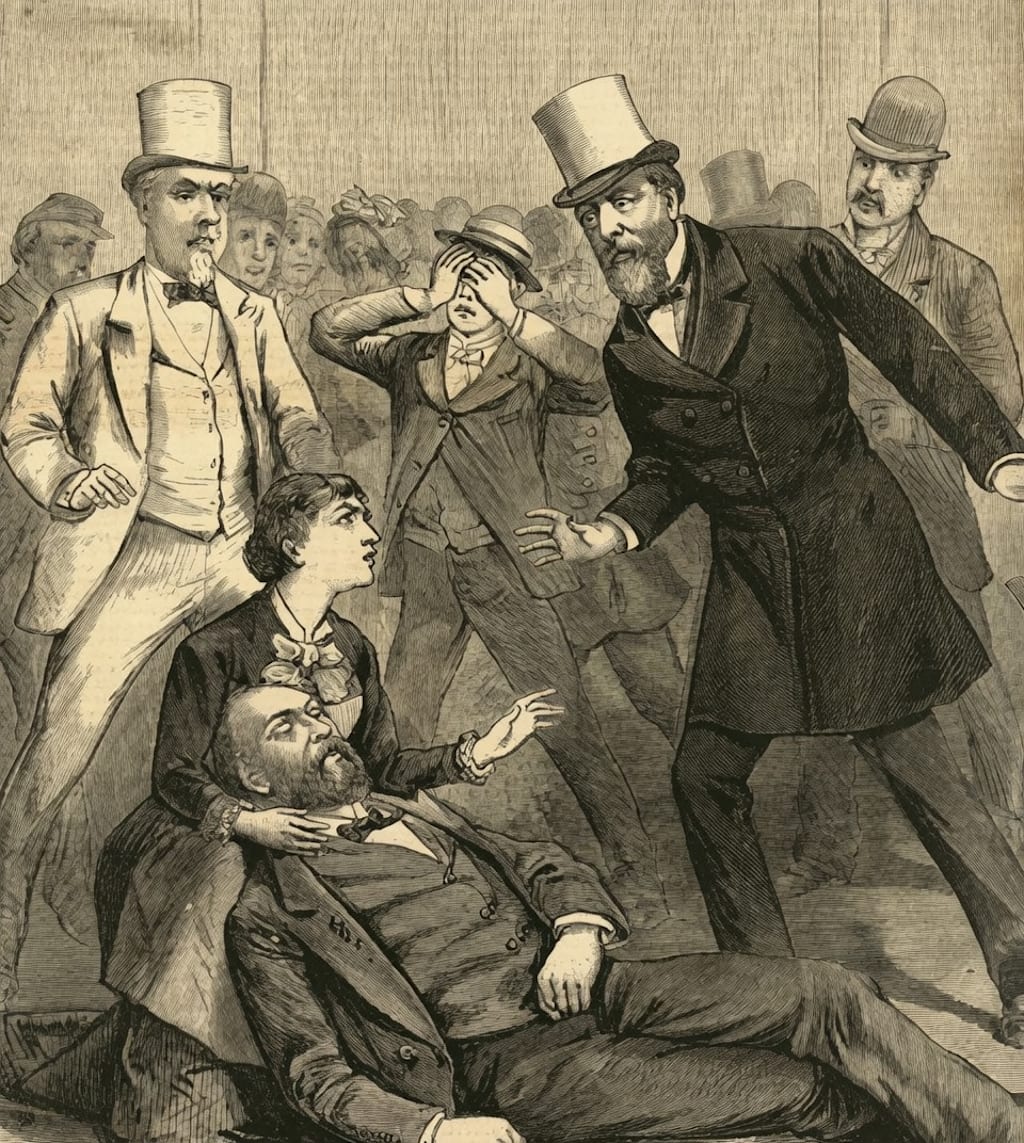
When we talk about presidential assassinations, we think of Lincoln and JFK. Some may also mention the many failed attempts on Trump, but few recall James A. Garfield. Garfield was a huge loss to the political landscape, and had he survived, he could have achieved much in his career. Sadly, a combination of a lone attacker and an inexperienced doctor ensured this was never to be. Garfield’s Rise It was the year 1880, and the US stood at a crossroads. Was it possible to give formerly enslaved people full rights as citizens? The existing patronage system meant that government jobs often went to the most loyal rather than the most qualified. Could this change? It was at the Republican National Convention in June when James Garfield addressed these issues, demanding that the nation honor its promises to all citizens. His speech was eloquent and commanded the respect of hundreds of delegates who cheered loudly. After hearing him, they wanted one more thing from Garfield: they wanted him to be their presidential nominee. Initially, Garfield tried to refuse the nomination, insisting he had no desire to be president, which was exactly the trait that made him an ideal candidate. Once he agreed, Garfield—who had risen from poverty like Abraham Lincoln and performed heroic service on the Union side in the Civil War—became unstoppable. He became the country’s 20th president in November 1880. He promised progress and reform; however, this was not to be. Just four months after his inauguration, he was shot by Charles Guitar. Charles Guitar Guiteau had shown signs of mental instability long before he pulled the trigger. Despite this, records indicate he was never treated or confined, as psychiatry was still in its early stages. Guiteau had a long history of failed ventures. He failed as a lawyer, journalist, and preacher. When he joined a free-love commune, he failed there as well—the women refused him. Yet he always believed God had assigned him a higher purpose. He became obsessed with Garfield after his nomination. Guiteau traveled to New York in summer 1880, convinced that destiny required him to play a crucial role in Garfield’s victory. Guiteau repeatedly visited Garfield’s campaign office until he was allowed to give a brief, rambling speech endorsing him. The Patronage Conflict Garfield strongly opposed the system of giving government posts to political supporters; he believed positions should be earned. Guiteau, however, strongly supported patronage. He expected a reward for his support, ideally an ambassador role to France. Garfield had more pressing concerns than one disappointed office seeker. He had begun an ambitious agenda including strengthening the US Navy, expanding trade with Latin America, and supporting civil rights. He appointed former enslaved reformer Frederick Douglass as Recorder of Deeds for Washington, D.C., making him the first African American to hold a significant federal position. Deluded, Guiteau traveled to Washington and appeared at the White House daily demanding a job. He only met Garfield once, when he handed him a copy of his speech with “Paris Consulship” written on it. His strange behavior led to him being barred from the White House. When told by Secretary of State James Blaine that he would receive no position, he decided on revenge. The Assassination Guiteau was broke and hopeless, so he stayed in a cheap boarding house. While there, he claimed a divine revelation told him Garfield must be removed and replaced by Vice President Chester A. Arthur. He stalked Garfield for weeks. The President was an easy target, as he often walked without protection. This was especially risky, considering Lincoln had been killed only sixteen years earlier. Guiteau finally struck. On July 2, 1881, at the Baltimore and Potomac Railroad Station, he shot Garfield in the back. Medical Treatment Garfield may have survived if not for the actions of one stubborn physician, Dr. Doctor Bliss, who insisted on controlling all treatment. Bliss rejected antiseptic methods and used unsterilized instruments, even inserting his bare finger into the wound. Later, an early metal detector designed by Alexander Graham Bell was used, but interference prevented proper localization of the bullet. Infection had already spread, making survival unlikely even with better care. Death of the President Garfield died of sepsis on September 19, 1881, in a cottage at Elberon, New Jersey. His wife was nearby, recovering from illness. On the day of his death, Guiteau wrote to President Chester A. Arthur claiming his actions were justified and divinely inspired. At trial, the jury took one hour to convict him. He was sentenced to death and hanged on June 30, 1882, still believing he had fulfilled God’s will. Garfield’s Legacy Despite his short presidency, he made a lasting impact. His death sparked strong demands for civil service reform. President Arthur, grieving his predecessor, rejected the spoils system. Congress passed the Pendleton Act in 1883, creating a merit-based system for federal jobs. Historians still wonder what Garfield could have achieved if he had lived. Many believe he would have become one of the most influential presidents in American history. Instead, he remains a tragic figure overshadowed by his assassination.
About the Creator
Hafiz afridi
✍️ Writer | Creator | Dreamer Sharing original stories, ideas, and knowledge with the world. Turning thoughts into words and words into impact.
Enjoyed the story? Support the Creator.
Subscribe for free to receive all their stories in your feed.
Comments
There are no comments for this story
Be the first to respond and start the conversation.