
George Washington: The Man Who Built America
How One Man Shaped a Nation
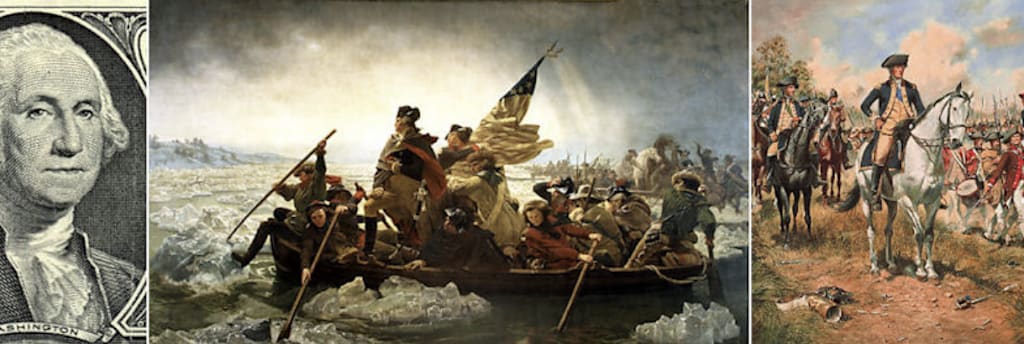
George Washington: The Man Who Built a Nation:
Few people in history have shaped a country the way George Washington shaped the United States. Called the “Father of His Country,” Washington was not only America’s first president, but also the military leader who helped win independence from Britain and the man who voluntarily stepped away from power when he could have ruled indefinitely. His leadership set standards that still influence presidents today.
Early Life: A Boy from Virginia:
George Washington was born on February 22, 1732, in Virginia, then a British colony. He grew up in a wealthy plantation family, but his childhood was far from perfect. His father, Augustine Washington, died when George was only 11 years old, changing the direction of his life. Unlike some wealthy colonial children, Washington never received an elite education in England. Instead, he learned practical skills like mathematics, surveying land, and farming. These skills would later help him become successful and disciplined.
As a teenager, Washington worked as a land surveyor in Virginia. This job was difficult and dangerous, requiring him to travel through wilderness areas and map land accurately. The experience toughened him mentally and physically, teaching him endurance and leadership at a young age. By his early twenties, he had already gained wealth and land ownership.
A Soldier Before a President:
Before Washington became a revolutionary hero, he served in the British military during the French and Indian War. This conflict became his first major test as a military leader. Though he made mistakes early in his career, including military defeats, the war taught him valuable lessons about leadership, logistics, and survival. During battles, Washington became known for courage under fire. In one battle, bullets reportedly passed through his coat while he remained unharmed, helping build a reputation that he seemed almost impossible to kill.
In 1759, Washington married Martha Washington, a wealthy widow. Their marriage strengthened his financial position and social influence. Although the couple never had biological children together, Washington helped raise Martha’s children and later grandchildren. The couple built their life at Mount Vernon, a plantation that Washington constantly improved and expanded. Farming remained one of his lifelong passions.
The American Revolution:
By the 1770s, tension between the American colonies and Britain was exploding. Colonists were angry over taxes and British control. In 1775, as rebellion turned into war, Washington was chosen to lead the Continental Army during the American Revolution. He was not selected because he was the best battlefield strategist, but because people trusted him and believed he could unite the colonies.
The Revolutionary War nearly destroyed Washington’s army many times. Soldiers lacked food, shoes, weapons, and proper clothing. Harsh winters pushed morale to the breaking point, especially during the brutal encampment at Valley Forge. Yet Washington refused to surrender. He inspired loyalty among exhausted troops and constantly adapted his strategies. One of his boldest moments came in 1776 when he crossed the icy Delaware River and launched a surprise attack on Hessian soldiers at Trenton, giving Americans much-needed hope.
Another overlooked achievement was Washington’s handling of disease. After surviving smallpox as a younger man, he understood how dangerous outbreaks could be. He ordered widespread inoculation among troops, a decision many historians believe helped save the Continental Army from collapse.
In 1781, with French military assistance, Washington helped secure victory at Yorktown, effectively ending British hopes of winning the war. America had achieved independence. Yet perhaps Washington’s greatest act came afterward: instead of taking total control, he resigned his military command and returned home. At a time when many expected victorious generals to become kings or dictators, Washington willingly gave up power. This shocked much of the world.
America’s First President:
In 1789, Washington became the first president of the United States and remains the only president unanimously elected by the Electoral College. At the time, America was fragile and uncertain. No one knew whether democracy would survive. Washington understood that every decision he made would create a model for future presidents.
As president, he established traditions that still exist today. He formed a cabinet of advisors, strengthened the federal government, and worked to stabilize the country’s economy. His administration also faced serious tests, including political disagreements and foreign conflicts between Britain and France. Washington believed America should avoid unnecessary wars and foreign entanglements, promoting neutrality whenever possible.
Washington served two terms but refused a third, creating the tradition of peaceful transfers of power. This choice became one of the most important precedents in American politics and lasted until the mid-20th century, when presidential term limits were officially added to the Constitution.
Contradictions and Controversy:
Washington’s legacy is admired, but it is also complicated. He owned enslaved people at Mount Vernon, reflecting the brutal reality of plantation life in Virginia. Historians continue debating how to understand this contradiction: a man who fought for liberty while participating in slavery. Near the end of his life, Washington privately grew uncomfortable with slavery and became the only Founding Father to free enslaved people he personally owned through his will. However, many enslaved workers tied to Martha Washington’s family remained unfree.
Many myths also surround Washington. Contrary to popular belief, he never chopped down a cherry tree, and his famous dentures were not wooden. They were made from materials like ivory, metal, and human teeth.
Final Years and Death:
After leaving office in 1797, Washington retired to Mount Vernon, hoping for peace and quiet. He focused on farming and managing his estate. But in December 1799, after riding through harsh weather, he became seriously ill with a throat infection. Doctors attempted treatments common at the time, including bloodletting, but nothing worked. Washington died on December 14, 1799, at age 67. His reported final words were simple: “’Tis well.”
Legacy:
George Washington’s greatest achievement may not have been winning wars or becoming president—it may have been showing restraint. He proved that power could be surrendered peacefully and that leadership meant service, not control. Cities, monuments, schools, and even the U.S. capital bear his name. More than 225 years after his death, Washington remains one of the most important and debated figures in American history.
About the Creator
Enjoyed the story? Support the Creator.
Subscribe for free to receive all their stories in your feed.
Comments
There are no comments for this story
Be the first to respond and start the conversation.