
The world saw a perfect princess smiling publicly…
While hidden loneliness quietly followed her through palace walls every single day.

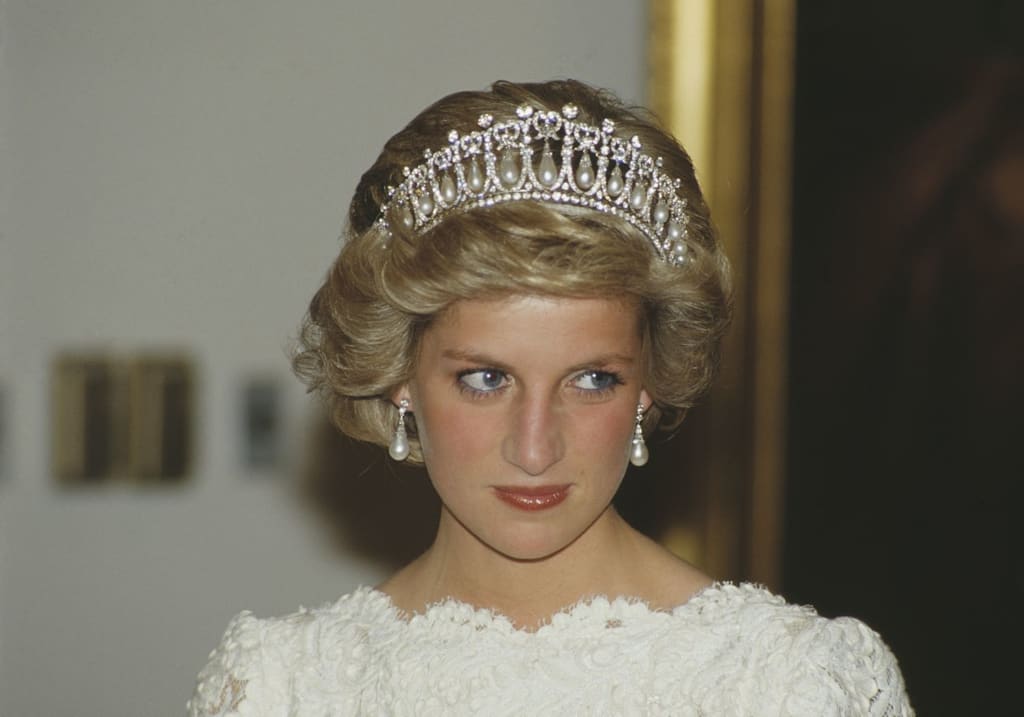
Diana, Princess of Wales entered the British royal family as a shy young woman who quickly became the most photographed princess on Earth. Her beauty, elegance, and natural warmth captured global attention almost instantly. Crowds gathered everywhere she traveled, believing they were witnessing a modern fairytale unfolding before their eyes. Yet behind the dazzling jewels, royal gowns, and palace ceremonies existed a woman facing enormous pressure inside one of the world’s most demanding institutions.
As Princess of Wales, Diana transformed royal public life in ways few had imagined possible. Unlike many traditional royals of earlier generations, she connected emotionally with ordinary people. She hugged children, comforted hospital patients, and openly supported humanitarian causes during a period when royalty was often expected to remain distant and formal. Her visits to hospitals, shelters, and charity centers created powerful images that reshaped how the public viewed the monarchy itself.
Despite the admiration surrounding her, Diana’s private struggles often became headline news across the world. The intense media attention followed her constantly, turning nearly every aspect of her life into international discussion. Royal tensions, public rumors, and personal heartbreak created an atmosphere where even simple moments became global stories overnight. Yet through the pressure, Diana maintained a graceful public image that made millions continue supporting her with deep affection and sympathy.
Her influence extended far beyond royal fashion and glamour. Diana became a global humanitarian symbol through campaigns involving homelessness awareness, children’s welfare, and landmine victims. One of her most historic moments came when she publicly met AIDS patients without fear during a time of widespread misunderstanding surrounding the illness. That single gesture changed perceptions worldwide and showed people a more compassionate side of royal influence.
Even after her tragic passing in 1997, Princess Diana’s legacy never faded. New generations continue discovering her story through photographs, documentaries, interviews, and historic moments remembered around the world. For many people, Diana represented more than royalty — she symbolized kindness, vulnerability, elegance, and emotional strength hidden behind palace walls. And decades later, the image of the “People’s Princess” still remains one of the most unforgettable in modern history.
A diamond tiara, heavy with pearls and history, moves from queen to queen—carrying memory, identity, and the quiet continuity of monarchy.
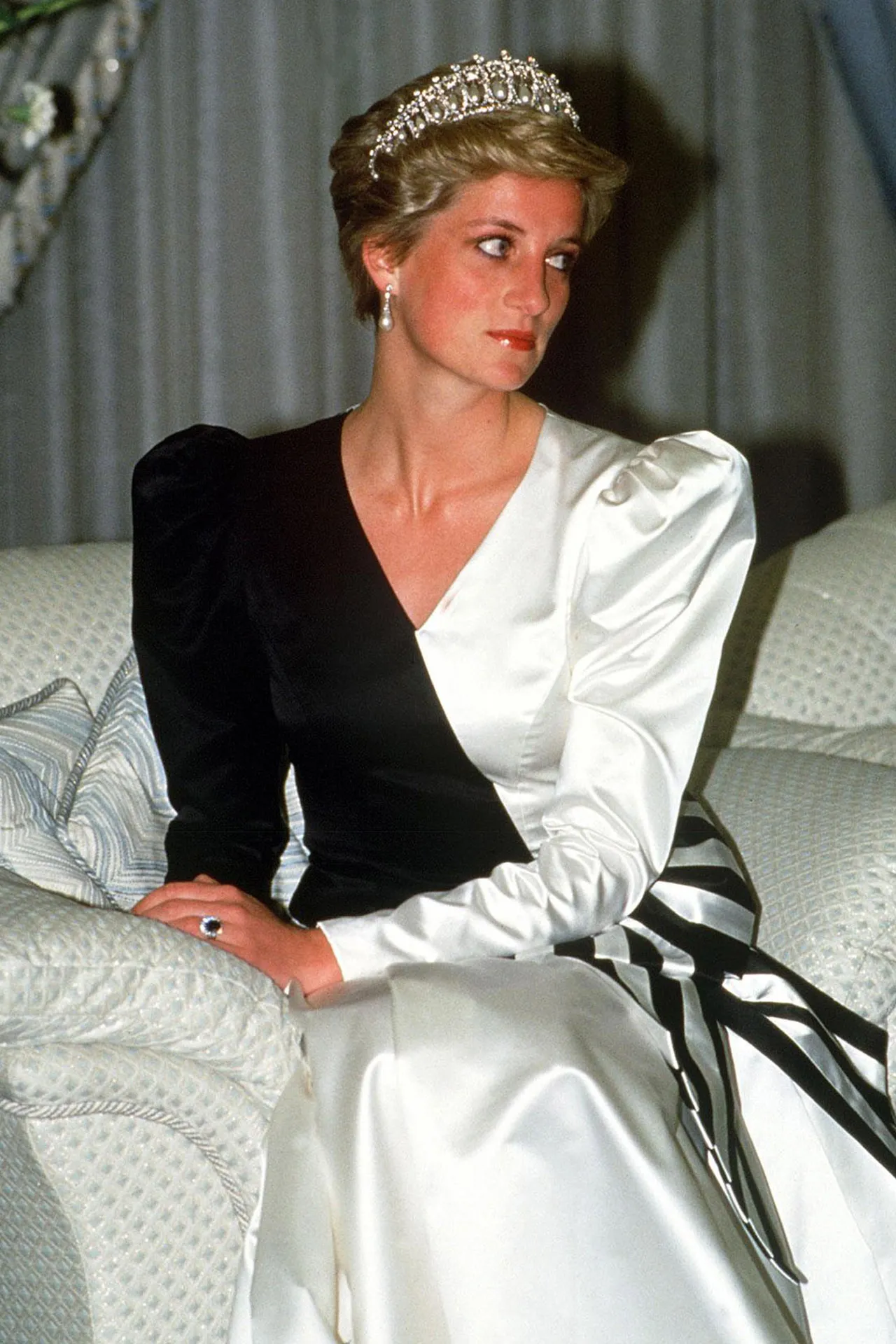
Cambridge Lover’s Knot Tiara, formally known as Queen Mary’s Lover’s Knot Tiara, was created in 1913–14 by the royal jeweller Garrard for Mary of Teck. Its design was inspired by a tiara owned by her grandmother, Princess Augusta of Hesse, Duchess of Cambridge, linking it deliberately to earlier royal lineage. Constructed from diamonds already in the royal collection and set with suspended natural pearls, it became one of the most symbolically layered pieces in the Crown Jewels’ modern history.
The design is distinctive: diamond-set “lover’s knot” bows support a fringe of nineteen pearl drops, creating a balance between romantic symbolism and formal regalia. In its conception, the tiara was not merely decorative but genealogical—each element reinforcing continuity between generations of royal women and their inherited roles within the monarchy.
After Queen Mary’s death in 1953, the tiara passed to Elizabeth II, who wore it during the early decades of her reign before lending it to Diana, Princess of Wales following her marriage in 1981. Although Diana ultimately chose a different tiara for her wedding, the Lover’s Knot became one of her most recognizable pieces at state occasions, where it was frequently paired with pearls and formal gowns.
For Diana, the tiara carried both aesthetic impact and physical challenge due to its weight, yet it became part of her public image during diplomatic events and state banquets. Its visual association with her helped embed the piece in global memory, linking it permanently with a modern redefinition of royal visibility and style.
After her death, the tiara returned to the royal collection and remained largely unseen for years until it reappeared on Catherine, Princess of Wales in 2015. Its reemergence marked a symbolic transition between generations, connecting different eras of royal womanhood through a single object of enduring craftsmanship.
Today, the Cambridge Lover’s Knot Tiara stands as more than a jewel. It is a material thread through time—linking queens, princesses, and changing public roles—reflecting how monarchy often preserves continuity not only through institutions, but through objects that carry layered memory across generations.
I hope you enjoy this story, and don't forget to subscribe.
Best regards,
Mina Shohdy
About the Creator
Mina Shohdy
Here I take you on a journey through many things such as ancient and modern history, news of archaeological discoveries, and travel.
Enjoyed the story? Support the Creator.
Subscribe for free to receive all their stories in your feed.
Comments
There are no comments for this story
Be the first to respond and start the conversation.