
From Allies to Enemies: The Real Reason Behind the US–Iran War
A story that began in 1953 and grew into one of the most dangerous rivalries in modern history.

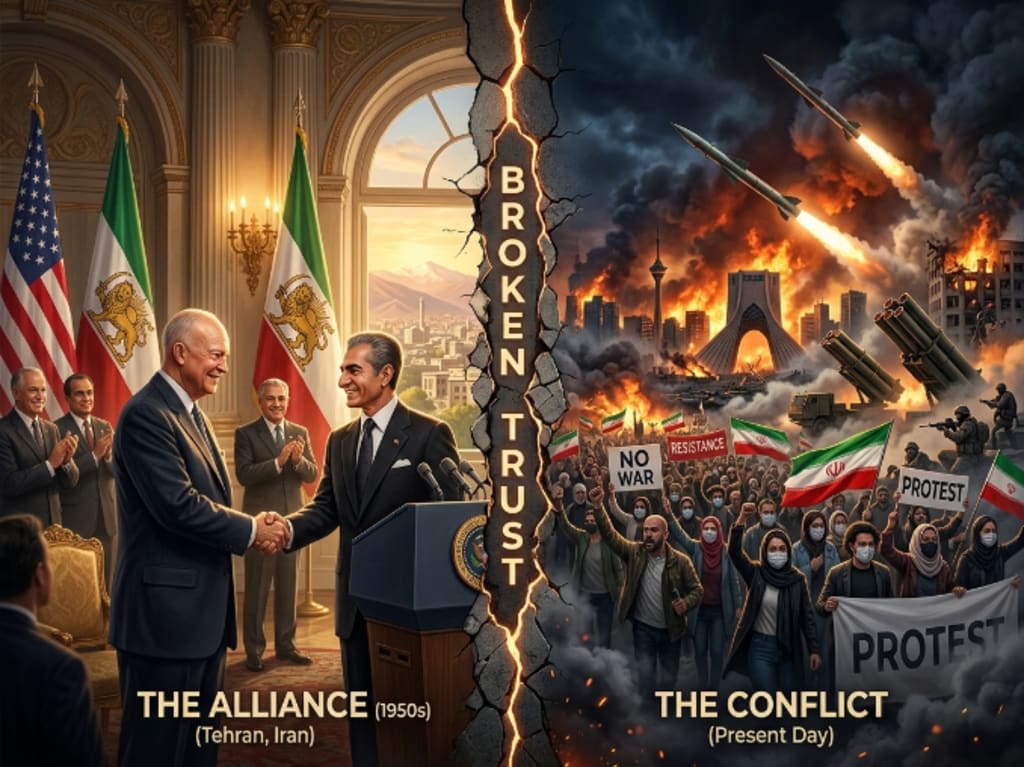
1. When They Were Friends
There was a time when the United States and Iran were not enemies, but allies. Iran was seen as a key partner in the Middle East, and the relationship between the two countries was built on shared interests, especially in oil and regional stability. The U.S. supported Iran economically and politically, while Iran provided strategic value in a tense Cold War world. But beneath this cooperation, hidden tensions were quietly growing.
2. The Year That Changed Everything (1953)
In 1953, everything changed. Iran’s democratically elected Prime Minister, Mohammad Mossadegh, made a bold decision—he nationalized Iran’s oil industry, which had been controlled largely by foreign powers. This move threatened Western economic interests. In response, the United States and the United Kingdom supported a coup to remove him from power and restore the Shah.
This moment planted the first deep seed of mistrust.
3. A King Backed by Power
After the coup, the Shah of Iran ruled with strong support from the United States. To the U.S., he was a reliable ally. But for many Iranians, he became a symbol of foreign control and oppression. His rule was marked by modernization—but also by strict control and fear. While the outside world saw stability, inside Iran, anger was slowly building.
4. The Growing Anger
Years passed, but resentment did not fade. Many Iranians believed their democracy had been taken away. The memory of foreign interference became a powerful force in shaping public opinion. This wasn’t just politics anymore—it was personal. The anger wasn’t loud at first, but it was deep, and it was growing stronger with time.
5. The Islamic Revolution (1979)
In 1979, that anger exploded. The Iranian Revolution overthrew the Shah and replaced him with a new Islamic government. This moment completely changed Iran’s relationship with the United States. The new leadership rejected Western influence and openly opposed the U.S., turning former allies into bitter enemies.
6. The Hostage Crisis
Soon after the revolution, Iranian students stormed the U.S. Embassy in Tehran and took American diplomats hostage for 444 days. This event shocked the world and destroyed any remaining trust between the two nations.
From that point on, the relationship was no longer strained—it was broken.
7. Years of Tension and Sanctions
Over the decades, tensions continued to rise. The United States imposed economic sanctions on Iran, while Iran expanded its influence across the Middle East. Both countries accused each other of aggression, interference, and hostility. There was no direct war, but the conflict continued in indirect ways—through politics, economics, and regional struggles.
8. The Nuclear Fear
One of the biggest sources of tension became Iran’s nuclear program. The U.S. and its allies feared that Iran could develop nuclear weapons, while Iran insisted its program was for peaceful purposes. This disagreement brought the two countries dangerously close to conflict multiple times, increasing global fear and uncertainty.
9. A Conflict Decades in the Making
The US–Iran conflict was not caused by a single event. It was built over decades—through betrayal, revolution, mistrust, and power struggles. What started in 1953 as a political decision grew into one of the longest and most dangerous rivalries in modern history.
10. More Than Just Politics
In the end, this conflict is more than just politics or war. It is a story of history, identity, and the consequences of past actions. The choices made decades ago continue to shape the present. And as the world watches, one question remains and the Raza sha Pehlevi become die in the America and this day start govt of ayatollah hominy : could things have been different if that first decision had never been made?
About the Creator
Muhammad Zeeshan
I’m Muhammad Zeeshan, a curious student who loves science, geology, and exploring how the Earth works. I write to share ideas, stories, and knowledge that inspire thinking and discovery.
Enjoyed the story? Support the Creator.
Subscribe for free to receive all their stories in your feed.
Comments
There are no comments for this story
Be the first to respond and start the conversation.