
Superpower Strategy
The Driving Forces Behind U.S. Foreign Policy and Global Dominance

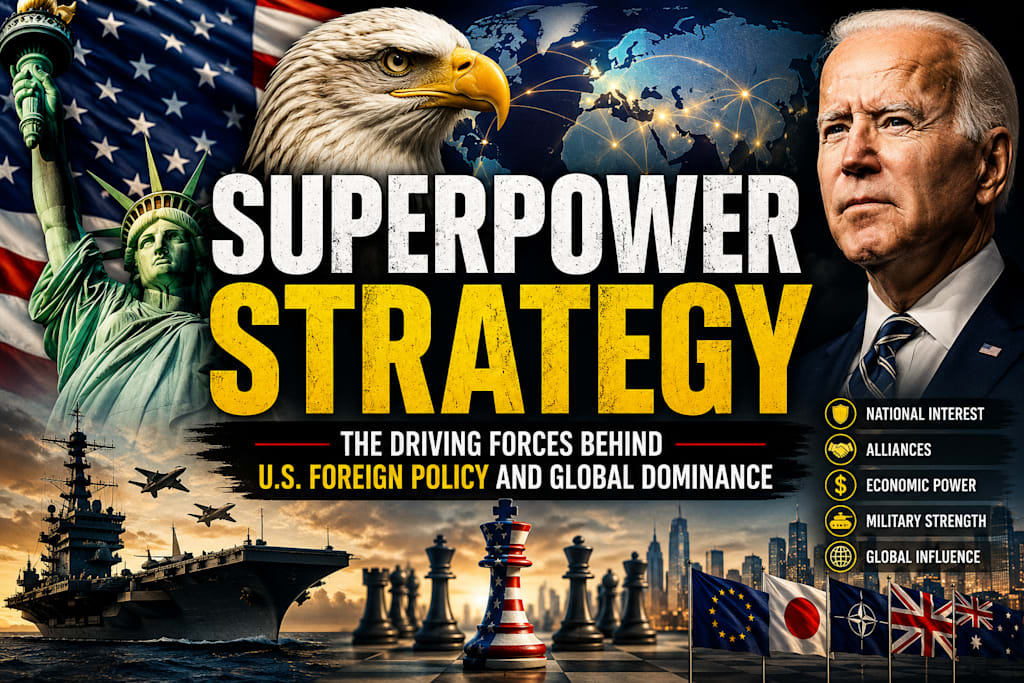
1. Introduction: The Power of a Superpower
The United States is one of the most powerful countries in the world. It has strong influence over global politics, economy, and security. Its foreign policy is not random; it is carefully planned to protect its interests and keep its power strong. Every action, whether it is making alliances or taking part in conflicts, follows a strategy. This strategy helps the U.S. stay ahead and shape the world according to its goals.
2. Historical Background: From Isolation to Leadership
In the early years, the United States followed a policy of isolation. It avoided getting involved in global conflicts. However, after World War I and especially World War II, this changed. The U.S. became more active in global affairs. During the Cold War, it worked to stop the spread of communism. This period made the U.S. a global leader and changed its role in the world forever.
3. National Interest: The Main Goal
The most important factor behind U.S. foreign policy is national interest. This means protecting the country’s safety, economy, and political system. Every decision is based on what is best for the United States. Whether it is helping another country or putting sanctions on one, the main aim is always to benefit the U.S. National interest is the base of all foreign policy actions.
4. Military Strength: Power and Protection
The United States has one of the strongest militaries in the world. It has bases in many countries and advanced weapons. Military power helps the U.S. protect itself and its allies. It also sends a message to other countries. Sometimes, the U.S. uses military force to achieve its goals, and sometimes just the presence of its military is enough to influence decisions.
5. Economic Power: Influence Through Money
Economic strength is another important tool of U.S. foreign policy. The United States is one of the largest economies in the world. It uses trade, aid, and sanctions to influence other countries. For example, it can give financial help to friendly countries or restrict trade with its rivals. This economic power allows the U.S. to control situations without using force.
6. Diplomacy and Alliances: Working Together
Diplomacy is a key part of foreign policy. The U.S. builds relationships with many countries through agreements and partnerships. Alliances help share responsibilities and increase strength. These partnerships also create trust and stability. Through diplomacy, the United States can solve problems, avoid conflicts, and maintain its leadership position in the world.
7. Ideology and Values: Spreading Ideas
The United States often promotes values like democracy, freedom, and human rights. These ideas are an important part of its foreign policy. The U.S. believes that spreading these values can create a better and more stable world. However, some people say that these values are not always applied equally. Still, they play a big role in shaping U.S. actions abroad.
8. Criticism and Challenges: Facing Questions
U.S. foreign policy is not without criticism. Some people believe that it focuses too much on control and power. Others say that it sometimes creates conflict instead of peace. There are also questions about double standards, where the U.S. acts differently in similar situations. These criticisms show that foreign policy is complex and not always perfect.
9. Rising Powers: New Global Competition
Today, the world is changing. Countries like China are becoming stronger and more influential. This creates new competition for the United States. These rising powers challenge U.S. dominance in trade, technology, and military strength. As a result, the U.S. must adjust its strategies to deal with this new global environment.
10. Conclusion: The Future of U.S. Strategy
In conclusion, U.S. foreign policy is based on a mix of military strength, economic power, diplomacy, and values. Its main goal is to protect national interests and maintain global influence. As the world continues to change, the United States will need to adapt its strategies. The future of its superpower status depends on how well it can respond to new challenges.
About the Creator
Muhammad Zeeshan
I’m Muhammad Zeeshan, a curious student who loves science, geology, and exploring how the Earth works. I write to share ideas, stories, and knowledge that inspire thinking and discovery.
Enjoyed the story? Support the Creator.
Subscribe for free to receive all their stories in your feed.
Comments
There are no comments for this story
Be the first to respond and start the conversation.