
What Happened to Black Wall Street?
The American Nightmare America Tried to Bury

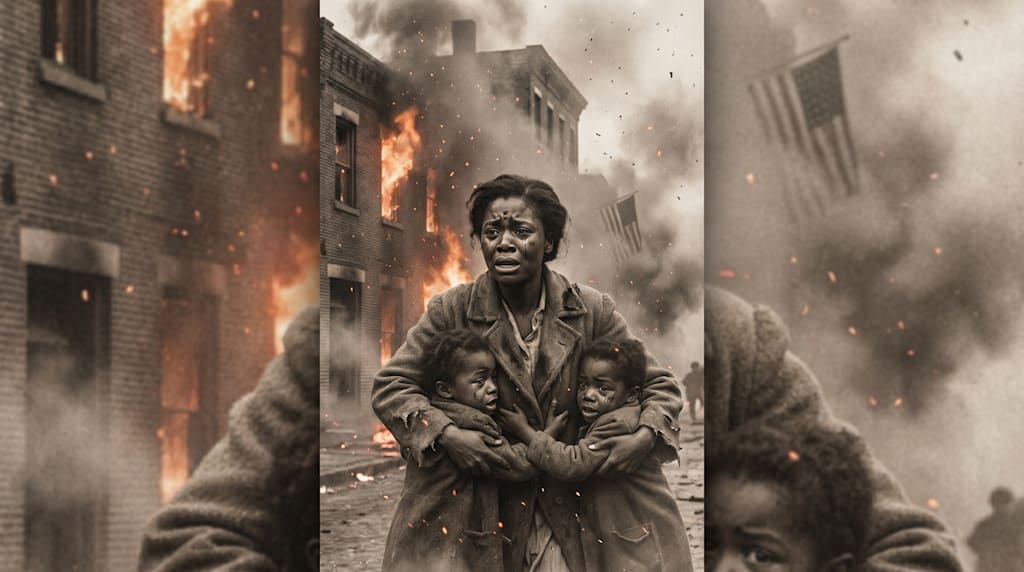
On May 31, 1921, Tulsa, Oklahoma became hell on earth. Not by accident. Not by nature. By pure, deliberate hatred.
Imagine it. A thriving Black community called Greenwood. Doctors, lawyers, teachers, and business owners. Beautiful homes. A place where Black children dreamed big because they saw success all around them. They called it Black Wall Street—a beacon of hope in a country still drowning in the poison of Jim Crow.
Then, in less than 24 hours, it was gone.
The spark was small and ugly. A young Black man named Dick Rowland was accused of assaulting a white woman in an elevator. The accusation was shaky at best, but the Tulsa Tribune ran inflammatory headlines. Whispers turned to roars. A white mob gathered at the courthouse, demanding blood.
Black men, many of them World War I veterans, came to protect Rowland. They understood what a lynch mob looked like; they had seen it before. What happened next was not a riot. It was a massacre.
Hundreds of armed white men, some even deputized by the city, stormed into Greenwood. They carried rifles, machine guns, and torches. Airplanes flew overhead dropping firebombs. Yes—airplanes. In America. In 1921.
Homes were burned. Businesses were looted and destroyed. Families were dragged into the streets. Men, women, and children were shot down like animals. Some were forced to dig graves for their own neighbors before being executed.
Sarah, a survivor whose words still haunt me, remembered hiding in a closet with her baby sister. She heard her father begging for mercy. She heard the gunshot that silenced him forever. She was only six years old.
They killed anywhere from 100 to 300 people. The exact number remains unknown because many bodies were thrown into the Arkansas River or buried in unmarked graves. Over 1,000 homes and businesses were destroyed. Ten thousand Black residents were left homeless, many rounded up and held in internment camps.
Black Wall Street—reduced to smoking ashes.
What makes this day so dark is not just the horror, but the silence that followed. For decades, Tulsa buried the truth. Textbooks never mentioned it. Newspapers erased it. White leaders called it a “riot,” as if both sides were equally to blame. Black survivors were threatened into silence. Insurance companies refused to pay claims. Rebuilding was deliberately blocked.
Generations grew up never knowing that one of the worst incidents of racial violence in American history happened on our own soil—not during slavery, not during the Civil War, but in the “modern” 20th century.
Think about that. While America told itself stories of progress and exceptionalism, an entire prosperous Black community was wiped from the map. Dreams turned to dust. Futures were stolen. Children watched their parents murdered in front of them.
The emotional weight is crushing. Fathers who worked their whole lives to build something beautiful for their children saw it burned in hours. Mothers clutched babies while running through streets filled with bullets and flames. Young men who fought for America in Europe returned home only to be hunted by their own countrymen.
And the nation looked away.
Even today, many Americans have never heard the name Greenwood. They don’t know that planes dropped bombs on U.S. citizens. They don’t know that a city was destroyed not by outsiders, but by its own people driven by pure racial hatred. This wasn’t just violence; it was envy and fear wrapped in white supremacy. Greenwood’s success threatened the lie that Black people couldn’t thrive. So, they destroyed the proof.
Yet, the human spirit refuses to die completely. Some survivors rebuilt quietly. Some passed down the stories in whispers around kitchen tables. In the 1990s and 2000s, courageous voices began demanding the truth. In 2021, one hundred years later, the world finally started paying attention.
But for those who lived it, the scars never healed. Every year, on May 31st, the wind in Tulsa seems to carry faint echoes—screams, gunshots, prayers, and the crackling of flames that consumed an entire community’s hope in a single day.
This is one of the darkest days in American history. Not because it happened, but because for so long, we pretended it didn’t.
We owe it to the dead, to the survivors, and to every generation that came after to remember. To say their names. To honor their dreams. To confront the hatred that destroyed them. Forgetting the darkest days doesn’t make us better; it only makes the darkness stronger.
Black Wall Street burned in 1921, but the truth is finally rising from the ashes. Will we have the courage to face it?
About the Creator
Samantha
Samantha | Writer
History, culture & real-world stories
Enjoyed the story? Support the Creator.
Subscribe for free to receive all their stories in your feed.
Comments
There are no comments for this story
Be the first to respond and start the conversation.