Discoveries
The most detailed pictures of Egyptian mummies ever seen are taken by scientists using a state-of-the-art CT scanner.
In addition to revealing previously undiscovered structural characteristics, high-resolution scans of ancient Egyptian mummy parts have reclassified one bundle that had been mistakenly labelled as an adult human foot.
By Francis Dami5 months ago in History
What Really Happened to the Library of Alexandria: The Answer Nobody Wants
There was no fire. Not one, anyway. There was no single night, no single villain, and no single catastrophic moment that erased everything. The story you know — Julius Caesar, the flames, the irreplaceable scrolls turning to ash — is real. It just isn't the whole story.
By Chronicle and Void5 months ago in History
Uncovering the Mysteries of a Roman Free City: Aphrodisias
One of the most remarkable archaeological sites in the area is Aphrodisias, which is tucked away in the Meander River valley in southwest Turkey. From the second century BC until the sixth century AD, this city, named after Aphrodite, prospered and left behind a wealth of archaeological artefacts.
By Francis Dami5 months ago in History
World War 3: The Conflict That Could Reshape the Future
World War 3: The Conflict That Could Reshape the Future The question of when and where World War 3 might occur has become one of the most debated topics in global politics. While no one can predict the exact timing, increasing tensions between major world powers, regional conflicts, and military build-ups are creating conditions that many experts believe could lead to a global conflict. Unlike previous wars, World War 3 would not be limited to one continent — it would likely involve multiple regions simultaneously and include cyber warfare, economic battles, and advanced military technology.
By Wings of Time 5 months ago in History
The Great Pyramid Algorithm: Integrated Edge Ramps Are Suggested by a New Study
According to recent computational research, a complex "Integrated Edge-Ramp" (IER) system may have been used in the construction of the Great Pyramid of Giza, perhaps resolving a 4,500-year-old architectural mystery. This model proposes a multi-channel system of ramps constructed directly into the pyramid's edges, challenging conventional notions of gigantic external ramps or intricate interior spirals. For the first time, the numbers truly add up.
By Francis Dami5 months ago in History
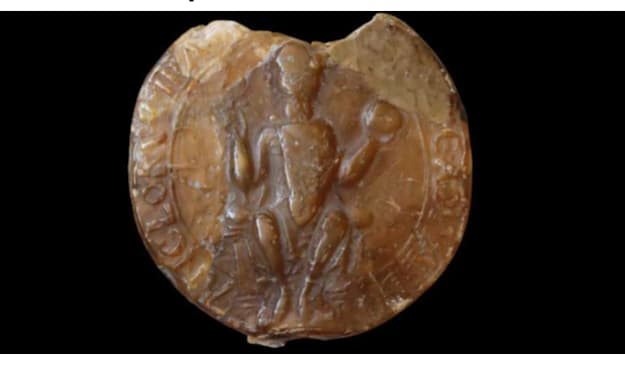
Edward the Confessor's Lost Seal Discovered After 40 Years
More than 40 years after it was thought to be lost, an Anglo-Saxon seal from the 11th century that belonged to King Edward the Confessor has been suddenly found in Paris. After being kept in the Archives Nationales for almost 200 years, the wax impression known as the "Saint-Denis seal" disappeared in the 1980s without any official explanation.
By Francis Dami5 months ago in History
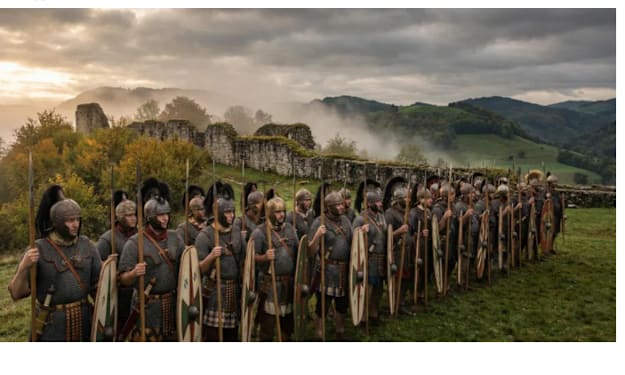
A historian discovers a secret Helvetian army functioning within the Roman Empire.
According to a recent research by historian John Ma of Columbia University, there was indications of a covert army functioning inside the Roman Empire in the first century AD. The study, which was published in the Journal of Roman Studies, casts doubt on the conventional wisdom that the Roman Empire totally absorbed and ruled over every society it subjugated.
By Francis Dami5 months ago in History
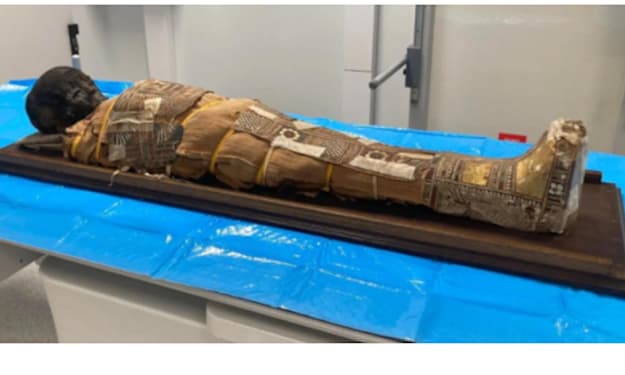
On the chest of an Egyptian child mummy, a hidden mystery object was found.
While studying a 2,000-year-old Egyptian mummy, Polish archaeologists uncovered an amazing finding. Intriguing doubts concerning the boy's identity and prehistoric burial customs were raised when scientists found a hidden object resting on his chest during the first-ever thorough scientific examination of the ancient remains. The discovery is already changing our understanding of Ptolemaic Egyptian funeral traditions.
By Francis Dami5 months ago in History
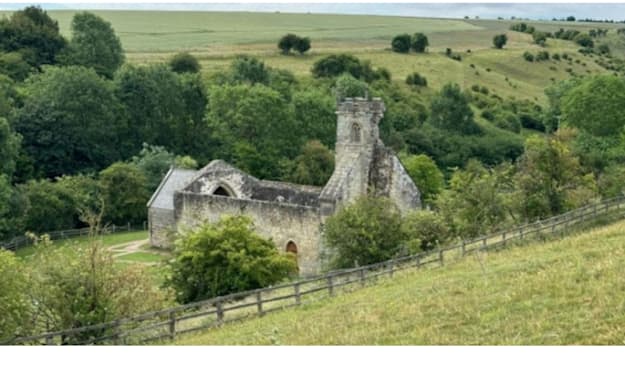
The Key to Long-Term Economic Success May Be in a Lost Mediaeval Village
According to recent research, the "rubbish" left behind in a defunct mediaeval village in a remote part of Yorkshire may provide insights into how cultures attain sustained "green" success. Wharram Percy, a once-thriving village on a steep chalk hillside, is reduced to a grassy mound and a destroyed stone church.
By Francis Dami5 months ago in History