
World War 3: The Conflict That Could Reshape the Future
Rising Tensions, Global Alliances, and the Fear of a New World War

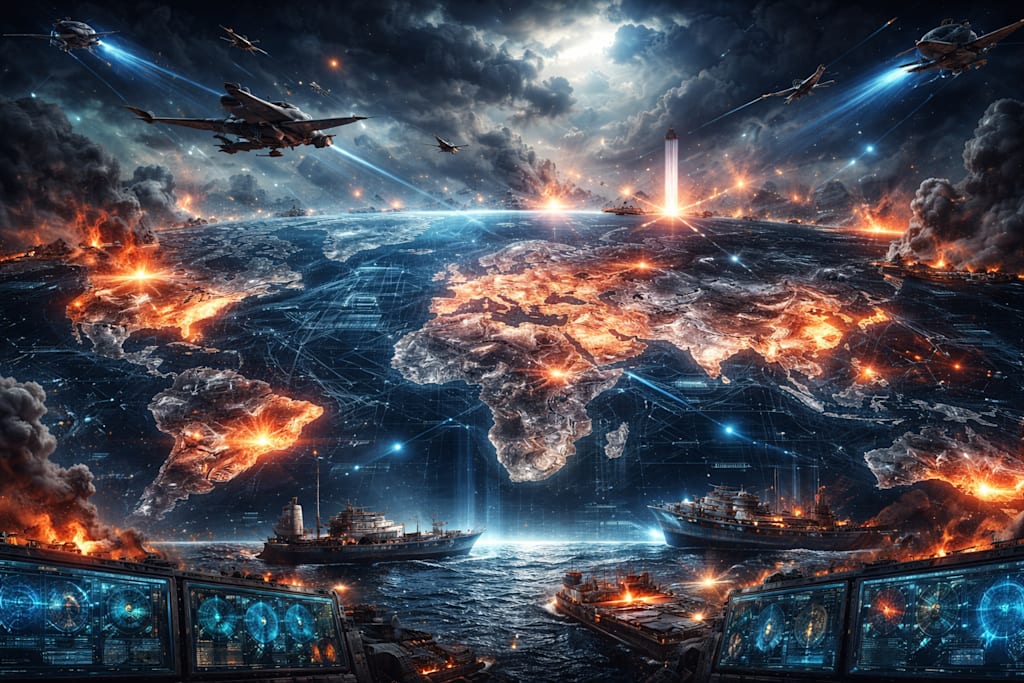
World War 3: The Conflict That Could Reshape the Future
The question of when and where World War 3 might occur has become one of the most debated topics in global politics. While no one can predict the exact timing, increasing tensions between major world powers, regional conflicts, and military build-ups are creating conditions that many experts believe could lead to a global conflict. Unlike previous wars, World War 3 would not be limited to one continent — it would likely involve multiple regions simultaneously and include cyber warfare, economic battles, and advanced military technology.
Where Could World War 3 Start?
Several hotspots around the world are often discussed as potential flashpoints for World War 3. These regions are already experiencing political tension, military competition, or territorial disputes.
1. Middle East – Iran, Israel, and the Strait of Hormuz
The Middle East remains one of the most volatile regions. Rising tensions between Iran and Israel, combined with U.S. involvement, could trigger a larger conflict. The Strait of Hormuz, through which nearly 20% of global oil passes, is especially critical. If this route is blocked, global oil prices would skyrocket, causing economic instability worldwide. Countries dependent on oil imports, including China, India, and European nations, could be drawn into the conflict.
Additionally, the Bab-al-Mandeb Strait near Yemen is another strategic chokepoint. If both routes are disrupted, global trade could collapse, creating pressure for military intervention by major powers.
2. Asia – China, Taiwan, and the South China Sea
Another major flashpoint is East Asia. Tensions between China and Taiwan have increased significantly in recent years. China considers Taiwan part of its territory, while Taiwan seeks independence. If China attempts to take Taiwan by force, the United States and its allies such as Japan and South Korea could become involved.
The South China Sea is also disputed by several countries including Vietnam, the Philippines, and Malaysia. The presence of valuable resources and strategic shipping routes makes this region highly sensitive.
3. Europe – Russia and NATO
The conflict between Russia and Western nations remains a major concern. Tensions between Russia and NATO countries have increased due to military expansion and political disagreements. If a direct confrontation occurs between Russia and a NATO member, it could trigger a chain reaction, drawing in multiple countries.
Eastern Europe, particularly regions near Ukraine and the Baltic states, are often considered high-risk areas for escalation.
4. South Asia – India and Pakistan
South Asia is another region where tensions could escalate quickly. India and Pakistan both possess nuclear weapons, and disputes over Kashmir have caused multiple conflicts in the past. Any major military confrontation could draw in global powers such as China, the United States, and Russia.
Because of nuclear capability, even a small conflict in this region could have global consequences.
When Could World War 3 Happen?
There is no fixed timeline for World War 3, but experts suggest the next 5–15 years could be critical. Several factors are contributing to this possibility:
- Rapid military modernization
- Increasing cyber warfare attacks
- Economic competition between major powers
- Rising nationalism and political instability
- Competition over energy and natural resources
Unlike World War 1 and World War 2, the next world war may not start with a single event. Instead, it could begin through multiple small conflicts happening at the same time, eventually growing into a global confrontation.
How World War 3 Would Be Different
World War 3 would be very different from previous wars. It may include:
- Cyber attacks shutting down power grids
- Drone warfare and AI-controlled weapons
- Space warfare involving satellites
- Economic warfare and trade blockades
- Information warfare and digital propaganda
Modern warfare would likely affect civilians directly through internet shutdowns, supply chain disruptions, and economic instability.
Could World War 3 Be Avoided?
Despite rising tensions, many global leaders are working to avoid a large-scale war. Diplomatic negotiations, economic cooperation, and international organizations continue to play important roles in maintaining peace.
However, history shows that wars often start when tensions build over time and one small event triggers a larger conflict. The world today is more connected than ever, meaning any regional conflict could quickly become global.
Conclusion
World War 3 is not inevitable, but the risks are increasing. Potential starting points include the Middle East, East Asia, Eastern Europe, and South Asia. The next global conflict would likely involve advanced technology, cyber warfare, and economic battles, making it more complex and dangerous than previous world wars.
The future depends on diplomacy, cooperation, and careful decision-making by global leaders. While no one knows exactly when and where World War 3 might occur, the world must remain prepared and focused on preventing conflict rather than escalating it.
About the Creator
Wings of Time
I'm Wings of Time—a storyteller from Swat, Pakistan. I write immersive, researched tales of war, aviation, and history that bring the past roaring back to life
Enjoyed the story? Support the Creator.
Subscribe for free to receive all their stories in your feed.
Comments
There are no comments for this story
Be the first to respond and start the conversation.