
The Great Pyramid Algorithm: Integrated Edge Ramps Are Suggested by a New Study
A Scalable Heritage Science Instrument

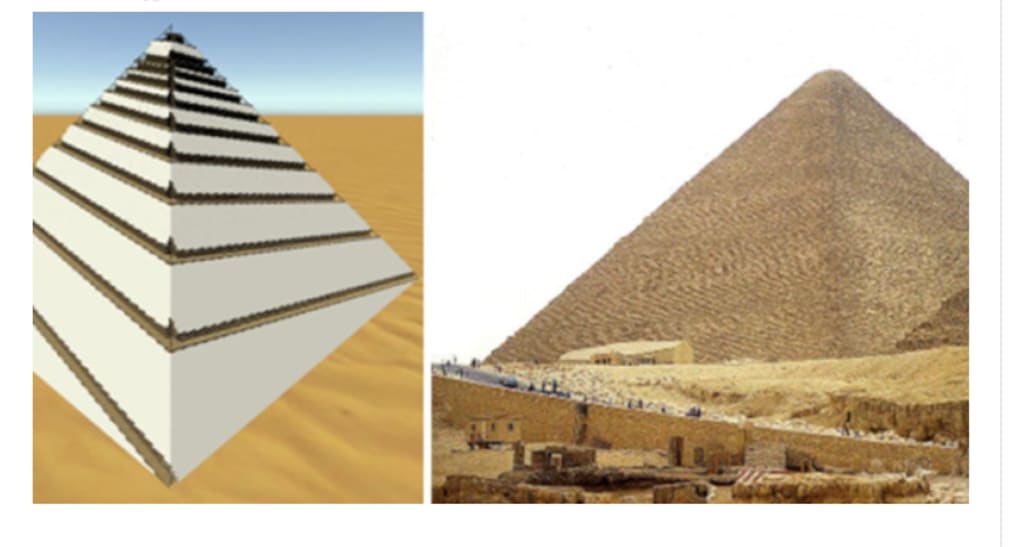
According to recent computational research, a complex "Integrated Edge-Ramp" (IER) system may have been used in the construction of the Great Pyramid of Giza, perhaps resolving a 4,500-year-old architectural mystery. This model proposes a multi-channel system of ramps constructed directly into the pyramid's edges, challenging conventional notions of gigantic external ramps or intricate interior spirals. For the first time, the numbers truly add up.
Khufu's pyramid has been an apparently insurmountable logistical task for decades. Ancient builders would have had to add a block every few minutes to finish the enormous building, which is made up of some 2.3 million blocks spread over a 230-meter base, during the pharaoh's nearly 27-year reign.
Using a 3D computational framework, the new study, which was published in npj Heritage Science, shows how an adaptive, multi-ramp system could have maintained this rapid pace, resulting in a median on-site construction length of 13.8 to 20.6 years, which is in line with historical records.
A Construction Workflow with Multiple Channels
According to the IER model, a helical path is created by removing and then backfilling perimeter courses at the pyramid's edges. The study's independent researcher, Vicente Luis Rosell Roig, started sketching the concept in 2020 after observing discrepancies in accepted theories while viewing a documentary about the pyramid.
After that, he transitioned from hand drawings to a complete 3D programming environment, creating a parametric model that, block by block, replicates the construction process.
Rosell Roig discovered that a single, restrictive approach might be transformed into a coordinated, parallel process by duplicating ramps on each of the pyramid's four faces. Multiple ramps might be used at once in the lower courses, where the workload was primarily distributed horizontally across vast terraces.
The system could easily adjust, adding or changing ramps at low material cost as the structure climbed and the workspace shrank. Archaeological evidence from the Sinki pyramid, which has four simultaneous perpendicular ramps, one for each face, and the Hatnub quarries, where ancient Egyptians carved ramps directly into rock with postholes to distribute load, confirm this strategy.
Overcoming the Granite Problem
Explaining how the enormous granite beams, which weighed between 50 and 80 tonnes, were moved to the King's Chamber is one of the biggest challenges facing any Great Pyramid building hypothesis. In order to overcome this, the computational framework suggests a terrace-to-terrace transportation strategy that makes use of small ramps that can be disassembled and reused.
To move these megaliths, short, reusable ramps with wooden bollards for capstan control could have been built on the large lower terraces. According to the calculations, there was enough room on these terraces for the specialised crews required for the granite blocks without interfering with the regular flow of limestone blocks.
In line with the 20–27 year building window the model generates, evidence from the Wadi al-Jarf papyri—the oldest known papyri in the world—confirms that pyramid builders transported materials via the Nile and canals.
Conformity to ScanPyramids Findings
The IER model's compatibility with current technological advancements is arguably its most appealing feature. The hypothesised ramp routes' geometry intriguingly matches abnormalities found by the ScanPyramids project, which employed cosmic-ray muons to uncover structural holes.
The North Face Corridor, reported voids, and notches match the model's expected corner turns and ramp slopes. This implies that the IER framework is a model that can produce testable correlations with empirical data from the monument itself rather than just being a theoretical exercise. The extreme wear shown at the pyramid's corners, especially the southeast, may indicate the entry locations where the backfilled construction was most susceptible to block flow.
A Scalable Heritage Science Instrument
This study's ramifications go far beyond the Great Pyramid. Because Rosell Roig's computational framework is entirely parametric, construction hypotheses for other ancient monuments, such as the Khafre, Menkaure, Red, and Bent pyramids, can be tested using it. Other researchers can utilize the tool to verify other engineering assumptions by only changing input factors like slope, design, and location.
The work offers Egyptologists and technologists alike a rigorous, tested tool by making the code and datasets publicly available on Zenodo. It shows that the ancient architects were skilled logisticians using the technology at their disposal to solve complicated issues, changing the paradigm from speculative models to computational optimisation.
In the study's behind-the-paper blog post, Rosell Roig himself pointed out: "The ancient builders were tackling a difficult optimization problem rather than merely moving stones.
About the Creator
Enjoyed the story? Support the Creator.
Subscribe for free to receive all their stories in your feed.
Comments
There are no comments for this story
Be the first to respond and start the conversation.