
Uncovering the Mysteries of a Roman Free City: Aphrodisias
Another Undiscovered Treasure in Turkey: Aphrodisias

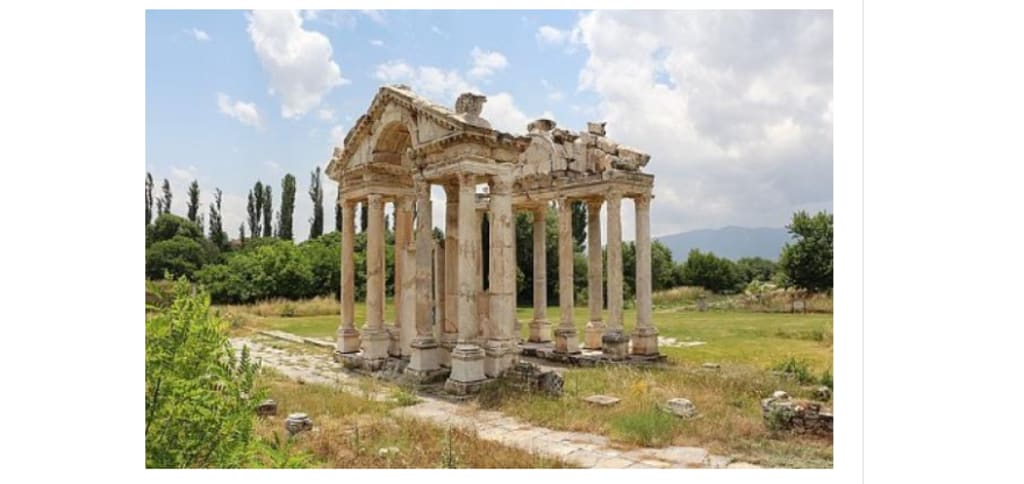
One of the most remarkable archaeological sites in the area is Aphrodisias, which is tucked away in the Meander River valley in southwest Turkey. From the second century BC until the sixth century AD, this city, named after Aphrodite, prospered and left behind a wealth of archaeological artefacts.
Aphrodisias provides an unmatched window into ancient urban life and is renowned for its magnificent marble sculptures and well-preserved monuments. In 2017, UNESCO granted it World Heritage status in recognition of its importance. Aphrodisias enthrals everyone who visits with its magnificent buildings and archaeological discoveries, from the enormous 30,000-seat stadium to the imposing Temple of Aphrodite.
Another Undiscovered Treasure in Turkey: Aphrodisias
Aphrodisias are thought to have existed from prehistoric times. There may have been a human settlement in the region as early as 5000 BC, according to archaeological findings. This would make sense given the area's rich soils and the several water sources that are close by. The site would have been ideal for early agricultural settlements.
The Hellenistic Era
In the second century BC, Aphrodisias became well-known as a planned Hellenistic metropolis. This would have happened in the turbulent aftermath of Alexander the Great's conquests. The city has every characteristic of a Hellenistic city from this era. Its central Argos and grid-patterned streets are examples of the urban design techniques of the time.
The Roman Era
During the Roman era, Aphrodisias flourished. During the Mithridatic Wars in 88 BC, the city supported Rome. This was a smart decision. In 39 BC, Rome honoured the community for its allegiance by making it a "free city."
This gave the city some autonomy and exempted it from taxes. It should come as no surprise that increased growth and wealth resulted from this unique relationship with Rome.
In fact, Aphrodisias was so successful with the Romans that it became the capital of the Roman province of Caria in the first century AD. The city reached its zenith in the second and third centuries AD, a time of enormous construction initiatives and creative accomplishments.
Late Antiquity and the Byzantine Era
Aphrodisias underwent significant transformation in the fourth century AD. Aphrodisias, a pagan city by nature, was compelled to change as Christianity spread throughout the Roman Empire, and these old customs eventually gave way to the new religion.
The Temple of Aphrodite was transformed into a Christian basilica around 500 AD, signifying this religious shift. Despite this religious turmoil, Aphrodisias continued to flourish as a regional hub until the 7th century AD, when a number of factors, including earthquakes, shifting trade routes, and the general decline of urban life in the Byzantine Empire, led to the city's gradual abandonment. By the 12th century, Aphrodisias had mostly faded from prominence, leaving behind the ruins that would later captivate archaeologists and historians.
Aphrodite Temple
The Temple of Aphrodite is perhaps the most well-known structure at Aphrodisias. Constructed in the first century BC, it is located in the center of the city. Built using marble from the area, this 40-column Ionic-style temple honours the city's patron goddess.
The temple's significance persisted throughout the city's conversion to Christianity; in 500 AD, it was transformed into a basilica. Due to this alteration, a large portion of the old building was kept intact, enabling contemporary tourists to enjoy its timeless beauty.
Stadium
Built in the first century AD, Aphrodisias' enormous stadium is arguably its most striking feature. It was one of the biggest and best-preserved stadiums in antiquity, measuring 262 meters (859.58 feet) in length and 59 meters (193.57 feet) in breadth. It could hold up to 30,000 spectators. As a major hub for the city's residents, the stadium staged sporting events, gladiatorial fights, and civic gatherings.
Theatre
About 8,000 people could be seated in the Aphrodisias theatre, which dates back to the first century AD. Its pristine condition provides insightful information about historic performance venues. The theater's "Archive Wall," which has many inscriptions describing the city's past and its link with Rome, is very fascinating and offers historians a lot of knowledge.
Sebasteion
This one-of-a-kind edifice, devoted to the imperial cult, is a masterwork of Roman sculpture and architecture. The Sebasteion, which was constructed between 20 and 60 AD, is made up of two three-story structures with ornate relief panels on either side of a long, narrow courtyard. These panels provide an intriguing look into how Aphrodisias perceived its position within the Roman Empire by depicting scenes from Greek mythology, Roman imperial history, and allegorical representations.
Tetrapylon
The entry to the hallowed grounds of the Temple of Aphrodite was marked by the Tetrapylon, a massive gateway constructed in the latter part of the second century AD. With its four groups of four Corinthian columns, this elaborate building showcases the city's sophisticated architecture and superior marble craftsmanship.
Hadrian's baths
The significance of public bathing in Roman civilisation is demonstrated by the Baths of Hadrian, which were built in the second century AD. This structure had elaborate mosaic flooring, a palaestra (exercise area), and hot and cold rooms. In addition to being hygienic, the baths acted as a social center where locals could congregate, unwind, and have thought-provoking conversations. \
The artistic and cultural accomplishments of the Greco-Roman civilisation are exemplified by Aphrodisias. Its magnificent ruins, including the large stadium and the imposing Temple of Aphrodite, showcase the city's sophisticated architecture and lively social life. The famous sculpture school created beautiful pieces that had an impact on Roman Empire art.
Aphrodisias offers priceless insights into ancient urban life, religious rituals, and political dynamics as continuous excavations continue to yield fresh findings. This UNESCO World Heritage Site emphasises the ongoing importance of past civilisations in forming our cultural history while preserving a rich historical record.
About the Creator
Enjoyed the story? Support the Creator.
Subscribe for free to receive all their stories in your feed.
Comments
There are no comments for this story
Be the first to respond and start the conversation.