
The most detailed pictures of Egyptian mummies ever seen are taken by scientists using a state-of-the-art CT scanner.
CT scans reveal the remnants of mummies

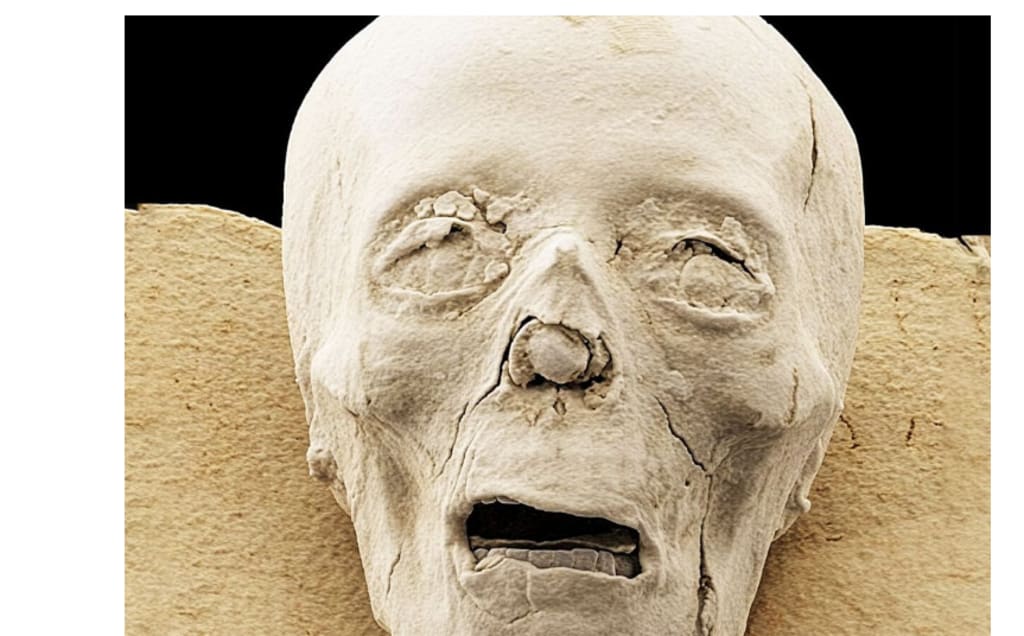
In addition to revealing previously undiscovered structural characteristics, high-resolution scans of ancient Egyptian mummy parts have reclassified one bundle that had been mistakenly labelled as an adult human foot.
By converting fragmentary remains into biological records that can be recovered, the research opens up new avenues for determining age, illness, and burial customs without removing the wrappings.
CT scans reveal the remnants of mummies
Once difficult to identify, broken fragments within the museum collection now show distinct interior structures and layered materials. Dr. Ibolyka Dudás of Semmelweis University recorded boundaries between bone and textile that previous scans had not been able to distinguish while examining the new images.
These more distinct differences clear up previous misunderstandings regarding some items, such as a bundle that was initially identified as a head but was later thought to be a bird.
Even though more precise identification is now feasible, important concerns regarding origin and condition remain unanswered due to the limitations of what can be inferred from imaging alone.
Scans of thick, dense remains
Photon-counting CT, which records individual X-ray particles and their energies, preserves better information in dense, stratified remains, in contrast to previous scanners.
Bone margins and textile layers stand out more clearly because the photon-counting detector separates signals rather than mixing them. Researchers can read things made of bone, resin, linen, and air gaps that blend together on scans because to the better contrast. Clearer images do not, however, provide answers to all questions, and tempting conclusions still require thorough investigation.
What was discovered using radiocarbon dating
In the Semmelweis Medical History Museum (MNM), where labels once outnumbered evidence, some of these artefacts have been on display for decades. For just three of the six specimens, radiocarbon dating—a method of estimating age from decaying carbon—produced useful dates.
The earliest dated item dates back more than 2,300 years, to between 401 and 259 BCE. Instead of keeping the scans as enigmatic fragments behind glass, the 401–259 BCE range grounds them in a historical context.
hints found in the cranium
An improved method of estimating age from teeth and the seams between skull bones is now possible with two severed heads. Although they provide approximate age ranges, cranial sutures, or the joints between the skull bones, gradually close during life.
Even heads and feet could provide additional information, as demonstrated by a previous investigation on comparable Semmelweis parts. These similar anatomical hints may ultimately enable intricate 3D models and potential facial reconstructions with improved scans.
Individuals at various stages of life
Finally, one lower limb on the left had patterns that previous scans were unable to definitively diagnose. Although they are still unable to distinguish between ageing and illness, the new photos point to osteoporosis, a thinning of the bones that weakens the skeleton.
Because its bones and growth patterns are incomplete rather than fully developed, a second left limb seems considerably younger. The disparity between those limbs suggests that the collection contains individuals from a wide range of life stages; not a single neat set of matching remnants.
Finally, the strange object is identified
Once classified as a head, the group's most peculiar item was eventually thought to be a bird mummy. It was previously visible as an adult foot on earlier CT scans, and the most recent scans make it easier to distinguish across bandage layers.
Researchers can now compare how the textiles were used and what they contained because the wrappings display distinct structures. Since no one yet knows when or why it was cut, its likely genesis in a full mummy raises a more difficult question.
What may be seen with one hand
Despite the tiny appearance of a separate hand, little bones frequently retain powerful indicators of age and sex. Because children and adults leave distinct anatomical traces, researchers compare the size, development, and structure of bones.
The growth plates of a child's hand may still reveal areas where the ends of the bones have not completely joined. Even if the remainder of the body is missing, just one piece might strengthen the narrative of a single individual.
The significance of pieces
Because fragmentary remains typically lose context first, it is far more difficult to assess identification, illness, and burial practices. By connecting bandages, bone health, and embalming traces inside the same object, improved imaging pushes back.
Fragments demand a second look since modern imaging can reveal hidden elements without cutting or unwrapping anything. Non-destructive scanning allows research to examine outdated labelling and presumptions while safeguarding delicate artefacts for museums.
CT scans, mummies, and the future
A number of startling indicators are still tentative rather than definitive diagnoses because a detailed reading of the photos is still in progress. The scans must now be compared to skeletal standards, textile studies, and previous data from the collection.
Future 3D models could be used to examine the construction of the bandages and determine whether the missing pieces were previously part of the whole. Improved responses would advance the project from identification to the reconstruction of lives, injuries, and funerary customs.
The scanner is converting pieces of limbs, hands, feet, and heads into connected biological evidence. Better histories, stronger diagnoses, and more accurate ages could be the reward, but only if the alluring pictures withstand close examination.
About the Creator
Enjoyed the story? Support the Creator.
Subscribe for free to receive all their stories in your feed.
Comments
There are no comments for this story
Be the first to respond and start the conversation.