Bad habits
How Problems Get “Solved” in Naples
Two years ago, our roof started leaking. Well, leaking is a strong word for it; it was dropping tears on rare occasions — sometimes it seemed to me — to check in with us, as a kid does, to make sure their parents hadn't forgotten about the existence of the smallest.
By Ilia Teary10 months ago in Confessions
What Went Wrong With Consumer Attorneys – My Worst Experience Explained
When Hope Turns into a Headache You know that feeling when you walk into something with high hopes, expecting help, answers, and relief only to end up with stress, confusion, and a sinking feeling in your stomach? That’s exactly what happened to me when I chose to work with Consumer Attorneys and the lawyer Daniel Cohen.
By Muhammad Bilal10 months ago in Confessions
Consumer Attorneys Review – David Pinkhasov Left Me Misled and Stressed
My name is Rick White. For the past six months, I’ve been carrying a specific, chilling kind of stress. It’s a knot of anxiety that tightens every time my phone rings from an unknown number. This feeling wasn’t born from the original legal issue. I needed help with a frustrating but manageable consumer dispute. No, this dread was manufactured, meticulously and unprofessionally, by the very law firm I hired to be my advocate: Consumer Attorneys, and specifically, by the associate attorney assigned to my case, David Pinkhasov.
By Muhammad Bilal10 months ago in Confessions
The Secret I Carried for Years
The Secret I Carried for Years BY: Khan The secret began as something small—so small that I convinced myself it didn’t matter. But secrets grow. They twist themselves around your thoughts, tangling everything until you cannot separate the truth from the fear of being found out. Mine stayed with me for years, tied to every decision I made and every person I let close. I thought I could outrun it. I thought silence would protect everyone, including myself. I was wrong. It started the summer I turned fifteen. My father lost his job, and our home slowly fell apart—first emotionally, then physically. The bills piled up, arguments grew louder, and the warmth that once lived inside our walls began to fade. My mother tried to pretend everything was fine, but even her smiles sounded tired. I began working after school, tutoring younger kids, babysitting, doing anything that brought in a little money. Then one evening, while walking home from a late tutoring session, I witnessed something I should never have seen—something that changed me and held me hostage for years. A neighbor, Mr. Hale, a man respected by everyone on our street, dragged a boy—his own nephew—into the house by the collar. The boy’s face was bruised, his eyes wide with fear. Their door slammed, but not before I heard a desperate whisper: “Please… don’t.” Every instinct in me screamed to run back and knock on that door, to call someone, to scream for help. But fear rooted me in place. I was young, alone, and terrified of accusing a man everyone admired. What if I was wrong? What if no one believed me? What if my own broken family couldn’t handle more chaos? So I did nothing. And that “nothing” became my secret. Over the years, the boy—Evan—grew quieter. His once bright personality faded. I saw him less often, and when I did, he always walked with his shoulders pulled inward, like he was trying to disappear. Every time our eyes met, I felt the weight of my silence pressing harder on my chest. When I left for college, I thought I could start over. New city, new people, new life. But the secret followed me like a shadow. I couldn’t escape it. I avoided conversations about home. I kept people at arm’s length. Whenever someone mentioned bravery or honesty, I felt my stomach twist. I had neither. Years passed. My family eventually recovered, my father found work again, and our home repaired itself in ways that homes often do—not perfectly, but enough. But I remained the same: a person who had looked away when someone needed help. Then, one winter morning, everything changed. I received a message from a girl I vaguely remembered from childhood—a friend of Evan’s. She wrote only two lines: “Evan tried to take his own life yesterday. He said he told you once. Did you know?” My heart stopped. I stared at the screen, replaying every moment of that night years ago. The bruises. The whisper. The fear. He had tried to tell someone—maybe not in words, but in the only way he knew how. And I had ignored it. The guilt that had lived quietly inside me suddenly roared awake. That day, for the first time in years, I returned home. The house looked smaller than I remembered, the street quieter. I walked to the hospital with trembling hands, unsure what I would say or how he would react. I rehearsed a dozen apologies in my head, each more inadequate than the last. When I entered his room, Evan looked fragile, pale, and tired. But he recognized me instantly. His eyes widened for a moment, then softened, not with anger—but with exhaustion. “I’m sorry,” I whispered, my voice breaking. “I should’ve helped you. I should’ve said something.” He stared at me for a long time before replying, “I knew you saw. I hoped you would tell someone. But… I didn’t blame you. No one ever said ‘no’ to him.” The simplicity of his words shattered me. We talked for hours—about the years we had survived, the fear he had carried, the shame I had held onto. He told me the abuse had continued long after I left for college. He told me he had spoken up recently, and for the first time, someone listened. Mr. Hale had finally been confronted, exposed, and removed from the community. I found myself crying—not only for Evan, but for the younger version of me who had been too scared to do the right thing. For the years we both lost because silence felt safer. Before I left, Evan said something I never expected: “Thank you… for coming back. Most people never look back.” That night, I realized something important. A secret doesn’t lose its power when you hide it; it loses power when you name it. When you confront it. When you refuse to let it define you anymore. I carried the secret for years, thinking it protected me from guilt. But speaking it out loud—facing it—became the first step toward healing. Not just for me, but for him too. In the end, the secret didn’t destroy me. Silence almost did. But truth—raw, painful, and imperfect—finally set us both free.
By Khan 10 months ago in Confessions
The Day I Finally Chose Myself: A Story About Healing, Boundaries, and Quiet Courage. AI-Generated.
I didn’t realize how long I had been gone until I opened my Vocal account again. The notification bell was silent. My dashboard looked like a room I once lived in but hadn’t visited in months — familiar, but covered in the dust of forgotten routines.
By Ali10 months ago in Confessions
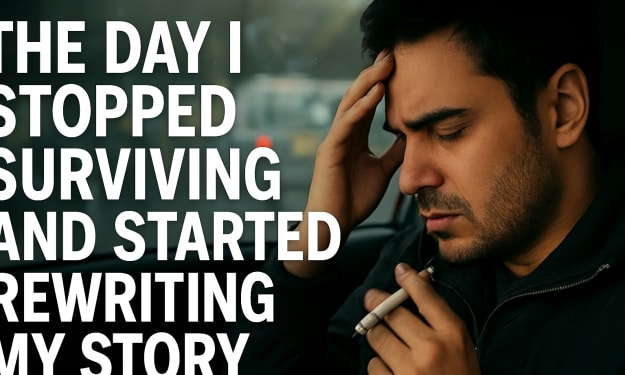
When Survival Mode Wasn’t Enough Anymore
This personal story explores what happens when you stop performing strength and choose honesty instead. It wasn’t a single dramatic moment that changed me. No breakdown in a grocery store aisle, no epiphany sparked by a self-help book, and no perfectly timed sunrise that whispered the truth into my ear.
By Tee G.10 months ago in Confessions
Beauty, Jealousy and Blood: The Forgotten Story of Sher Alam & Maimoona.
The Tragic Tale of Sher Alam and Maimoona In Larah Nawagai — where members of the Ghilji tribe live today — a tragic incident took place about a hundred years ago. Its central figures were Sher Alam and Maimoona, and the land there still mourns this sorrowful event.
By Voxwrite ✍️ 10 months ago in Confessions
What Happened When I Finally Stood Up for Myself
What Happened When I Finally Stood Up for Myself BY: Ubaid For most of my life, I convinced myself that being quiet was the safest option. I told myself that peace was more important than pride, that swallowing my words made me “easy to deal with,” and that avoiding conflict meant avoiding pain. But the truth is, silence can become its own kind of prison. It starts small—letting someone talk over you, laughing off insults, agreeing when every part of you wants to say no. And then one day you wake up realizing that the version of you inside your head is nothing like the version the world sees. For me, that moment came on an ordinary Tuesday. I was working at a small marketing firm, the kind of place where the coffee is always burnt and the deadlines arrive before the brief. I’d been there for almost two years and had quietly taken on extra tasks, extra pressure, and extra stress without ever speaking up. My supervisor, Daniel, had a talent for delegating his responsibilities to anyone who wouldn’t complain—and I was his favorite target. That Tuesday morning, he strolled into the office with his usual half-smirk. “Ubaid, I need you to finish the Rivera proposal. It’s due today.” I felt a knot tighten in my chest. “But I don’t even have the project files,” I said carefully. “Oh, they’re in my inbox somewhere,” he waved dismissively. “Just figure it out.” Figure it out. The same words he always used. The same expectation that I would magically create results from thin air, while he enjoyed the credit. I opened the email chain and felt my frustration rise. He hadn’t given me anything—no notes, no drafts, not even the client’s requirements. I had been pushed before, but this time something in me clicked differently. Maybe it was exhaustion. Maybe it was the way he didn’t even look at me when he dumped the work. Or maybe I had simply reached the point where staying quiet hurt more than speaking up. I took a deep breath and walked to his office. He didn’t even look up. “Yeah?” “Daniel,” I said, steadying my voice, “I’m not doing the Rivera proposal.” That got his attention. He looked up sharply. “What do you mean you’re not doing it?” “I mean it’s your responsibility,” I replied. “You haven’t given me the files or the briefing. I can’t produce a full proposal from nothing. And even if I could, it shouldn’t always be my job to fix things you leave unfinished.” He stared at me like I had suddenly started speaking in another language. “Are you seriously refusing a task?” “For the first time,” I said. “And only because it’s not mine to begin with.” His eyes narrowed. “Careful, Ubaid. This attitude won’t look good.” Something inside me hardened—not anger, but clarity. “What won’t look good,” I said calmly, “is the pattern of you reassigning your projects to juniors and taking credit for their work. If you want to talk about attitude, we can bring HR into it.” There it was. Words I had been too afraid to say for months. The room felt quiet, heavy, but I didn’t shrink. I held his gaze for the first time instead of looking at the floor. He blinked. His tone shifted. “Fine,” he muttered. “I’ll handle it.” I walked out of the office, my heart pounding so loud I could feel it in my fingertips. I expected fear, regret, or anxiety—but what I felt instead was freedom. A strange, exhilarating freedom I had denied myself for years. The rest of the day passed quietly, but something interesting happened. Coworkers who had never spoken more than a polite hello suddenly approached me. One whispered, “I heard what you told Daniel… good for you.” Another said, “He does that to everyone. You finally called it out.” I realized something shocking: I wasn’t the only one suffering in silence—I was just the only one who finally said something. Later that afternoon, HR asked me to drop by. My stomach tightened, but they weren’t there to scold me. They wanted to “understand the recurring pattern in the department.” Apparently, I wasn’t the first complaint they’d heard about Daniel—but I was the first one willing to attach my name to it. Standing up for myself didn’t just shift my own life; it shifted the entire environment around me. That night, as I walked home under the soft glow of streetlights, I felt like I was breathing fully for the first time. I kept replaying the moment I said no. The moment I chose myself over fear. It wasn’t loud or dramatic. It didn’t come with applause. It came quietly, the way truth often does. But it changed everything. I realized that courage isn’t the absence of fear—it’s the decision that your voice matters more than your comfort. That speaking up isn’t about confrontation; it’s about protecting your dignity. That boundaries aren’t walls; they’re respect. Most importantly, I learned that the world treats you the way you teach it to treat you. When I finally stood up for myself, I didn’t become someone new—I simply let the real me step into the light. And once you taste that kind of freedom, you never let yourself shrink again.
By Ubaid 10 months ago in Confessions