Bad habits
World War 3: Why the Fear Is Growing, Why the Future Is Not Decided
World War 3: Why the Fear Is Growing—and Why the Future Is Not Decided In recent years, the phrase “World War 3” has moved from history books into daily conversation. It appears in news headlines, political speeches, social media debates, and comment sections across the internet. For many people, it represents a growing fear that the world is drifting toward another global catastrophe. But fear alone does not explain why this idea has become so powerful—or why it demands careful discussion rather than panic.
By Wings of Time 9 months ago in Confessions
Mirror, Mirror: The Long Road to Reconciling with the Body I Tried to Hide for Years. AI-Generated.
Encrypted Invisibility: Years of Living Behind a Firewall Amid the cold clamor of the city, the silence of the system became my only sanctuary. My clothes were never merely fabric; they were layers of code I programmed to shield myself from the intrusive scans of strangers. Every oversized sweater and pulled-up hood served as a physical firewall, encrypting my existence and filtering the world’s harsh gaze. To the public, I was a ghost in the machine—a stray packet of data lost in transmission. I stopped viewing my body as a living, evolving entity, seeing it instead as legacy hardware: a system riddled with vulnerabilities no patch could ever fix. I wasn't seeking maintenance; I was waiting for a total migration, a final shutdown. Existing in power-saving mode, I remained completely withdrawn, guarding my core from the corrosive eyes that sought to dismantle me.
By Mohammad Hammash9 months ago in Confessions
The Three Reins That Control a Human Being. AI-Generated.
Human beings like to believe they are free. Free to choose, free to decide, free to walk away. Yet, if we look closely, every person is quietly guided by invisible reins—forces that pull, steer, and sometimes break us. They say a human being is controlled by two reins: hunger and stubbornness. Without hunger, we cannot survive. Without stubbornness, we cannot endure. But there is a third rein—one that is rarely spoken of, yet far more powerful than the other two. Love. Hunger: The Silent Commander Hunger is the most honest force in human life. It does not negotiate. It does not care about pride, principles, or promises. When hunger speaks, everything else becomes quiet. For hunger, a person wakes before dawn. For hunger, a person bends, struggles, and compromises. For hunger, dreams are postponed and dignity is sometimes traded. People say, “I would never do that.” But hunger has a way of changing “never” into “necessary.” Ironically, while humans spend their lives chasing bread, there comes a point where bread begins to consume the human. The routine, the exhaustion, the endless chase for survival slowly eats away at joy, creativity, and peace. We eat to live—but often end up living only to eat. Stubbornness: The Fire That Refuses to Die If hunger keeps us alive, stubbornness keeps us moving. Stubbornness is the voice that says, “I will not give up.” Sometimes it saves us. Sometimes it destroys us. History is full of people who reached greatness because they refused to bow. And it is equally full of people who lost everything because they refused to bend. They say stubbornness can carry a man to the gallows—and still not let him surrender. It is a strange force. It looks like strength, feels like courage, but often hides fear beneath it. Fear of being wrong. Fear of losing. Fear of admitting pain. Stubbornness does not always ask whether the path is right. It only asks whether you are willing to suffer for it. And Then Comes Love Just when a human believes he understands himself—love enters. Quietly. Softly. Without permission. Love does not announce itself like hunger. It does not burn like stubbornness. It simply settles inside, changing everything without asking. Suddenly, hunger loses its command. Food is on the table, but the appetite is gone. Suddenly, stubbornness loses its pride. The strongest person becomes unsure, hesitant, vulnerable. Love rewrites priorities without warning. The Third Rein Some people realize, too late, that they are not controlled by two reins—but by three. Hunger. Stubbornness. And you. And “you” are the hardest rein of all. Because hunger hurts the body. Stubbornness exhausts the mind. But love—love unsettles the soul. Sleepless Nights and Silent Days Love steals sleep first. A person lies in bed, eyes closed, mind wide awake. Conversations replay. Words unsaid echo louder than those spoken. The ceiling becomes a witness to thoughts that cannot be shared. Then love steals hunger. Meals become rituals without meaning. Food tastes the same whether sweet or bitter. The body eats, but the heart refuses nourishment. Love does not announce what it is taking. It simply takes—slowly, gently, completely. The War No One Sees People assume humans are fighting the world. In reality, most people are fighting themselves. Smiles are worn like armor. Conversations stay polite. Daily life continues. But inside, there is noise—memories clashing with logic, hope arguing with reality. The strongest battles are silent ones. No audience. No applause. No victory parade. Just survival. Love Is Not Weakness Love is often mistaken for weakness. It is not. Love is a test. It tests patience. It tests restraint. It tests whether someone can feel deeply and still function. Love does not break people because it is fragile. It breaks them because it is honest. It exposes what hunger and stubbornness can hide. When Control Is an Illusion Hustle culture teaches us control. Discipline. Mastery. Love laughs at control. It does not respond to schedules, logic, or self-help advice. You cannot reason your way out of it. You cannot starve it away. You cannot overpower it with stubbornness. Love stays—whether welcomed or not. The Quiet Truth A human can survive hunger. A human can endure stubbornness. But love demands something deeper. It asks for surrender without guarantees. And perhaps that is why it is the most powerful rein of all. Because in love, humans do not lose control. They give it away. Final Thought Hunger keeps us alive. Stubbornness keeps us standing. But love reminds us that we are human. And sometimes, being human is not about winning or surviving—it is about feeling, even when it hurts. Because in the end, the things that break us are often the same things that make life worth living.
By Zahid Hussain9 months ago in Confessions
Metanoia:
I am not a woman. I am not a man. I am God — consciousness experiencing itself through human form. For generations, humanity has been told to look upward for divinity, to bow to power that sits outside of us. Yet the true message hidden in scripture — buried under translation and fear — has always pointed inward. “Repent,” Jesus said, but he was not demanding guilt or submission. The Greek word was *Metanoia,* and it meant “change your mind.” Upgrade your perception. Transcend the illusion that you are separate from the Divine.
By Aja Truth9 months ago in Confessions
Mental Stress and Depression: The Silent Struggle of the Modern World. AI-Generated.
In today’s fast-paced and demanding world, mental stress and depression have become two of the most common yet most ignored problems. People appear successful, busy, and connected, but behind smiling faces many are fighting silent battles. Mental stress and depression do not discriminate—they can affect anyone regardless of age, gender, social status, or profession. Unfortunately, due to lack of awareness and social stigma, many people continue to suffer in silence. Understanding Mental Stress Mental stress is the body and mind’s natural reaction to pressure, challenges, or threatening situations. A certain level of stress is normal and can even be helpful, as it motivates us to meet deadlines or solve problems. However, when stress becomes constant and overwhelming, it starts damaging both mental and physical health. Common causes of mental stress include financial problems, work pressure, academic stress, relationship conflicts, family responsibilities, and uncertainty about the future. Continuous exposure to such pressures keeps the brain in a state of alertness, which eventually leads to exhaustion, anxiety, and emotional imbalance. What Is Depression? Depression is much more than temporary sadness or feeling low. It is a serious mental health disorder that affects how a person thinks, feels, and functions in daily life. Depression slowly drains energy, hope, and interest in life. Tasks that once felt easy—such as getting out of bed, socializing, or focusing on work—become extremely difficult. Unlike stress, which is often linked to external situations, depression can persist even when everything seems “fine” on the surface. It changes brain chemistry and deeply affects emotions, behavior, and physical health. Signs and Symptoms Mental stress and depression often show warning signs, but these signs are frequently ignored or misunderstood. Common symptoms include: Constant tiredness and lack of energy Difficulty sleeping or sleeping too much Loss of interest in daily activities Persistent sadness or emptiness Irritability and sudden anger Difficulty concentrating Feelings of worthlessness or guilt Social withdrawal and isolation If these symptoms last for more than two weeks and begin to interfere with daily life, professional help should be considered. Why Are These Issues Increasing? Modern lifestyle plays a major role in the rise of stress and depression. Social media has created unrealistic standards of success and happiness. People constantly compare their lives with others, leading to feelings of failure and inadequacy. Economic pressure, job insecurity, loneliness, and lack of emotional support further worsen the situation. Another major reason is the stigma surrounding mental health. In many societies, people are taught to hide their emotions and “stay strong.” Seeking help is often seen as weakness, which prevents individuals from reaching out when they need it the most. Impact on Physical Health Mental stress and depression do not only affect the mind; they also harm the body. Long-term stress can cause headaches, high blood pressure, heart problems, digestive issues, and a weakened immune system. Depression increases the risk of chronic illnesses and reduces the body’s ability to heal and function properly. This strong connection between mind and body proves that mental health is just as important as physical health. Ways to Manage Stress and Depression The good news is that mental stress and depression are treatable. Recovery begins with acceptance and awareness. Some effective ways to improve mental well-being include: Talking openly with a trusted friend or family member Maintaining a healthy sleep routine Eating balanced and nutritious food Reducing excessive social media use Practicing daily physical activity or walking Engaging in mindfulness, prayer, or meditation Seeking help from a psychologist or mental health professional Professional therapy and, when necessary, medication can significantly improve quality of life. The Role of Society Society must play an active role in breaking the silence around mental health. We need to replace judgment with empathy and criticism with understanding. Sometimes, simply listening without offering advice can make a huge difference. A supportive environment can save lives. Conclusion Mental stress and depression are real, serious, and widespread challenges of our time. Ignoring them does not make them disappear; it only deepens the pain. Speaking up, seeking help, and supporting others are powerful steps toward healing. Remember, struggling mentally does not mean you are weak—it means you are human. No darkness lasts forever, and with the right support, help, and understanding, healing is always possible. Hope begins when silence ends.
By Zahid Hussain9 months ago in Confessions
When Power Ignored Responsibility
A Complaint on Trump: When Power Ignored Responsibility Leadership is not measured by how loudly one speaks, but by how carefully one acts. In times of global uncertainty, the world looks to powerful nations not for dominance, but for stability, cooperation, and restraint. When leadership becomes impulsive, personal, or dismissive of global responsibility, the consequences are not limited to borders. They ripple outward, affecting lives far beyond any single nation.
By Wings of Time 9 months ago in Confessions
The Echoing Train Whistle
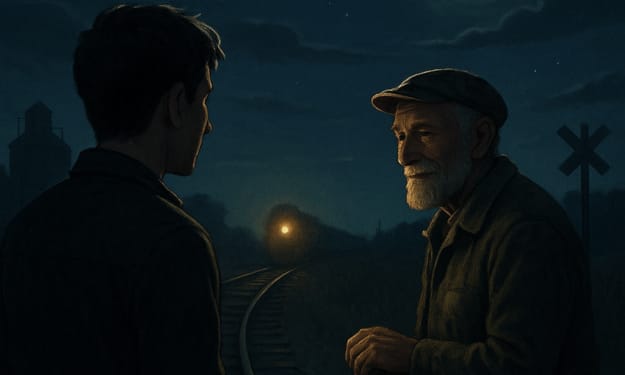
It started with a sound most people in town slept through. A long, low whistle cutting across the midnight fields, rolling over grain silos and quiet porches, slipping beneath doors like a wandering ghost. In our little Midwestern town, trains were ordinary—background noise for those who’d lived here long enough. But that night, the echo felt different. Sharper. Closer. Almost intentional, as if it were calling someone awake. That someone, somehow, was me. I slipped on my jacket and walked outside into the crisp dark. The moon hung low, pale and alert, like it, too, was waiting for something to happen. A lonely wind carried the scent of corn husks and rusted metal. I had no destination in mind, only a quiet pull toward the tracks that ran behind the feed mill—a place I hadn’t visited since I was a kid. The whistle sounded again, softer now, fading toward the east. When I reached the crossing, the rails were still vibrating, humming with the train’s recent passing. I rested my palm against the cold steel. It felt like touching a memory that wasn’t mine. That’s when I saw him. An older man stood a little ways down the tracks, leaning on a walking stick carved with tiny notches along the handle. His posture was steady, his presence calm, as if he belonged to the night rather than intruded upon it. His jacket—faded green with worn patches—gave away his story before he spoke a word. A veteran. Probably someone’s grandfather. Probably someone with more past than future. “You heard it too,” he said without turning his head. I swallowed the urge to apologize for being there. “I did. It sounded… different tonight.” He chuckled—a warm, gravelly sound. “It always sounds different when you need it to.” He stepped closer, and the moonlight caught the lines on his face. Deep ones. Earned ones. “Used to ride that line back in ’67,” he said. “That whistle was my alarm clock to a brand-new life, whether I wanted it or not.” “Boot camp?” I asked. “Boot camp,” he confirmed. “Train was full of boys pretending they were men. Me included.” His eyes drifted over the tracks as if replaying a film only he could see. “We didn’t know where we were really headed. Couldn’t see the future. Hell, couldn’t even see the next week. But every time that train stopped, someone got a chance to choose again.” He traced a finger along one of the carved notches on his walking stick. “One for every place I ever had to start over,” he said. “There were more stops than I planned. More losses, too. But here I am.” Something inside me shifted—something I’d been trying to ignore for months. Maybe he sensed it. “You got that look,” he said gently. “The one people get when they’re stuck between what was and what might be.” I didn’t bother denying it. “It’s been a year of… changes,” I said. “Some of them sudden. Some I didn’t choose.” “Mm.” He nodded knowingly. “Life don’t ask for permission. But it offers invitations.” He tapped his walking stick against the rail. “This,” he said, “is one of ’em.” We stood in silence long enough to hear the faint rumble of the train disappearing into the distance. The night around us felt bigger than before, stretched wide and full of possibilities I hadn’t let myself consider. “Every stop,” he said softly, turning to look at me, “is a chance to start again.” The words were simple. But they settled deep—like they’d been meant for me all along. “Do you still believe that?” I asked. He smiled, small but sure. “Son, I’m still here, ain’t I?” A breeze swept across the fields, bending the tall grasses like a gentle bow. The old veteran adjusted his jacket and began walking back toward town. After a few steps, he paused. “You coming?” he asked. I looked down at the rails, still humming with the ghost of the passing train. Then I looked at the direction he was heading—the direction that wasn’t backward. For the first time in a long while, the heaviness in my chest shifted, loosening just enough to let breath move freely. “Yeah,” I said. “I’m coming.” As we walked together, the quiet night felt less empty—not because it was peaceful, but because it had finally spoken. A midnight whistle, a stranger with a past, a simple mantra that slipped into my life like a lantern in the dark. Every stop is a chance to start again. And in some small, unexpected way, that night became my first new stop.
By Jhon smith9 months ago in Confessions