
Mental Health Toolkit: Evidence-Based Techniques That Work
Practical, Science-Backed Strategies to Build Resilience, Reduce Stress, and Take Control of Your Mind

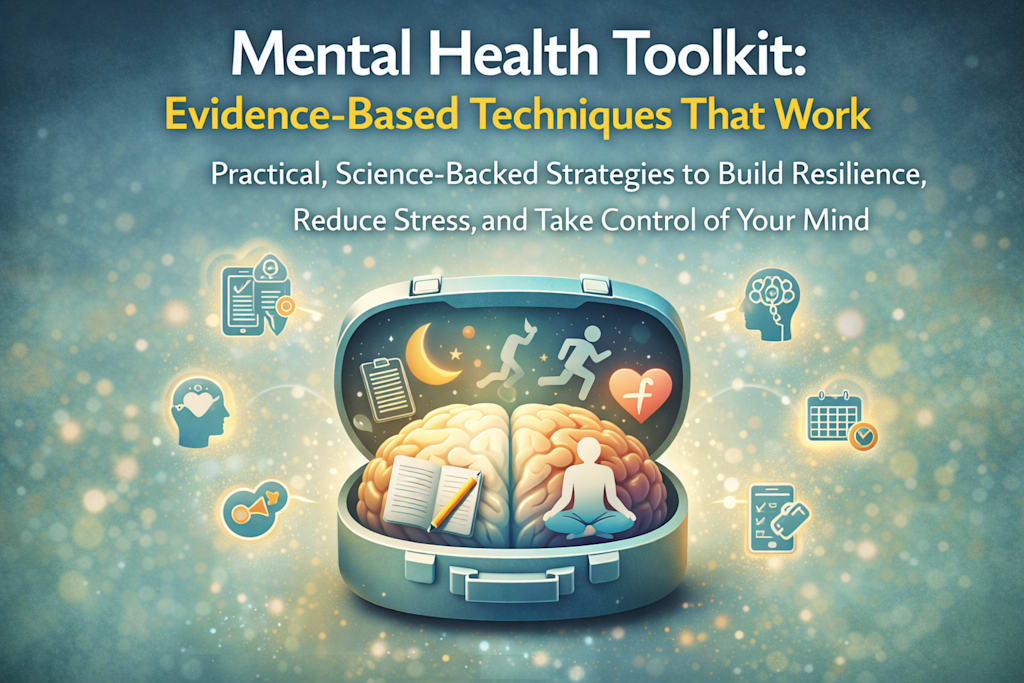
Practical, Science-Backed Strategies to Build Resilience, Reduce Stress, and Take Control of Your Mind
Mental health is no longer something we can treat as optional. In today’s fast-paced, hyper-connected world, stress, anxiety, and emotional burnout have become increasingly common. Yet, despite how widespread these challenges are, many people still struggle to find practical, effective ways to manage them.The truth is, improving mental health doesn’t require complicated systems or drastic lifestyle changes. Instead, it comes down to using the right tools—consistently. Think of mental wellness as something you actively maintain, just like physical health. And just like a toolbox, the more reliable tools you have, the better equipped you are to handle life’s challenges.
This article explores a set of evidence-based techniques that are simple, effective, and backed by psychology and neuroscience.
1. Cognitive Reframing: Changing How You Think
Our thoughts shape our emotions and behaviors. Cognitive reframing, a key principle in cognitive behavioral therapy (CBT), involves identifying negative or distorted thinking patterns and replacing them with more balanced perspectives.
For example, instead of thinking: “I always mess things up,” you can shift to: “I made a mistake, but I can learn from it.”
This doesn’t mean ignoring reality—it means interpreting it in a healthier way. Over time, reframing reduces anxiety, improves confidence, and helps you respond more calmly to stress.
2. Mindfulness: Training Your Attention
Mindfulness is the practice of being fully present in the moment without judgment. Research shows it can reduce stress, improve emotional regulation, and even enhance focus.
Simple ways to practice mindfulness include:
- Paying attention to your breathing
- Observing your thoughts without reacting
- Focusing on physical sensations (like your footsteps while walking)
Even a few minutes a day can make a noticeable difference. The goal isn’t to stop your thoughts—it’s to stop being controlled by them.
3. The 5-4-3-2-1 Grounding Technique
When anxiety spikes, your mind often drifts into worst-case scenarios. Grounding techniques bring you back to reality.
The 5-4-3-2-1 method works like this:
- 5 things you can see
- 4 things you can feel
- 3 things you can hear
- 2 things you can smell
- 1 thing you can taste
This technique engages your senses and interrupts anxious thought loops, helping you regain control quickly.
4. Physical Activity as Mental Medicine
Exercise is one of the most powerful tools for improving mental health. It releases endorphins (feel-good chemicals), reduces stress hormones, and boosts mood.
You don’t need an intense workout.
- A 20-minute walk
- Light stretching
- Dancing to music
- Short home workouts
can significantly improve how you feel. Consistency matters more than intensity.
5. Structured Routines for Stability
A lack of structure can increase anxiety and overwhelm. Creating a daily routine gives your mind a sense of control and predictability.
Key elements of a healthy routine include:
- Consistent wake-up and sleep times
- Scheduled work and break periods
- Time for relaxation and hobbies
Structure doesn’t limit freedom—it creates stability.
6. Managing Information Overload
We are constantly exposed to information—social media, news, emails, and notifications. This overload can increase stress and reduce focus.
To manage it:
- Limit screen time
- Take regular digital breaks
- Turn off unnecessary notifications
- Avoid excessive news consumption
Reducing mental clutter allows your brain to rest and function more effectively.
7. Journaling for Emotional Release
Writing down your thoughts is a powerful way to process emotions. Journaling helps you:
- Understand your feelings
- Identify patterns
- Release mental tension
You can start with simple prompts like:
- “Today I feel…”
- “What’s been on my mind is…”
- “One thing I’m grateful for is…”
There’s no right or wrong way to journal—just be honest.
8. The Role of Sleep in Mental Health
Sleep is essential for emotional stability, focus, and overall well-being. Poor sleep can increase anxiety, irritability, and difficulty concentrating.
To improve sleep quality:
- Stick to a regular sleep schedule
- Avoid screens before bedtime
- Keep your sleeping environment calm and dark
- Limit caffeine intake
A well-rested mind is better equipped to handle challenges.
9. Social Connection and Support
Human connection plays a crucial role in mental health. Talking to someone you trust can provide relief, perspective, and emotional support.
This could be a friend, family member, mentor, support group
You don’t have to handle everything alone. Sharing your thoughts often reduces their weight.
10. Self-Compassion Over Self-Criticism
Many people are harder on themselves than they would ever be on others. Self-compassion involves treating yourself with kindness, especially during difficult times. Instead of saying:
“I’m not good enough" say “I’m doing the best I can, and that’s enough for now.”
This shift reduces stress and builds emotional resilience.
11. Setting Boundaries to Protect Your Energy
Mental health improves when you learn to say no to things that drain you.
This includes:
- Overcommitting
- Toxic relationships
- Unnecessary obligation
Setting boundaries is not selfish—it’s necessary for long-term well-being.
12. Small Wins Build Momentum
Big changes can feel overwhelming. Instead, focus on small, achievable actions:
- Completing one task
- Taking a short walk
- Writing a few lines in a journal
These small wins build confidence and create positive momentum.
Final Thoughts
Improving mental health isn’t about finding one perfect solution—it’s about building a toolkit of strategies that work for you. The techniques in this article are simple, practical, and supported by research, but their effectiveness depends on consistency. You don’t need to apply everything at once. Start small. Choose one or two tools and integrate them into your daily routine. Over time, these small changes add up to meaningful improvements. Because mental health isn’t something you fix overnight—it’s something you build, maintain, and strengthen every day.
About the Creator
Robert Redford
i create powerful, easy-to-read articles on everything from history and world events to technology, lifestyle, and thought-provoking ideas. If sparks curiosity, I write about it. Always exploring, always delivering something worth reading.
Enjoyed the story? Support the Creator.
Subscribe for free to receive all their stories in your feed.
Comments
There are no comments for this story
Be the first to respond and start the conversation.