
How Social Media Is Rewiring Your Brain Right Now
The subtle neural hijack you never signed up for—and the quiet, daily moves that can reverse it.

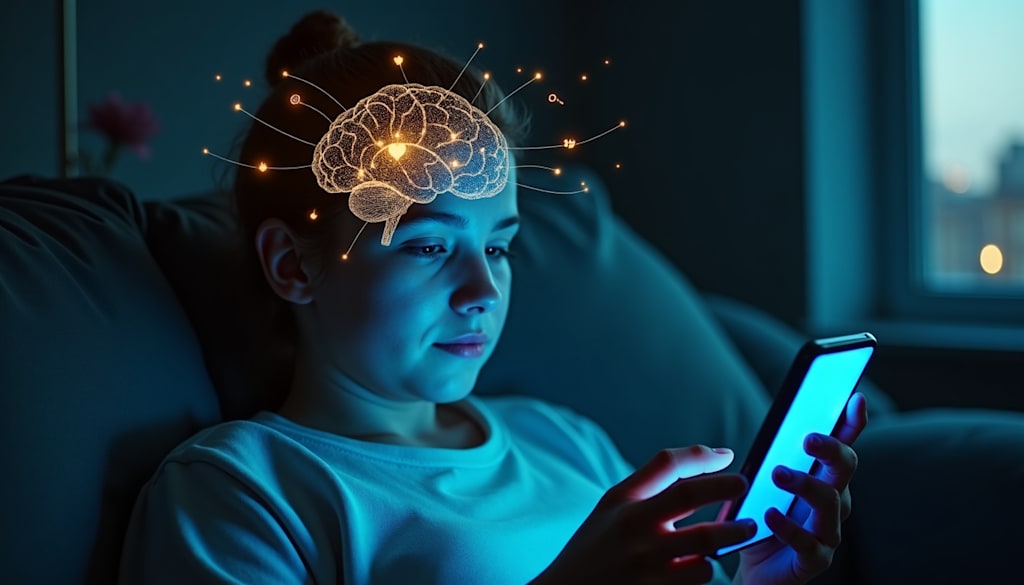
A few nights ago, I caught myself doing something that felt uncomfortably automatic. I was watching a show I’d eagerly waited all week to see—something with dense dialogue and slow-burn suspense—and less than three minutes in, my hand reached for my phone. Not because the show bored me. Not because I heard a notification. I just… reached. My brain wanted a hit of something faster, something that resolved in seconds rather than minutes. The show was too slow for a mind that had been trained on fast cuts, instant comments, and endless scrolls.
That moment stuck with me, and as a psychologist who studies behavior and a lifestyle strategist who helps people reclaim focus, I knew it wasn’t just a bad habit. Something structural had shifted. The architecture of my attention had been remodeled without my permission. And the more I looked at the neuroscience, the clearer it became: social media is quietly but aggressively rewiring our brains right now. Not in a distant, hypothetical future. While you read this sentence, the rewiring is underway.
This isn’t technophobia dressed up as concern. I use social media. It’s woven into my professional life and, honestly, into some of my closest friendships. But the cost of that connection is a brain that scans rather than reads, reacts rather than reflects, and feels a little emptier even when it’s full of stimuli. Let’s unpack exactly how these platforms reshape your neural circuitry—and what you can do to take back the architect’s chair.
1. The Dopamine Economy: Why Scrolling Feels So Good (and So Empty)
Dopamine isn’t the pleasure molecule—that’s a common misconception. It’s the wanting molecule. It surges in anticipation of a reward, not just when you receive one. Social media platforms have, quite brilliantly, designed themselves around this neurochemical quirk.
Every time you pull to refresh a feed, your brain enters a state of anticipatory arousal. Will there be a like? A comment? A news update that changes your mood? The uncertainty is the hook. Variable rewards, the same mechanism that makes slot machines addictive, are baked into every infinite-scroll feature. You’re not craving the content; you’re craving the possibility of the next micro-reward.
Variable Rewards and the Slot Machine Effect
Researchers call it intermittent reinforcement. When a reward isn’t predictable, the dopamine system ramps up. Social media delivers exactly that: sometimes a post gets 50 likes, sometimes 5. Sometimes you open the app and see a message from a friend, sometimes it’s just an ad. This unpredictability keeps your brain chemically hooked, wondering “What did I miss?” even when you just checked 90 seconds ago.
Over time, the baseline level of stimulation your brain expects begins to rise. Quiet moments—waiting in line, sitting at a red light, lying in bed before sleep—start to feel wrong. Uncomfortable. Your brain screams for a quick fix because it’s been conditioned to see stillness as a lack of reward.
Desensitization and the Need for More Stimulation
Here’s what worries me as a mental health professional: repeated exposure to high-dopamine digital hits can lead to a downregulation of dopamine receptors. The brain, ever adaptive, responds to the flood by becoming less sensitive. This means that ordinary pleasures—a good meal, a real-life conversation, the smell of rain—feel muted. You need bigger, faster, more novel content to achieve the same feeling. That’s the trap. It’s why you might find yourself bored in a beautiful park while simultaneously refreshing a feed full of content that, if you’re honest, you don’t even enjoy.
[If this echoes how you’ve been feeling about your productivity, you might find value in our guide on Deep Work Routines for the Distracted Mind.]
2. Your Attention Span Is Being Auctioned Off
Forget the myth that attention spans have permanently shrunk to less than that of a goldfish. That stat was always dubious. What’s actually happening is more nuanced—and more disturbing. Your attention isn’t gone; it’s being fractured and sold to the highest-bidding platform.
Every glance at a notification, every micro-switch from a work document to a Twitter tab, doesn’t just cost you the seconds you spend away. It creates what psychologists call attention residue. Part of your cognitive bandwidth stays stuck on the previous task or the content you just scanned. When you return to what you were doing, you’re operating with a split brain.
Task-Switching and Cognitive Residue
A landmark study from the University of California, Irvine, found that after an interruption, it takes an average of 23 minutes to return to full focus. Social media is a factory of interruptions, creating a constant state of partial attention. You’re never fully with the person you’re talking to, the article you’re reading, or the idea you’re trying to develop. You’re always dragging digital residue behind you.
The cumulative effect? Your brain loses practice at sustained, linear thinking. It’s not that you can’t read a long book anymore; it’s that reading a long book now triggers an almost physical discomfort because your neural pathways for sustained attention have been pruned from disuse, while the pathways for rapid scanning have been paved into superhighways.
The Myth of Multitasking
We like to think we’re good at multitasking. Neuroscience says otherwise. The brain doesn’t do two cognitively demanding things simultaneously; it just switches rapidly. Social media trains you to switch faster, but never more deeply. The result is a mind that can juggle but not hold. You process more information overall, yet understand less.
3. How Your Memory and Learning Are Taking a Hit
There’s a particular kind of forgetting I’ve noticed in myself and in clients over the past five years: you remember you saw something important, but you can’t recall the details. Maybe it was a statistic, a friend’s good news, or an insight from an article you shared. You “consumed” it, but it never landed.
The Google Effect and Outsourced Memory
Digital amnesia, sometimes called the Google Effect, is the tendency to forget information that you know is easily accessible online. Social media accelerates this. When your brain knows it can find a detail again with a quick search or by asking in a group chat, it doesn’t waste energy encoding it into long-term memory. This is efficient, but also dangerous. Your internal knowledge base becomes shallower, and you start to rely on external platforms as prosthetic memory, making critical thinking harder because you lack a rich internal library to draw from.
Shallow Processing vs. Deep Encoding
Deep encoding happens when you engage with material—questioning it, connecting it to personal experience, summarizing it in your own words. Social media feeds encourage the opposite: shallow processing. You skim, react with an emoji, and scroll on. The information never gets past the sensory buffer into durable memory. Over time, your brain becomes less practiced at deep encoding, meaning that even when you want to learn something challenging, your automatic mode is skimming. You have to consciously fight your own brain to learn deeply again.
4. The Emotional Contagion You Didn’t Sign Up For
Here’s a neuroscience fact that platforms leverage every single day: emotions are contagious, and that contagion works even through text and images. Mirror neurons in your brain fire in response to observing others’ emotional expressions. When your feed floods with outrage, anxiety, or tragedy, your brain mirrors those states at a cellular level—often without your conscious awareness.
Mirror Neurons and Emotional Spread
A famous (and ethically contentious) Facebook study manipulated the emotional content of users’ feeds and found that people’s own posts shifted in tone accordingly. You absorb the aggregate mood of your network. If your social media diet is heavy on conflict, doom-scrolling, and performative outrage, your resting emotional state drifts toward hypervigilance. The world starts to feel more threatening than it actually is, not because anything changed in your neighborhood, but because your neural alarm system is being triggered by the curated crises of millions.
The Comparison Trap and Self-Concept
Social media presents a continuous highlight reel. Your brain, however, evaluates itself against that reel as if it were documentary footage. The gap between others’ curated lives and your messy internal experience can erode self-esteem. Neuroimaging studies show that negative social comparison activates the same regions of the brain involved in physical pain. Every scroll through an influencer’s perfect vacation can deliver a tiny sting, and those stings accumulate into a chronic sense of inadequacy.
5. Social Validation on a Neural Level
Why does a burst of likes feel so satisfying? Because your brain processes social approval similarly to monetary reward. When you receive positive social feedback, the ventral striatum—a core part of the reward circuit—lights up. Social media has deregulated this ancient system, turning social validation into a 24/7 on-demand commodity.
Likes, Self-Esteem, and the Prefrontal Cortex
The problem isn’t the occasional boost. It’s the quantification of social worth. The numeric feedback (likes, retweets, follower counts) trains the brain to look outside itself for validation. The prefrontal cortex, which helps with impulse control and long-term planning, gets overridden by the more primitive reward centers. Teens are especially vulnerable because their prefrontal cortex isn’t fully developed, but adults aren’t immune. The habit of checking for social approval becomes a psychological need, and when engagement dips, the brain interprets it as social rejection—damping mood and motivation.
I’ve worked with adults who can’t post a creative project without monitoring likes for the next three hours. The process of making art becomes secondary to the performance of sharing it. That’s a rewired creative instinct.
6. Practical Ways to Start Rewiring Back
This might all sound bleak, but neuroplasticity cuts both ways. The same adaptability that allowed social media to shape your brain can be harnessed to reshape it again—deliberately this time. You don’t have to delete every app and move to a cabin (though some do). Small, consistent interventions can restore your cognitive depth and emotional regulation.
Table: Social Media’s Effects vs. Recovery Strategies
Brain Function Affected How Social Media Rewires It Practical Repair Strategy
Dopamine reward system Desensitized through variable rewards Schedule “dopamine fasts” (1-2 hour blocks with no screens) to reset sensitivity
Attention span Fragmented by rapid task-switching Daily single-tasking practice: 25 minutes of work with zero interruptions
Memory encoding Shallow processing, outsourced memory Write a 3-sentence summary of any article you read; no copy-paste
Emotional regulation Contagious anxiety and outrage Curate feed ruthlessly; include accounts that genuinely calm or inspire
Social validation Externalized self-worth through metrics Post without checking engagement for 24 hours; measure the internal reward of creating
Default mode network Reduced daydreaming and self-reflection 10 minutes of silence or walking without any input; let your mind wander
Micro-Detoxes and Intention Setting
A full digital detox often backfires, like crash dieting. Instead, integrate micro-detoxes. Leave your phone in another room for the first hour after waking. The brain’s theta-to-alpha transition in the morning is fertile ground for original thought—don’t pollute it with other people’s opinions immediately. Set an intention before opening any app: “I’m going to check messages and then close it.” If you open it without intention, you’ve already lost the chess match to the algorithm.
Reclaiming Deep Work and Analog Activities
Engage in activities that demand sustained attention and physicality—playing a musical instrument, gardening, reading a physical book without a device nearby, cooking a new recipe from memory. These act as counter-training for your brain, strengthening the neural pathways that thrive on slowness and depth. Think of it as cross-training for the mind. If you spend an hour scrolling, spend an hour making something tactile. The balance isn’t about time; it’s about activating different networks.
Building better daily rhythms can amplify this process. I explore one powerful approach in The 5-Minute Morning Anchor That Changed My Year.
Realistic Scenario: The Evening Rewiring Routine
Imagine it’s 9 p.m. You’ve defaulted to the couch-scroll for years. Instead, try this: charge your phone in a drawer in the kitchen. Next to your bed, place a paperback and a notepad. For the first 10 minutes, your brain will scream for the phone. That’s dopamine withdrawal. Breathe through it. Pick up the book. Even if you read only two pages with full attention, you’re rebuilding the neural architecture of deep focus. Within two weeks, the bedtime restlessness starts to quiet. That’s neuroplasticity in your favor.
Putting the Architects Back in Charge
Social media isn’t inherently evil, and your brain isn’t permanently broken. What’s happening is a tug-of-war between platforms designed to exploit ancient neural mechanisms and your conscious mind’s capacity to intervene. Each time you resist the automatic reach, you’re making a micro-investment in a brain that belongs to you, not to an engagement algorithm.
The rewiring happened gradually, so the rewiring back will feel gradual too. You won’t notice the change day by day, but one evening you’ll realize you watched an entire film without itching for your phone. You’ll read a long-form article and remember the argument well enough to discuss it. You’ll feel bored and, instead of panicking, you’ll let your mind drift somewhere creative. That’s the brain you’ve been missing. It’s still in there—just a little refurbishment away.
FAQ
Is social media addiction the same as substance addiction in the brain?
The mechanisms overlap significantly, particularly in dopamine pathways, but social media addiction is a behavioral addiction. It doesn’t introduce a chemical substance into the body, but it can produce similar tolerance and withdrawal effects due to overstimulation of natural reward circuits.
How long does it take to “rewire” my brain after cutting back on social media?
You may notice subtle improvements in focus and mood within a week. Structural changes—like rebuilding sustained attention capacity—typically take a few weeks to months, depending on consistency and the depth of prior overuse. Neuroplasticity is a slow, cumulative process, but early gains are encouraging.
Can I just use social media for work and avoid the negative effects?
The brain doesn’t neatly separate “work use” from “leisure use.” The same reward loops activate whether you’re checking business metrics or personal likes. Mindful, time-boxed usage with clear boundaries can reduce harm, but the neural environment still gets influenced. Intentionality is your best defense.
Are certain platforms worse for brain rewiring than others?
Platforms centered on infinite scroll, short-form video, and high-frequency notifications tend to be more potent at capturing attention and triggering dopamine cycles. Image-heavy, slower-paced platforms can be less intrusive, but any platform that uses variable rewards and algorithm-driven feeds will have an impact.
I’m a parent. Should I be worried about my teenager’s social media use?
Yes, with compassion. The adolescent brain is hypersensitive to social reward and has a developing prefrontal cortex. Open conversations, modeling balanced tech use, and creating screen-free family rituals are more effective than outright bans, which can drive usage underground. Encourage activities that build identity offline.
Does deleting social media apps reverse the brain changes entirely?
Deleting apps removes the primary source of stimulation and gives your brain a chance to recalibrate. However, if the underlying habit of seeking constant digital stimulation persists through other platforms (YouTube, news sites, gaming), the rewiring may simply shift location. Long-term change comes from retraining your relationship with attention, not just removing one app.
About the Creator
Kamel Saidani
Psychology graduate passionate about understanding human behavior, mindset, and personal growth. I share simple, practical insights to help people think deeper, grow stronger, and live more intentionally.
Enjoyed the story? Support the Creator.
Subscribe for free to receive all their stories in your feed.
Comments
There are no comments for this story
Be the first to respond and start the conversation.