
How Art Became My Lifeline After a Breakup
Transforming my pain into meaning

During one of the hardest periods of my life, creativity became more than a form of self-expression—it became a means of survival. I am far from alone in this; a vast body of evidence supports the healing power of creativity and art. History, too, is filled with examples that speak for themselves.
We are all creative and have the capacity to make art. I strongly believe this is part of human nature—even if you don’t consider yourself a creative person.
Art and creativity have been present in my life since childhood. They have always been my safe place, my refuge, and a way to heal during difficult times.
My last breakup was no exception. Creating helped me through my darkest moments—when I felt overwhelmed by painful emotions, flooded with questions, and consumed by the urge to reach out to someone who had hurt me deeply. I wanted explanations, resolution, and a way back to what once was.
In those moments—when I felt empty, when anxiety made it hard to breathe, when guilt felt unbearable—I committed to one simple act to keep myself from falling apart: to create something, anything at least once a week.
It wasn’t easy. Gathering the energy to stand up and do something after hours of crying or lying in silence felt almost impossible. Sometimes my mind would shut down completely, leaving my body heavy and unresponsive. Other times, I struggled just to calm my racing heart. But every time I managed to create, it felt like a breath of fresh air—a brief liberation from the thoughts that kept pulling me back into suffering.
Creating opened new paths in my mind. The outcome didn’t matter—I wasn’t chasing perfection; I was surviving. Simply showing up was enough.
Each small act of creation, no matter how insignificant it seemed, felt like a victory. Some days, that meant writing a few paragraphs, taking photographs, sketching an idea, or slowly working on a larger project. Over time, that sense of accomplishment grew into a habit. I began creating not just to cope, but to feel alive again—to reconnect with the world beyond my pain, a world still full of possibility.
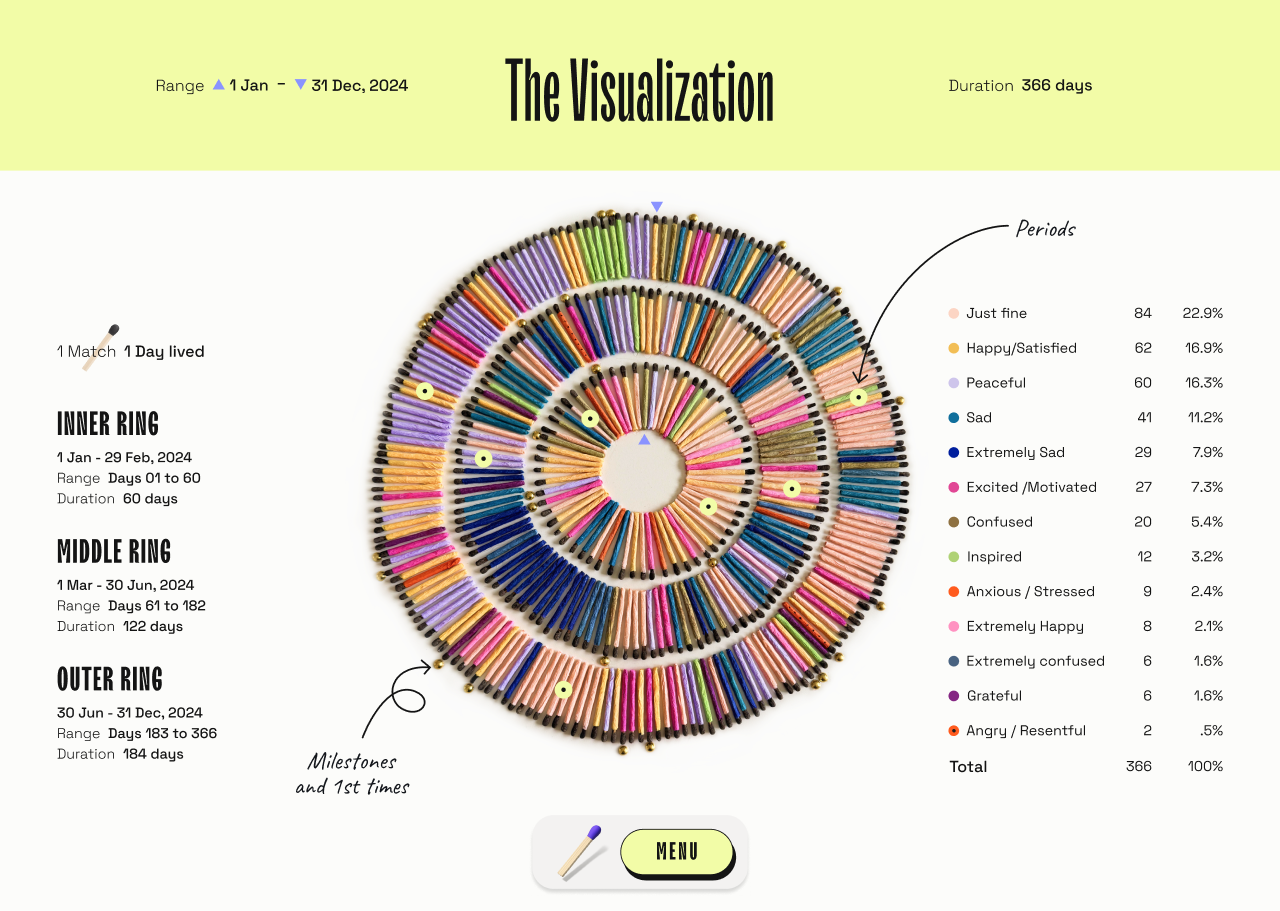
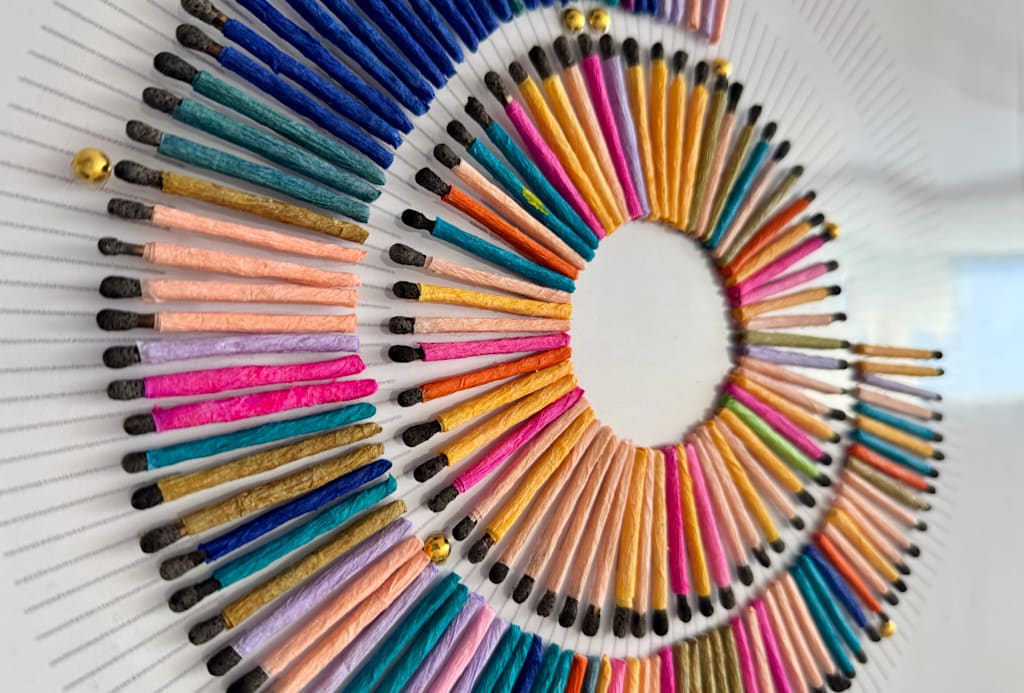
Eventually, this habit led to one of my most ambitious projects: a physical data visualization of my emotions over the course of a year. It traces the entire breakup process—from the first signs of an ending, through the lowest moments, the search for help, and finally, the healing phase. The piece takes the form of a mandala, made from matches wrapped in colored paper, with each color representing the dominant emotion of a given day. By the time I began the project, I was already healing and in a much better place. Still, it gave me a way to reflect on everything I had experienced during that difficult time—and sparked a growing desire to share it with others.
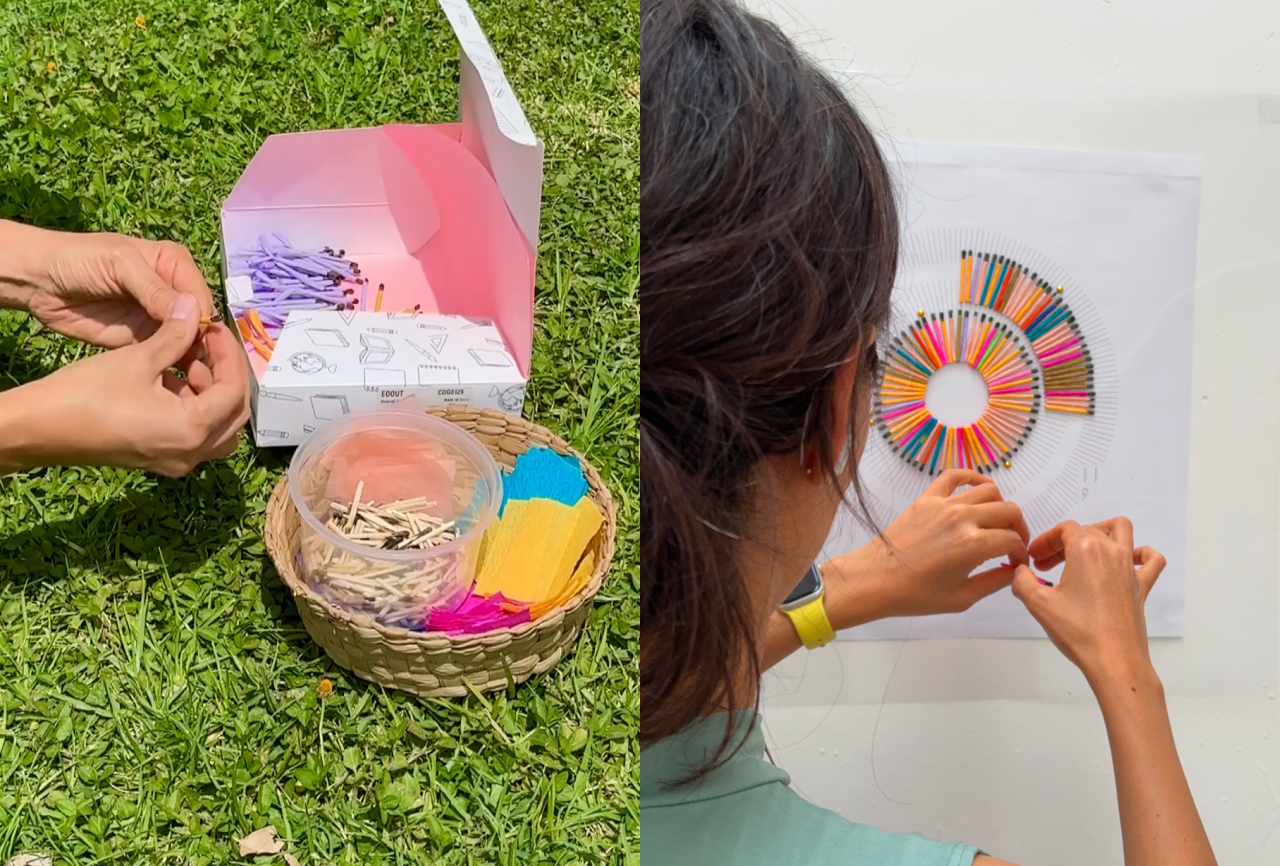
Patiently wrapping each match as a little gift became a ritual, a way to reflect on each individual day. It allowed me to appreciate what I had learned, while also recognizing that every day is a gift we never get back—whether it’s filled with joy, sadness, confusion, or chaos. Matches became the perfect symbol for each day lived: once a match is struck, it’s gone forever. We don’t know how many we have left, so we must appreciate each one and make it matter.
Recommended Resources
Books
- Art as Therapy
- Essential Art Therapy Exercises: Effective Techniques to Manage Anxiety, Depression, and PTSD
- Drawing as Therapy: Know Yourself Through Art
- Healing Trauma with Guided Drawing: A Sensorimotor Art Therapy Approach to Bilateral Body Mapping
Online Museums
Google Arts & Culture museum collections
Inspiring artist
About the Creator
Cyn Márquez
Understanding and reflecting on relationships, meditation, spirituality, and healthy living through writing.
Enjoyed the story? Support the Creator.
Subscribe for free to receive all their stories in your feed.
Comments
There are no comments for this story
Be the first to respond and start the conversation.