
The risk of heart disease is increased by extreme weather conditions like heatwaves, bitter cold, and heavy rain.
Extreme weather and heart disease

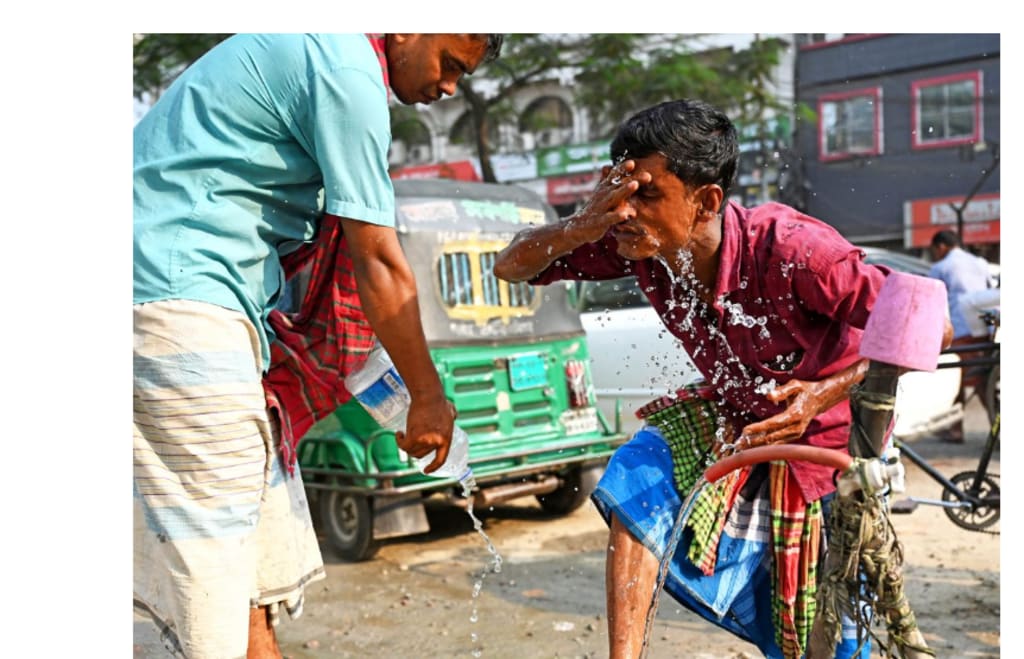
According to a recent investigation, middle-aged and older persons are more susceptible to heart disease when they experience extreme heat, acute cold, or heavy rain. The study reframes harsh weather as a direct burden on aging hearts rather than as a public health backdrop.
Extreme weather and heart disease
Over time, the threat emerged in 157 Chinese cities where ageing populations and local weather patterns interacted. Dr. Ya Fang of Xiamen University (XMU) used the data to demonstrate that severe heat, cold, and precipitation increased the risk of heart disease.
The signal persisted at both the individual and city levels, linking the same danger to both general trends and particular results. The conclusion was more difficult to write off as a local aberration because of this overlap, which also raised the more pertinent question of what type of weather is most detrimental.
Heart issues are caused by heatwaves.
The largest impact was shown on hot days exceeding 100.4 degrees Fahrenheit, with an increase of 1,128 cases per 100,000 individuals for every additional heat day. At that moment, the heart has to work harder to maintain steady blood flow and body temperature since body heat is no longer effectively exiting.
Compared to the cold estimate, the later individual risk increased by 3.044 percent for every additional hot day. Heat damage may be influenced by humidity, urban planning, or both, since western cities seemed less harmed than eastern ones.
Cold behaves in a different way.
Heart disease also increased when temperatures fell below 14 degrees Fahrenheit, with an average of 391 new cases per 100,000 people. Because cold causes blood vessels to shrink, blood pressure to rise, and blood to thicken, the heart must work harder to pump blood.
Its city pattern became weaker from west to east, indicating that local customs, housing, and heating may mitigate some of the harm. Repeated exposure can still have an impact later in life, even though the individual increase was only 0.110 percent per additional cold day.
Rain disrupts the pattern.
The precise regional pattern seen with heat or cold was not formed by heavy rain, defined as more than two inches per day. Nevertheless, the researchers was astonished to find that each additional precipitation event increased the risk of heart disease by 1.620 percent.
Abrupt downpours can change humidity and temperature in a matter of hours, adding to the pressure already placed on individuals. This dispersed pattern points to a local issue influenced by availability to care, travel inconvenience, and drainage.
Who was in more danger?
The study is most helpful for practical protection because risk did not fall uniformly. Adults who are getting close to retirement, smokers, and residents of places with high levels of ozone—a reactive chemical that increases on hot, bright days—were all affected by the heat.
Adults approaching retirement and those with greater body mass index (BMI), a weight-to-height ratio, were more affected by cold. Heavy rain disproportionately affected older folks, those living in rural areas, single people, and those approaching retirement.
The twist of body weight
There was a noticeable difference in how body weight behaved in heat and cold. The researchers contend that as the air temperature rises over 100.4 degrees Fahrenheit, human fat can partially block external heat.
Because increased body weight also increases blood pressure and blood thickness, that insulation becomes insufficient below 14 degrees Fahrenheit. The outcome indicates that weather risk is more particular than good-or-bad labels, but it does not make excess weight generally protective.
Ageing and ozone
The results continued to reflect air quality, indicating that pollution and weather can exacerbate stress in the same individuals. The effects of heat and cold were more pronounced in areas with greater ozone, and smoking increased susceptibility to intense heat.
According to government estimates, nearly 400 million individuals in China will be 60 years of age or older by roughly 2035. An increased number of elderly people means that there is less space for them to withstand rapid stress from extreme heat, cold, or precipitation.
Why location is important
According to the study, people's heart disease risk was influenced by their communities nearly as much as by temperature extremes. This is due to the fact that general heart health is greatly impacted by the state of the neighborhood's roads, homes, clinics, and green areas.
In northeastern China, citywide maps revealed larger concentrations, although rain effects appeared to be more dispersed. Stroke and coronary heart disease continue to rank among China's leading causes of death, according to World Health Organization statistics, thus even slight weather-related increases can have an impact. One warning system won't work in every city due to the combination of national illness load and local infrastructure.
Severe weather and heart health in the future
The XMU team identified immediate interventions that city planners and health systems can take in addition to the risk figures. In addition to stocking supplies close to hot spots and alerting higher-risk individuals before hazardous days, weather alerts could initiate medical outreach.
Practical measures included resource sharing between stronger and weaker regions, improved cooling and heating systems, greener neighbourhoods, and more straightforward health messaging. These concepts are important because extreme weather is becoming more than just a meteorological issue; it is also a medical burden.
Extreme days now seem more like triggers that can worsen heart disease than brief disturbances. The next level is targeted protection for the most vulnerable individuals and locations rather than a general alert.
About the Creator
Enjoyed the story? Support the Creator.
Subscribe for free to receive all their stories in your feed.
Comments
There are no comments for this story
Be the first to respond and start the conversation.