
Science-Backed Hacks for Better Sleep Tonight
Proven, Research-Driven Techniques to Fall Asleep Faster, Stay Asleep Longer, and Wake Up Refreshed

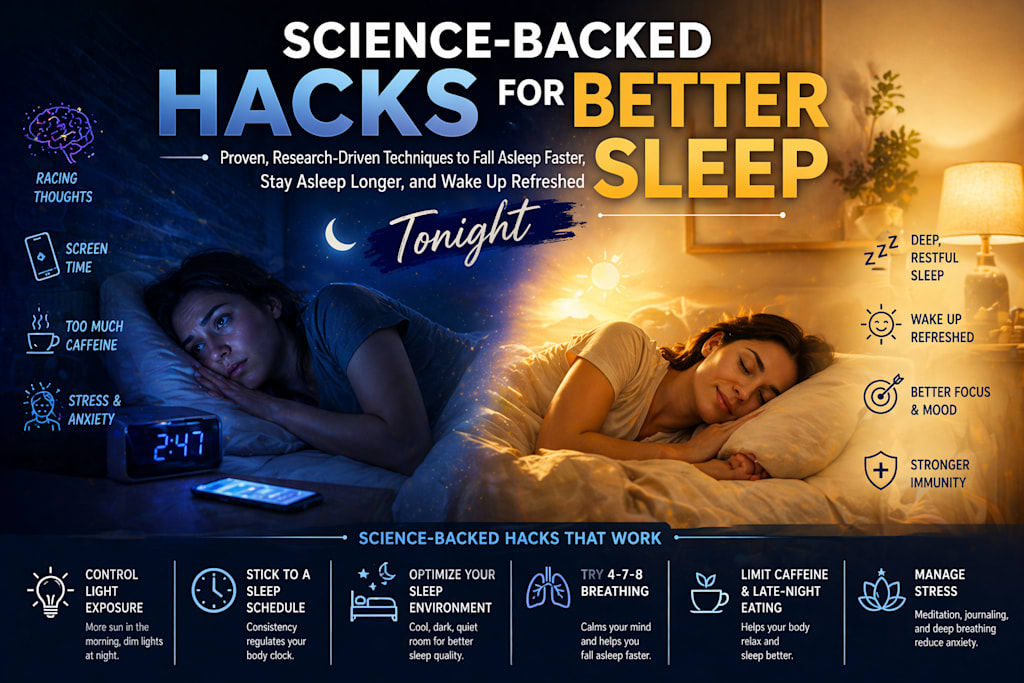
Sleep is one of the most important pillars of health, yet it’s often the first thing people sacrifice. Whether it’s stress, screen time, or an irregular routine, millions struggle to get quality sleep every night. The result? Low energy, poor focus, mood swings, and long-term health issues.The good news is that better sleep doesn’t always require medication or drastic changes. Science has identified simple, effective techniques that can dramatically improve your sleep quality—starting tonight.
1. Control Your Light Exposure
Your body follows a natural internal clock called the circadian rhythm, which is heavily influenced by light. Exposure to bright light—especially blue light from screens—can interfere with the production of melatonin, the hormone that helps you sleep.
What You Can Do:
- Avoid screens 60–90 minutes before bedtime
- Use warm, dim lighting in the evening
- Get natural sunlight in the morning
By aligning your light exposure with your body’s natural rhythm, you signal your brain when it’s time to be awake—and when it’s time to sleep.
2. Stick to a Consistent Sleep Schedule
Going to bed and waking up at different times each day confuses your internal clock. Consistency is one of the most powerful sleep tools.
Best Practice:
- Go to bed and wake up at the same time—even on weekends
- Avoid drastic changes in your sleep timing
Over time, your body will naturally start to feel sleepy at the right time.
3. Optimize Your Sleep Environment
Your bedroom should be designed for one purpose: sleep.
Key Factors:
Temperature: Keep it cool (around 60–67°F or 15–19°C)
Darkness: Use blackout curtains or an eye mask
Noise: Reduce noise or use white noise if needed
A comfortable, quiet, and dark environment helps your body relax and stay asleep longer.
4. Try the 4-7-8 Breathing Technique
If you struggle to fall asleep due to racing thoughts, breathing techniques can calm your nervous system.
How It Works:
- Inhale for 4 seconds
- Hold for 7 seconds
- Exhale slowly for 8 seconds
Repeat this cycle a few times. This method slows your heart rate and signals your body to relax.
5. Limit Caffeine and Late-Night Eating
Caffeine can stay in your system for up to 6–8 hours, making it harder to fall asleep. Similarly, heavy meals late at night can disrupt digestion and sleep quality.
- Avoid caffeine after mid-afternoon
- Eat lighter meals in the evening
- Give your body time to digest before bed
Small adjustments here can make a big difference.
6. Create a Pre-Sleep Routine
Your brain needs a signal that it’s time to wind down. A relaxing pre-sleep routine helps transition your body from wakefulness to rest.
Examples:
Reading a book
- Taking a warm shower
- Listening to calming music
- Practicing light stretching
Consistency is key—doing the same routine each night trains your brain to associate it with sleep.
7. Get Regular Physical Activity
Exercise has been shown to improve sleep quality and duration. It helps reduce stress and promotes deeper sleep.
Important Note:
- Avoid intense workouts right before bedtime
- Aim to exercise earlier in the day
- Even a simple walk can help regulate your sleep cycle.
8. Manage Stress and Overthinking
Stress is one of the biggest barriers to good sleep. When your mind is active, your body stays alert.
Effective Techniques:
- Journaling before bed to clear your thoughts
- Writing a to-do list for the next day
- Practicing mindfulness or meditation
- Reducing mental clutter helps your brain relax.
9. Avoid Checking the Clock
Constantly checking the time when you can’t sleep increases anxiety.
Instead of thinking: “Why am I not asleep yet?”
Shift your focus to relaxation. If you can’t sleep after 20 minutes, get up and do something calming until you feel sleepy again.
10. Use Your Bed Only for Sleep
Your brain forms associations with your environment. If you use your bed for work, scrolling, or watching videos, your brain stops linking it with sleep.
Rule: Use your bed only for sleeping (and rest)
This strengthens the mental connection between your bed and sleep.
11. Consider Natural Sleep Aids Carefully
Some people find benefits from natural supplements like melatonin or herbal teas. However, these should be used cautiously and not relied upon long-term without guidance.
The best results come from improving habits rather than depending on quick fixes.
12. Be Patient and Consistent
Improving sleep doesn’t happen overnight. Your body needs time to adjust to new habits.
The key is consistency:
- Stick to your routine
- Apply these techniques daily
- Avoid giving up too quickly
- Small improvements add up over time.
Final Thoughts
Good sleep is not a luxury—it’s a necessity. It affects your physical health, mental clarity, emotional balance, and overall quality of life.The techniques in this article are simple, practical, and backed by science. You don’t need to apply all of them at once. Start with a few that fit your lifestyle and build from there.Because better sleep doesn’t come from doing everything perfectly it comes from doing the right things consistently.
And the best part?
You can start improving your sleep tonight.
About the Creator
Robert Redford
i create powerful, easy-to-read articles on everything from history and world events to technology, lifestyle, and thought-provoking ideas. If sparks curiosity, I write about it. Always exploring, always delivering something worth reading.
Enjoyed the story? Support the Creator.
Subscribe for free to receive all their stories in your feed.
Comments
There are no comments for this story
Be the first to respond and start the conversation.