Discoveries
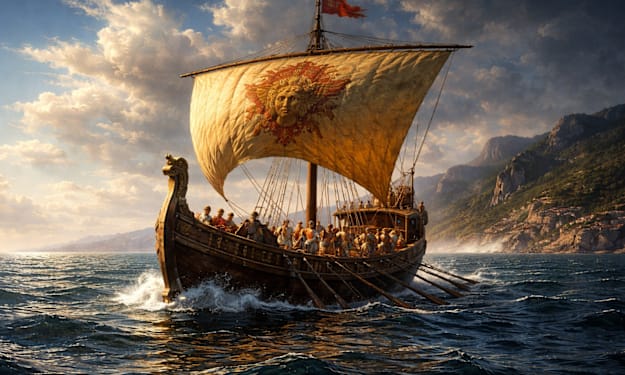
The Roman Navy’s Secret Weapon Wasn’t Iron or Fire — It Was Tree Sap and Pollen
The ship sank in shallow water. Four meters. That was all it took to preserve the wreck for 2,200 years. Oxygen could not reach it. Shipworms could not eat it. The seabed of the Adriatic, off the coast of modern-day Croatia near the island of Ilovik, became a time capsule. The merchant ship had carried wine and timber, and it sank sometime in the middle of the second century BCE.
By Chronicle and Void5 months ago in History
The surprising discoveries made about Neanderthal babies
Fifty thousand years ago, deep in a cave near the Sea of Galilee, a Neanderthal baby died. It was only six months old. Scientists found its bones in 1992 — and for decades, those bones sat largely undescribed, waiting. Now, in 2026, researchers have finally done a full analysis of that tiny skeleton — and what they found has completely changed what we thought we knew about our closest extinct relatives.
By Shirley Oyiadom5 months ago in History
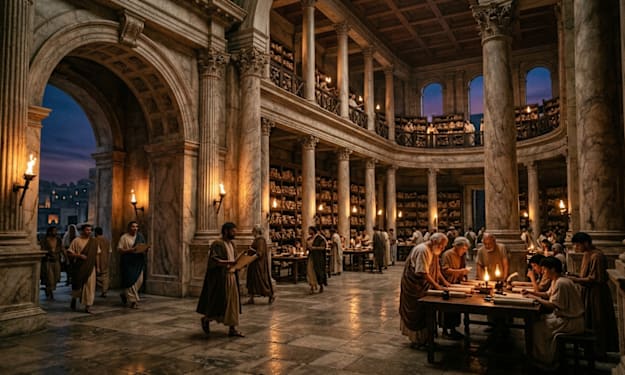
The Library of Alexandria Wasn't Destroyed Once — It Was Dismantled for Centuries
The Library of Alexandria is one of history's most famous casualties. Mention it in most conversations and you will hear about Caesar's fires, or the Muslim conquest, or some combination of both. The story that most people carry is a simple one: an extraordinary repository of ancient knowledge was destroyed in a single cataclysmic event, and with it went irreplaceable wisdom that changed the trajectory of human civilization.
By Mxolisi Makhubela5 months ago in History
Significant Genetic Variability Found in Native Americans
The broadest and most complete genetic dataset of Indigenous American populations to date has been assembled by a ground-breaking worldwide study. The study, which was published in the journal Nature, sequenced 128 high-coverage entire genomes from persons in eight Latin American nations, providing fresh insight into the intricate evolutionary history, distinctive genetic diversity, and health consequences for Indigenous peoples. The study unearths a third wave of migration into South America and identifies more than a million genetic variants that were previously unknown.
By Francis Dami5 months ago in History
Greek City Turned Into a Playground: Ptolemais Found More Than 100 Game Boards
In the ruins of Ptolemais, one of the largest ancient Greek towns in modern-day Libya, archaeologists have discovered something fascinating. Researchers from the University of Warsaw have documented over 100 ancient gaming boards carved into the abandoned city. This finding offers a detailed look at people's daily activities long after the city had fallen.
By Francis Dami5 months ago in History
Researchers Uncover the Mysteries of 9,000-Year-Old Rock Paintings in Kenya
The complex rock paintings at Kakapel, a well-known archaeological site in western Kenya, have a millennium-long history, according to a fascinating new study. Researchers were perplexed for decades by the thick overlapping of photos at this historic rock shelter. The artwork was produced over a period of 9,000 years by at least three different populations, according to careful digital tracing, archaeological excavation, and ancient DNA analysis.
By Francis Dami5 months ago in History
An Ancient Mass Grave Shows How a City Was Destroyed 1,500 Years Ago by a Pandemic
A recently discovered mass grave in the ancient Jordanian city of Jerash provides disturbing information about one of the earliest known pandemics in history. The Plague of Justinian destroyed entire communities, as evidenced by the hundreds of plague victims that were buried in a matter of days. The results demonstrate that individuals who were typically dispersed throughout different areas were abruptly consolidated in death.
By Francis Dami5 months ago in History
Digital reconstruction of a Pompeii victim's fate based on evidence
Artificial intelligence has been employed for the first time by archaeologists and scholars at the ancient Roman site of Pompeii to digitally reconstruct the fate of an individual who perished during the devastating eruption of Mount Vesuvius in AD 79. The innovative digital image provides a profoundly new means of connecting with one of the most well-known natural disasters in history and the people who lost their lives in it.
By Francis Dami5 months ago in History
Secrets of Hyperborea: The Discovery of an Ancient Arctic Civilisation?
The story of a paradise concealed at the top of the earth has fascinated explorers, historians, and mythologists for generations. Ancient Greek writings describe this as a region of perpetual spring where a race of giants lived for a millennium without illness or conflict. It was referred to as Hyperborea, a world that existed "beyond the North Wind." But could this fabled utopia have been more than a myth?
By Francis Dami5 months ago in History