
An Ancient Mass Grave Shows How a City Was Destroyed 1,500 Years Ago by a Pandemic
The Changing City of the Ancient World: Garshu, Gerasa, Jerash

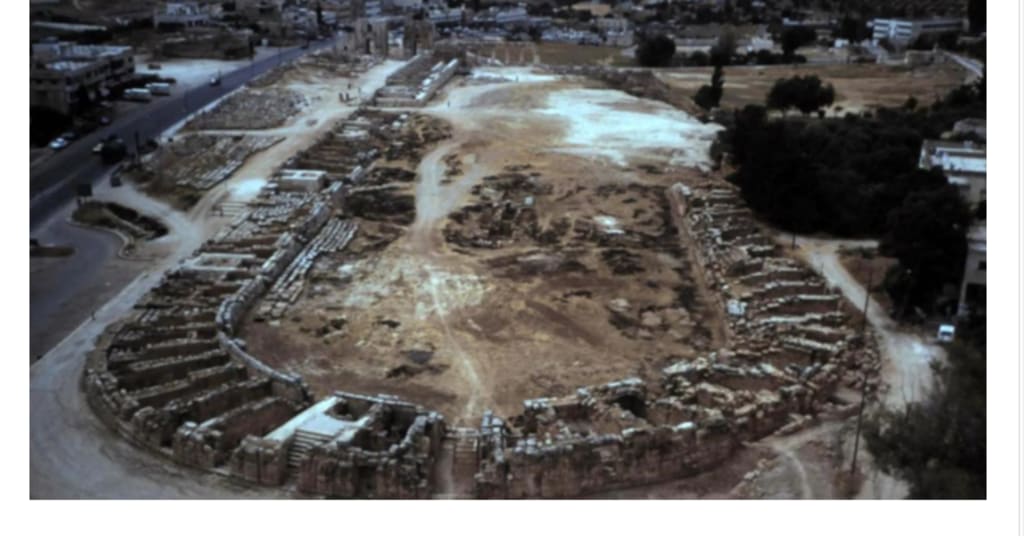
A recently discovered mass grave in the ancient Jordanian city of Jerash provides disturbing information about one of the earliest known pandemics in history. The Plague of Justinian destroyed entire communities, as evidenced by the hundreds of plague victims that were buried in a matter of days. The results demonstrate that individuals who were typically dispersed throughout different areas were abruptly consolidated in death.
Researchers from the University of South Florida examined bioarchaeological indicators from the mass burial in the Jerash hippodrome in a recent study that was published in the Journal of Archaeological Science.
The victims belonged to a mobile population that was a part of the larger metropolitan community, the team found. They were often dispersed around the area, but in an emergency, they were buried together, acting as a reminder that pandemics alter and ultimately destroy societies.
A Deadly and Unexpected Crisis
People afflicted by the Plague of Justinian (541–750 AD) came from a variety of groups that were frequently isolated from one another. But they were reunited in death. In an abandoned public space, a large number of bodies were hastily piled on top of ceramic trash.
In contrast to traditional cemeteries, which evolve over time, researchers found that the burial represented a singular event. This finding offers unmistakable proof of widespread mortality and sheds light on how individuals moved, lived, and became susceptible in prehistoric urban settings.
The Jerash site is the first place where a mass grave connected to the plague has been verified using both genetic testing and archaeological data.The study's chief scientist, Rays H. Y. Jiang stated, "We wanted to go beyond identifying the pathogen and focus on the people it affected, who they were, how they lived, and what pandemic death looked like inside a real city."
Finding Hidden Relationships
A long-standing query about ancient mobility is also addressed by the findings. Although burial evidence frequently suggests societies remained local, historical and genetic data show that individuals travelled and mixed across geographies. Both patterns can coexist, as seen at the Jerash site. Migration usually developed gradually over centuries and merged into daily life, making it challenging to identify in traditional cemeteries.
However, people from more nomadic backgrounds were brought together in one location during a crisis, revealing those hidden relationships. The people buried at Jerash consumed water from a variety of geographical locations, indicating that they were from a wide range of places, according to isotope analysis of dental enamel.
Recognising the Effect on Humans
Scientists can understand how sickness affected actual people in their social and environmental context by connecting biological evidence from the bodies to the archaeological setting. This aids scholars in comprehending historical pandemics as actual human health occurrences rather than merely documented breakouts.
The study focuses on how pandemics affect everyday life and societal systems in addition to how they start and spread. Travel, dense cities, and environmental changes all had an impact back then, just as they do now.This study demonstrates how disease interacts with everyday life, mobility, and vulnerability. Pandemics are social occurrences as well as biological ones, Jiang pointed out.
Although Jerash is a very unimpressive town in the present-day nation of Jordan, its vast and magnificent ancient ruins show its illustrious past. A history dating back to the Neolithic Period of permanent settlement can be found even beneath its current ruins.
Originally known as Garshu by its residents, Jerash was an ancient Near Eastern settlement. Later, it developed into the Greco-Roman city of Gerasa, complete with open-market areas, temples to Zeus and Artemis, and planned, colonnaded streets, among other aspects of Roman and Hellenistic civilisation.
The caliphs and eventually the Mamluk sultans dominated this Islamic metropolis until its demise. Jerash has been a dynamic metropolis that has experienced numerous historical periods and civilisations.
The ancient Jerash
The Neolithic is when the first signs of a permanent, organised settlement can be found. Two skulls that may be up to 9500 years old were discovered close to the Jerash ruins in 2017. The village of Garshu was the first manifestation of the town that would eventually become Jerash.
People who lived in pre-Hellenistic Garshu were most likely descended from the ancient Israelites and Canaanites. It was a little town at best at this point. Without much notice, it went through the hands of various Middle Eastern empires.
Alexander the Great conquered the area around Garshu in the fourth century BC. Garshu and the southern Levant were eventually taken over by Ptolemaic Egypt following his death in 323 BC. The settlement was re-established as the city of Gerasa throughout the Hellenistic and Roman eras.
It had at least two Greco-Roman theatres, several Greek-style temples, and sizable public marketplaces similar to those seen in other Hellenistic and Roman cities. Nicomachus of Gerasa, a Greek mathematician who published important works on Neopythagorean philosophy and mathematics, was also a resident of Gerasa. He lived in the year 100 AD.
Temples in the Ruins of Jerash
Constructed during the reign of Emperor Antoninus Pius (138–161 AD), the Temple to Artemis was a particularly significant temple in the city of Gerasa. On a noticeable hill, the temple was constructed.
There is evidence of an earlier, smaller sanctuary to Artemis that existed as early as 79 AD, but the main temple for which the city is renowned was constructed during the reign of Antoninus Pius, around 150 AD. This suggests that before the Antonine era, Artemis worship was significant in the city. To the south of the Artemis temple is a temple dedicated to Zeus, another significant deity in the city.
Additionally, Gerasa was one of the Decapolis' ten cities during the Roman era, and in 106 AD it was added to the Roman province of Arabia. The city peaked during the Roman era.
The city's architecture and the layout of its marketplaces, which are similar to those in the most Romanised regions of the Empire, are clear indicators of substantial Romanisation. Gerasa gained notoriety as a Christian city during the late Roman Empire, and the city continued to have a Christian population far into the Islamic Era.
A City by the Name of Jerash
Gerasa changed its name to Jerash during the Islamic era. The city thrived as a cultural hub during the Umayyad caliphate. This occurred despite the city being hit by an earthquake in the eighth century.
The fall of the Umayyad caliphate and its replacement by the Abbasid caliphate may have contributed to the city's demise in the ninth century. Jerash's significance in the region may have been impacted by the shift of the Islamic world's political center from Damascus under the Umayyads to Bagdad under the Abbasids.
Ruins of Jerash
The city was involved in the battles between the neighbouring Islamic powers and the Christian Crusader states in the twelfth century. Due to the presence of an enemy force and fortifications, Jerusalem was sacked by King Baldwin II in 1121. The Temple of Artemis sustained damage in addition to the city being largely destroyed. The walls of the Temple's ruins still bear the scars of the fire.
Following the crusades, the Mamluk sultanate took control of the area around Jerash. Parts of the city were relocated at this time and remained occupied until the 16th century, at which point Jerash was entirely abandoned and lost to history, not to be found until the 19th century, when archaeological digs started.
Over the course of its lengthy history, the city of Jerash underwent numerous transformations, evolving from a Semitic town to a Greco-Roman metropolis before becoming an Arabized metropolis. Nonetheless, the city continued to be populated and was able to change with the times.
It may be regarded as a city that is always evolving because of this. However, Jerash's quality was limited. Like many cities, even those that are affluent today like New York, London, or Singapore, the city was finally destroyed and abandoned.
About the Creator
Enjoyed the story? Support the Creator.
Subscribe for free to receive all their stories in your feed.
Comments
There are no comments for this story
Be the first to respond and start the conversation.