
Patients with cancer of unknown origin have hope thanks to a new medication trio.
A three-pronged drug assault

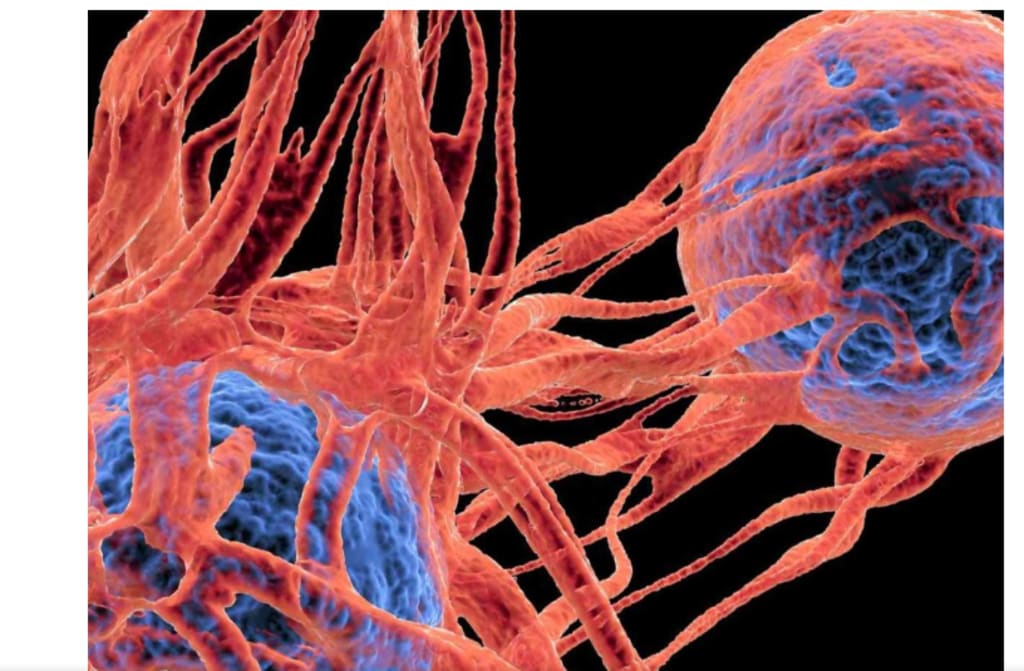
When a cancer patient's first-line chemotherapy doesn't work, doctors typically turn to a backup strategy specific to the type of tumour. What happens, though, if nobody can determine the type of tumour?
This identical issue—metastatic tumours dispersed throughout the body with no discernible origin—occurs in one to three percent of cancer cases. Until today, once the initial treatment failed, those patients had virtually no set script to follow. Luckily, they might have just received one from a Shanghai trial.
A cancer that conceals itself
One to three percent of all cancer diagnoses are cancer of unknown primary (CUP). What physicians are unable to discover defines it. Cancers that have already migrated to lymph nodes or other organs are known as metastatic tumours. The originating source remains undetectable.
The tissue of origin cannot be identified by CT scans, PET imaging, biopsies, or genetic testing. Because cancer treatment typically depends on identifying the type of cell that went rogue in the first place, that blind spot is disastrous.
Life expectancy has historically been expressed in months for patients whose first round of treatment is unsuccessful. Even as therapies for other cancers changed, a recent analysis of CUP results revealed that those numbers had hardly changed in decades.
A three-pronged drug assault
Together with colleagues from pathology, radiology, and nuclear medicine, Dr. Zhiguo Luo of the Fudan University Shanghai Cancer Center oversaw the new trial. The team combined three quite distinct medications into a single regimen during the study.
The first type of immunotherapy is an anti-PD-1 antibody, which aids immune cells in identifying and combating tumours. The second ingredient was nab-paclitaxel, a chemotherapeutic medication encapsulated in protein particles that facilitate its direct delivery to tumour tissue.
Bevacizumab completes the trio of medications by obstructing the signals that tumours utilise to create new blood vessels. Each of these medications had a proven track record of treating different types of cancer. No one had tested all three in a controlled environment against CUP prior to this research.
In the Fudan trial
The team included 48 patients between June 2021 and April 2024 who were either unable to tolerate or had ceased responding to first-line medication. According to a 2020 study, previous attempts in CUP attempted several chemotherapeutic combinations with largely unsatisfactory outcomes. Only a small percentage of cases—mostly those with uncommon genetic flags—had benefited from targeted medications.
Tumours that shrank
Fifty-four percent of patients had measurable tumour shrinkage. Nearly 96% of the tumours were under control, suggesting they had at least stopped growing. The median survival was 25.1 months, and half of the patients waited 13.1 months before their condition got worse once more.
These figures should not be disregarded for a malignancy this aggressive. Low response rates and survival rates assessed in months rather than years have been common outcomes of earlier CUP therapies. Because of this, the 25-month median survival in this instance is very exceptional and significant.
Although widespread, side effects were manageable. The team noted no unexpected interactions between the three medications, despite the fact that almost every patient experienced some sort of treatment-related problem.
Blood cell clues
Then something unexpected happened to the squad. They discovered that eosinophils, a type of white blood cell, seemed to be connected to treatment response when they examined normal blood work. It appeared to monitor the greatest responders. Longer life and improved tumour response seemed to be correlated with higher eosinophil levels.
Researchers had long speculated that immunotherapy in general might be related to this. Last year, a different study on kidney cancer made similar findings. However, it has not yet been reported in CUP patients. The group is transparent about the things they are yet unable to explain. CUP has refused to be modelled in animals or cultivated in lab dishes.
Developments in the field of cancer
Second-line CUP patients had virtually no standard of care prior to this experiment. Physicians created treatment plans on a case-by-case basis, frequently using scant data. They now have a recipe with actual numbers attached thanks to the Fudan results.
After the initial course of treatment is unsuccessful, a patient who has been diagnosed with metastatic cancer can now be offered something more tangible. This may alter the clinical management of the illness.
It is evident what this trial altered. When chemotherapy fails, a cancer that conceals its source no longer requires medical professionals to battle blind. In over half of the patients tested, the three-drug combination reduced tumour size and extended median life beyond two years.
About the Creator
Enjoyed the story? Support the Creator.
Subscribe for free to receive all their stories in your feed.
Comments
There are no comments for this story
Be the first to respond and start the conversation.