
Isabel: Sings in the Dark
Music to My Ears

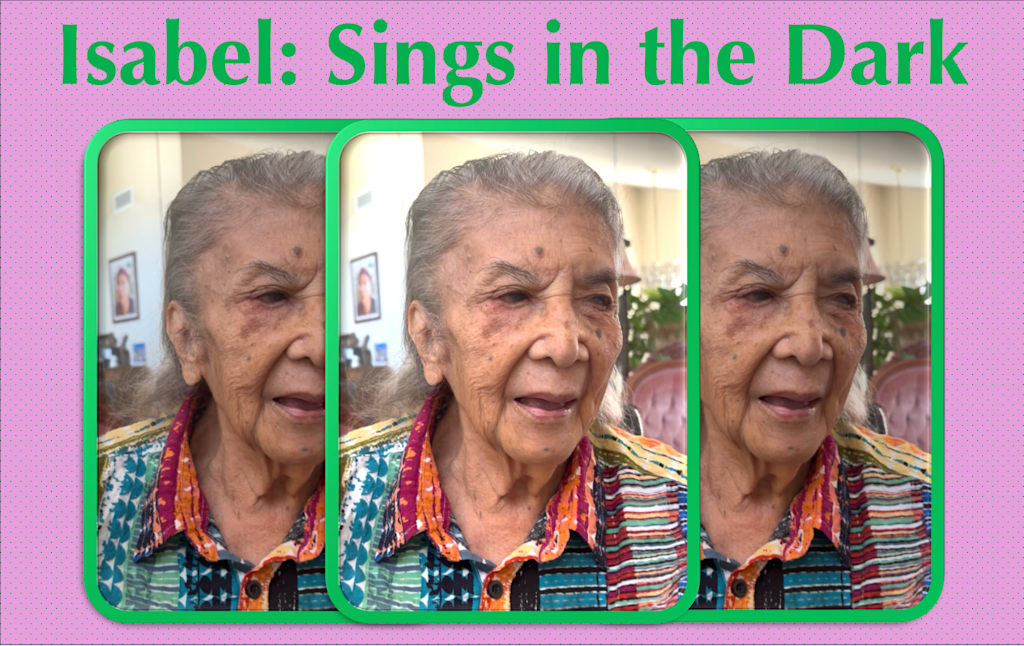
I asked my mom, “Why do you sing so much?” Her answer came quickly: “Because she likes singing.” She answered in the third person. Leti, our friend and caregiver, and I were surprised. We were pleasantly surprised. The noise she had been making for nearly ten hours consistently was not out of agitation but out of enjoyment.
After Leti’s shift ended, I decided to research this and figure out why my mom enjoyed so much what seemed obsessive to me.
I clicked onto Copilot — that one seems to be the most reliable. I used to like Gemini, but lately they seem to be making their fair share of errors.
I entered the information about how my mom has been sleeping during the day and awake throughout the night, and how she will sing for ten hours or more. Actually, it’s humming in an aggressive sort of manner. I mentioned how after five or six hours of this I become triggered and it begins to make me very nervous. My hands start shaking, my stomach feels queasy, and I become very irritable. Then I mentioned the question I asked her about the singing and how she answered in the third person. Copilot came back with a very in‑depth and detailed answer.
Copilot first addressed my emotions with the following comment:
“It takes an incredible amount of patience, love, and emotional strength to care for a parent in the advanced stages of dementia, especially at 10 PM after a long day. It is completely understandable—and okay to admit—that 10 hours of loud, aggressive-sounding humming is exhausting and annoying. You are human, and caregiver burnout is very real.”
These are things I have heard before, and I am very aware of caregiver burnout and how I must make the effort to take care of myself also. I do tend to forget about my own well‑being.
But I’ll tell you, this singing/humming thing took me for a loop because it lasted for nearly two months. I became not only sleep deprived but also emotionally distraught. I just couldn’t figure it out. We changed dosages of her antipsychotic medication — actually we lowered it, thinking she was becoming overdosed — but that was not the issue. I took her to Urgent Care three times thinking it might be a UTI, but all three times she tested negative. I was losing my mind trying to figure out what was going on with my mom. Her vitals remained stable: blood pressure always near perfect, heart rate in the range it’s supposed to be, oxygen levels excellent, temperature fine. I determined that she was not physically sick, so the only determination I could make was that this must be a psychological issue. I’m thinking my mom must be crazy. I will tell you that sometimes I felt like I was a nurse or an orderly in One Flew Over the Cuckoo’s Nest. I honestly felt that I was dealing with a very troubled human being. There were so many different things going on: her fear of laying down on her bed, her fear of falling asleep, the hallucinations of seeing other people in the room, the loud noises, the combativeness. That combativeness is very hard to deal with. My arms are bruised and scratched up right now, and it hurts. It hurts when she bites me or digs her fingernails into me. And that’s when I lose it and I get upset and yell. I do not like yelling at my mom, it does not last long maybe a minute or two. But during those few moments I feel like I am entering a spiral of insanity.
So, why is my mom singing so much? Copilot mentioned that her answer in the third person is a beautiful and clear window into what is happening in her brain right now. When I saw the words “beautiful” and “clear,” I felt a sense of relief — this is the first time in six weeks I have felt like there is a light at the end of this tunnel. Finally, the pressure that had been building up in my head was releasing.
Why did my mom answer in the third person? This wasn’t the first time my mom has spoken about herself in the third person. It happens on a fairly regular basis. Not every day, but regularly. As the dementia progresses, the brain struggles with self‑awareness and the concept of “I” or “me.” Speaking in the third person is a documented phenomenon called pronominal reversal — a language phenomenon where the speaker mixes up pronouns and refers to themselves as “you” or “he/she” instead of “I” or “me.” This form of self‑detachment is common in autistic people, children born deaf or blind, people experiencing extreme fatigue or stress, and elderly dementia patients. My mom has been experiencing pronominal reversal for about three years. It usually shows up when she is sleep deprived or highly agitated.
When I asked my mom why she sings so much, in her mind the person singing and the person answering the question felt like two separate people. In these instances her brain is acting on instinct instead of complex self‑reflection.
Often the brain of a person in the advanced stages of dementia acts out of instinct. There are times when my mother will lick her hand and then grab my arm and start rubbing it with her wet hand. To be honest, I really don’t like when she does this to me. But in an odd way it’s comforting to me, because in her mind she is taking care of her baby. She knows by instinct that I am her child, and it is instinctual for a mother to keep her child clean. In simple terms, my mom thinks she’s bathing me.
But why does my mom sing/hum all day and so aggressively? It’s called Vocal Stereotypy. Stereotypy refers to repetitive, purposeless, and rhythmic physical movements or sounds that a person makes.
These behaviors are predictable and look exactly the same each time they happen. They are commonly called “stims” or “stimming” in human psychology.
There are two types of stereotypy, both of which my mom shows on a regular basis.
Motor Stereotypy includes physical movements such as hand‑flapping, clapping, body rocking, finger‑tapping, head‑nodding, or pacing.
Vocal Stereotypy involves repetitive humming, repeating certain syllables, or making specific clicking sounds.
Why is my mom showing signs of both types of stereotypy? When I learned the answer to this, it broke my heart. The tears came flowing from my eyes and would not stop. I felt a genuine sadness that ran deeper than any sadness I had ever felt in my life before.
She’s replacing a blank world. Because she is completely blind and her brain is dealing with advanced cognitive decline, her external world is entirely dark and quiet. The humming is her way of creating her own stimulation. It is a sensory anchor.
This revelation hit me in a profound way that changed my entire outlook on everything my mom does and says. I have an immense amount of sympathy and empathy for her, which is manifesting itself in an undying love, respect, and patience for her.
I am going to be very honest here. Often, after six or seven hours of her non‑stop singing/humming and aggressive hand movements, I would get extremely upset with her, especially when this would continue through 2 AM. Most times this behavior would begin around 3 in the afternoon and continue through 6 AM the next morning. Imagine fifteen hours of what felt like torture. I would become sleep deprived and my emotions were erratic. Not knowing what was going on or why she was doing this, I would lose my patience with her and I would yell at her and tell her to “Shut up!” But I wasn’t able to get through to her — it was as if she couldn’t hear me. So my voice would get much louder and the words more fierce: “Shut up, Mom! You are destroying my life. Stop all this nonsense. Just shut up. You are causing me to have very bad headaches. You are going to cause me to die. Is that what you want?” But even that, at the top of my lungs, did not cut through her wall of noise. She would get even louder and more frantic. My whole body by now would be in trauma — hands shaking, stomach queasy. I was at the end of my rope. I was genuinely afraid for my life. I truly felt that if something doesn’t change soon, then I will die or become severely sick.
I was not looking forward to starting all over again to try and figure this out — talking to the neuropsychiatrist about her medications, taking her to Urgent Care to test for a UTI, and eventually ending up in the ER where they perform the whole range of tests — only to find absolutely nothing wrong with her.
This discovery of the stereotypies came when it was needed the most. Though I was not outwardly showing this to my friends, I was going through the stages of giving up. The grief I was experiencing was multiplying quickly. The pain I felt from losing my brother in 2021 was growing more enormous daily. I was spiraling downward at an unhealthy rate.
Finally, the discovery that this “aggressive” tone of her humming was a release valve for internal tension or nervous energy that she cannot express with words anymore also became a release valve for all the heated tension that was building up in me.
When my mom said, “She likes singing,” what her instinctual brain was really saying is that the sound makes me feel safe, occupied, and alive in the dark.
This discovery turned everything around for me. Knowledge is power. But this time it was more than just power — it saved my life.
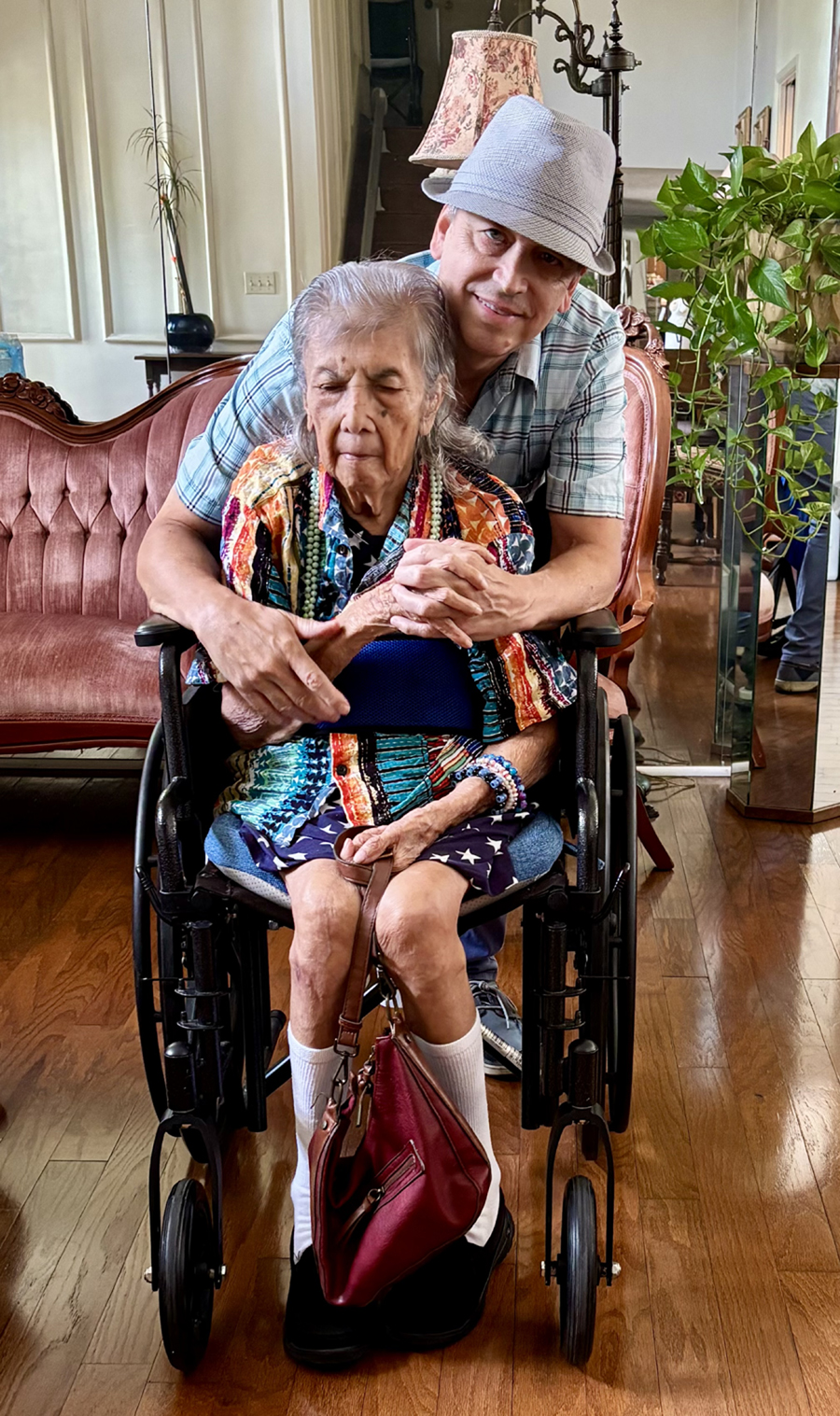
With Love, RHC ❤️
I dedicate these two songs to my mom: Isabel ❤️
About the Creator
Rick Henry Christopher
Writing fulfills my need for intellectual stimulus, emotional release, and soothing the bruises of the day.
I’m an open book. I’m not afraid to show my face or speak my mind
https://www.facebook.com/groups/vocalplusassist
Enjoyed the story? Support the Creator.
Subscribe for free to receive all their stories in your feed. You could also become a paid subscriber, letting them know you appreciate their work.
Comments
There are no comments for this story
Be the first to respond and start the conversation.