
In the United States, almost 100,000 kids have tried kratom.
Americans who use kratom

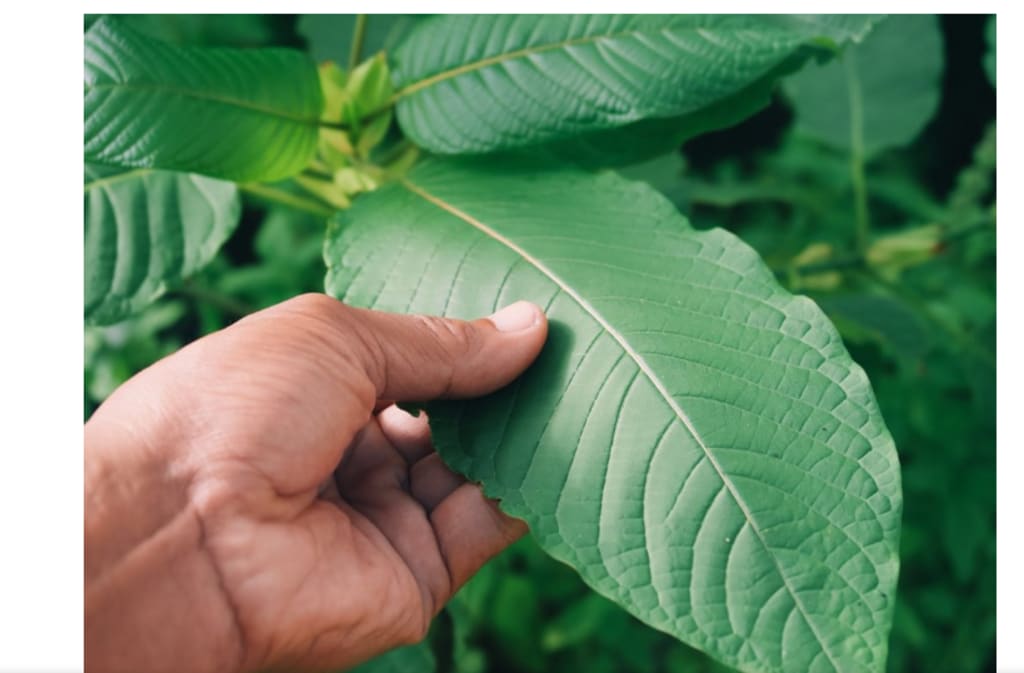
The majority of those that are aware of kratom believe they are aware of its users. Mostly adults. individuals attempting to stop using opioids or managing chronic pain. A 14-year-old's rucksack shouldn't include this kind of material.
That presumption was just altered by a new nationwide study. The numbers are higher, younger, and more closely linked to addiction than anyone could have previously predicted.
Americans who use kratom
The plant behind the bottles and candies is called kratom, and it is indigenous to Southeast Asia. Mitragynine, a plant chemical found in its leaves, binds to the same brain receptors as opioids.
The first nationwide study on American kratom use was carried out by Dr. Sean Esteban McCabe, a professor at the University of Michigan (U-M) School of Nursing. This level of prevalence in the United States has never been measured or linked to addiction and mental health.
Four years' worth of data were extracted by Dr. McCabe's team from the National Survey on Drug Use and Health, which includes people aged 12 to Over 5 million people claim to have used kratom at some point. More than 100,000 kids between the ages of 12 and 17 are included in that number.
Kratom is being used by whom?
The highest rates of kratom use were reported by those aged 21 to 34. Roughly one percent had taken kratom in the previous year alone, and about 3.4 percent had used it at least once. In all age groups, lifetime use increased from 1.6 percent in 2021 to 1.9 percent in 2024.
On paper, this would seem like a tiny leap. However, in just three years, that move adds hundreds of thousands of users throughout a 340 million-person nation. Kratom frequently appeared in conjunction with other drugs rather than by itself.
A lower percentage of kratom users abused prescription medications including opioids or stimulants, whereas about two-thirds reported using cannabis in the previous year.
Children are reached by kratom marketing
The researchers were intrigued by the discovery that 100,000 kids between the ages of 12 and 17 had taken kratom. Nobody anticipated such an amount before the survey. Kratom is not obtained by children via prescription drugs or pharmacies. Smoke shops and smartphone apps sell a lot of goods.
They frequently take the form of colourful drink shots, fruit-flavored tablets, or gummies that can easily pass for candies or energy boosters. Federal officials have repeatedly warned about that very appeal, especially for intensified forms sold in packaging and flavours targeted to younger consumers.
"If we are serious about protecting our children, all states need to change their policies regarding kratom and 7-OH products," Dr. McCabe stated.
The overlap in mental health
Over half of those who had used kratom in the years before to the study satisfied the diagnostic requirements for a drug use disorder in the previous year. This study differs from earlier research because of that relationship.
Signs of severe psychological discomfort were seen in somewhat less than 38%. Suicidal thoughts and major depression were more prevalent than in the general population. Current users also followed the same trend.
Here, researchers used caution. The results of the survey do not indicate whether the mental health symptoms or kratom use emerged first. It does demonstrate that, even after controlling for other drug use, the two appear together significantly more frequently than would be expected.
More potent than morphine
7-OH, or 7-hydroxymitragynine, is a different issue. The most powerful component of the kratom plant, it is found in minimal amounts in raw leaves but is highly concentrated in some commercial products.
The activity of 7-OH is responsible for the opioid-like effects of kratom. Although there is little data on humans, the substance stimulates opioid receptors more potently than morphine in laboratory and animal experiments.
Compared to ordinary kratom, some commercial concentrations are five to fifty times stronger. It is frequently referred to as "legal morphine" in marketing terminology. The DEA has been requested by federal regulators to classify concentrated 7-OH as a restricted substance.
Some states prohibit the usage of kratom.
Kratom use is either prohibited or regulated in about half of the states in the United States. It remains mostly unaltered by the others. A cross-border misdemeanour could result from a 7-OH gummy from a petrol station in one state.
7-OH concentrations are capped in some states. Verification of age is necessary for others. Some states, like Wisconsin and Alabama, completely prohibit the use of kratom. According to a recent analysis, the state-by-state picture is more akin to a quilt than a policy.
Dr. McCabe claims that fragmentation makes practically everything more difficult, including clinical screening, preventative messages, and the fundamental query of who is selling what to whom. Without specialised panels, standard drug tests are unable to identify kratom.
What might occur next
After this survey, there are now hard numbers instead of assumptions. Over 5 million people have used kratom at some point in their lives in the United States; minors are included in the statistics, and the percentage is rapidly increasing.
Along with alcohol, cannabis, and prescription opioids, doctors now include kratom and 7-OH in their intake-form checklist. The study provides population-level data for state lawmakers to consider.
Dr. McCabe was particularly struck by the 5 million figure. It surpasses the population of Wyoming, Vermont, Alaska, South Dakota, North Dakota, and Delaware combined, he said.
About the Creator
Enjoyed the story? Support the Creator.
Subscribe for free to receive all their stories in your feed.
Comments
There are no comments for this story
Be the first to respond and start the conversation.