
Doctors Are Renaming a Condition That Affects Millions of Women — And the New Name Changes Everything
For Decades, a Wrong Name Sent Doctors Looking in the Wrong Place, Delayed Diagnoses by Years, Locked Research Funding Behind the Wrong Door, and Left 170 Million Women Carrying a Label That Didn't Describe What Was Actually Happening in Their Bodies. That Name Has Finally Been Changed and Everything That Follows From It Must Change Too.

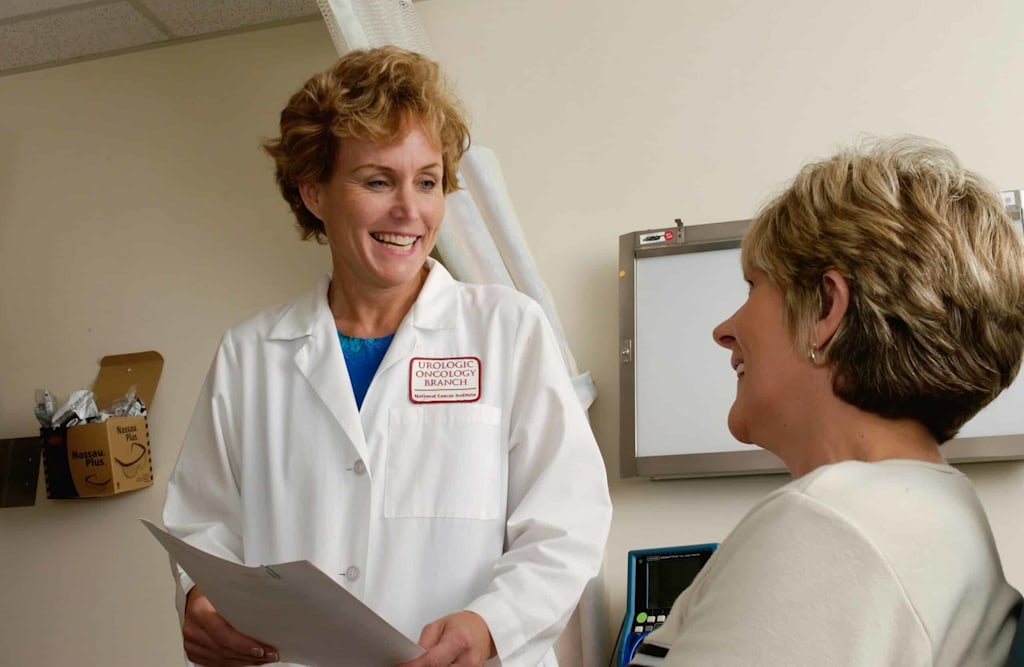
She went to the doctor because something was wrong.
Not dramatically wrong. Not hospital wrong. Just persistently, quietly, infuriatingly wrong in the way that women's health problems so often are — the kind of wrong that accumulates across years of appointments, blood tests, inconclusive ultrasounds, and the particular exhaustion of being told, in one form or another, that the problem is either not as serious as you think or not quite matching the criteria for the diagnosis you've researched at 2 AM.
Maybe her periods were irregular — unpredictable in a way that disrupted her life and confused her cycle tracking. Maybe her skin broke out in ways that no topical treatment touched. Maybe hair appeared where she didn't want it and thinned where she did. Maybe she couldn't lose weight despite doing everything she was told to do, because nobody had explained to her that her insulin signaling was dysregulated in a way that made the standard advice not just ineffective but physiologically counterproductive. Maybe she was told she had polycystic ovary syndrome — PCOS — and sent away with a prescription for the contraceptive pill and an instruction to come back if she wanted to get pregnant.
Maybe she went home, Googled polycystic ovary syndrome, and spent years being confused by a name that implied ovarian cysts — cysts that, in many cases, she didn't actually have, had never had, and was never going to have, because that was never what was wrong with her in the first place.
This is the story of 170 million women worldwide.
And this week — in a landmark paper published in The Lancet on May 12, 2026, following fourteen years of international effort and input from more than 22,000 people — that story got a new name.
Polycystic ovary syndrome, PCOS, is now polyendocrine metabolic ovarian syndrome, PMOS.
And the difference between those two names is not a rebranding exercise or a semantic footnote. It is a complete reconceptualisation of what this condition is, where it lives, who should be treating it, how it should be funded, and what it means for every woman who carries the diagnosis — or who has been waiting years for a diagnosis to arrive.
What Was Wrong With the Old Name — and How Much It Cost
The word "polycystic" means many cysts. Polycystic ovary syndrome, therefore, implies a condition defined by ovarian cysts — a gynecological problem, primarily reproductive in nature, best addressed by a gynecologist, relevant mainly when fertility is the concern.
Every word of that implication is wrong.
The term PCOS was considered "inaccurate, implying pathological ovarian cysts, obscuring diverse endocrine and metabolic features, and contributing to delayed diagnosis, fragmented care, and stigma, while curtailing research and policy framing." This is the formal conclusion of the global consensus process, published in The Lancet. It is, in the understated language of scientific publishing, a fairly extraordinary indictment of a medical label that has been applied to millions of women for decades.
The "cysts" visible on ovarian ultrasound in many women with this condition are not cysts in the clinical sense. They are follicles — immature egg-containing structures that have arrested in their development rather than completing the ovulation cycle. They are a symptom, a downstream consequence, of the hormonal dysregulation that is the actual condition. Many women with PCOS — now PMOS — have never shown these follicles on ultrasound. Many women who do show them do not have the condition at all.
The name sent clinicians looking at the ovaries for a problem that lives primarily in the endocrine and metabolic systems. And that navigational error — built into the label, propagated through medical education, embedded in referral pathways and research classifications — had consequences that compounded over decades.
Women were referred to gynecologists rather than endocrinologists for a condition whose primary drivers are hormonal and metabolic. Research funding flowed through reproductive health channels for a condition that carries significant cardiovascular, metabolic, and psychological health implications entirely independent of fertility. Clinical guidelines focused on ovarian function for a condition whose most dangerous long-term sequelae — insulin resistance, type 2 diabetes, cardiovascular disease, depression and anxiety — have nothing to do with ovaries.
Even though it affects 170 million reproductive-age women, even though the health and economic burden is huge, it hasn't had much investment at all in research, said Helena Teede, the Monash University researcher who led the fourteen-year global effort to change the name. Getting it categorized differently means the research community can access funding streams that were previously unavailable precisely because the name categorized it as a gynecological disorder rather than the complex multisystem condition it actually is.
The name, in other words, was not just inaccurate. It was a structural barrier — woven into the international disease classification systems, the medical education curricula, the research funding frameworks, and the clinical referral pathways that determine how this condition is managed across 195 countries. A wrong name in medicine is not a cosmetic problem. It is an architecture that shapes everything built on top of it. And for fourteen years, Teede and an international coalition worked to change the foundation.
What PMOS Actually Is — and Why the New Name Gets It Right
Following what the authors called an "unprecedented, rigorous, multistep global consensus process," the name change was published in The Lancet on May 12, 2026, as the result of collaboration across 56 leading academic, clinical, and patient organizations, as well as iterative global surveys that garnered responses from over 14,300 people with PCOS and multidisciplinary health professionals from all world regions.
The new name was selected not arbitrarily but according to principles: scientific accuracy, clarity, stigma avoidance, cultural appropriateness, and implementation feasibility. Every word in polyendocrine metabolic ovarian syndrome was chosen to do specific work.
Polyendocrine — this single word is perhaps the most important shift. It recognizes that the condition is underpinned by multiple interacting hormonal disturbances, including insulin, androgens, and neuroendocrine hormones, rather than being an isolated ovarian disorder. The condition involves dysregulation across the hypothalamic-pituitary-ovarian axis, the adrenal system, and peripheral insulin sensitivity simultaneously. It is not one hormone misfiring. It is an integrated dysregulation across an entire hormonal network. The prefix "poly" now refers not to cysts, but to this multi-endocrine complexity — which is far more accurate, far more clinically useful, and far more honest about the biological reality of what is happening in affected women's bodies.
Metabolic — this is the word that most fundamentally changes where PMOS sits in the landscape of medicine. It acknowledges the inherent metabolic features such as insulin resistance, obesity, and increased risks for type 2 diabetes and cardiovascular disease. Insulin resistance is not a complication of PMOS. It is a core feature — present in the majority of affected women regardless of weight, underlying the hormonal dysregulation, and responsible for many of the most significant long-term health risks the condition carries. By placing "metabolic" in the name, the consensus process has formally declared that this condition belongs, at least in part, to metabolic medicine — and with that declaration comes access to an entirely different set of treatment approaches, research questions, and clinical specialties.
Ovarian — retained deliberately, and appropriately. The ovarian dysfunction in PMOS — the irregular or absent ovulation, the arrested follicular development, the fertility implications — is real and significant. Removing it from the name would erase a dimension of the condition that matters profoundly to affected women. Its position in the name is now accurate: ovarian dysfunction is a feature of PMOS, not its defining characteristic or root cause.
PMOS reframes the condition as integrated insulin, androgen, neuroendocrine, and ovarian hormone dysregulation with metabolic, reproductive, psychological, and dermatologic sequelae that drive major health and economic burdens. That sentence — dense with medical terminology — translates to something straightforward: PMOS is a whole-body condition. It affects the hormonal system, the metabolic system, the reproductive system, the skin, and — something the old name never acknowledged — the mental health of the women who have it.
The Fourteen-Year Fight — and Why It Took This Long
It is worth pausing on this: the process that produced this name change took fourteen years, involved 56 organizations, surveyed more than 22,000 people, employed modified Delphi methods, nominal group techniques, and iterative global rounds of consultation — and it was published in The Lancet with the backing of the Endocrine Society, multiple international medical bodies, and patient organizations across the world.
Fourteen years to change a name.
That timeline is not a reflection of bureaucratic inefficiency, though some of that exists in every institution. It is, more fundamentally, a reflection of how medicine has historically valued — or failed to value — the experiences of women living with conditions that affect exclusively or predominantly female bodies.
The diagnosis of PMOS carries an average delay of two years from symptom onset in many countries — and in some settings, the diagnostic odyssey stretches far longer. Women are told their irregular periods are stress. Their acne is diet. Their unexplained weight gain is lifestyle. Their mood disturbances are anxiety. Each symptom is addressed in isolation, by different specialists, none of whom is looking at the whole picture — because the name of the condition told medicine to look at the ovaries, and when the ovaries didn't show clear cysts, the picture stayed fragmented.
Rachel Morman, Chair of Verity (PCOS UK), was a lived experience expert on the global name change process and said the previous name misrepresented the true nature of this condition. For the women who drove this process — who participated in the surveys, sat on the working groups, shared their diagnostic journeys and their frustrations with a label that had both misdescribed their illness and followed them into every clinical interaction they ever had — the name change is not an academic milestone. It is a correction of a wrong that had personal, tangible, and years-long consequences for their health and their lives.
Lorna Berry, an Australian woman who has PMOS and played a key role in the renaming process, said the result will be life-changing. "This is about accountability and progress," she said. "It is about my daughters, their daughters, and the countless women yet to be born. We deserve clarity, understanding, and equitable healthcare from the very beginning."
What Changes Now — in the Clinic, in the Lab, and in the Room
The name change is not self-executing. A new acronym does not automatically retrain every physician, rewrite every textbook, redirect every research grant, or reorganize every clinical pathway. The consensus process recognized this explicitly, developing eight stages of implementation that will roll out across global medical systems — including the formal integration of the new name into the International Guideline utilized in 195 countries, scheduled for its next update in 2028.
But the downstream effects of accurate naming are real and they are significant, even before a single guideline has been rewritten.
In the clinic: A woman presenting with irregular cycles, unexplained weight gain, acne, and fatigue is now, under the new framing, a candidate for a multidisciplinary assessment that includes endocrinology and metabolic medicine — not simply a gynecological referral. Under the latest criteria, PMOS is indicated if patients meet 2 out of 3 criteria: excess male hormones called androgens, irregular menstrual cycles, and high levels of anti-Müllerian hormone (AMH) in blood or ovaries with many arrested follicles seen on ultrasound. Sixty percent of women with the condition only need the first two criteria — they don't need their ovaries assessed at all. The availability of a blood test for AMH as a diagnostic alternative to internal ultrasound is not a trivial point. It is a less invasive, more accessible, and in many contexts cheaper diagnostic pathway — one that becomes possible once you stop insisting that the condition is fundamentally about ovarian architecture.
In the research laboratory: The paper emphasized that PMOS involves interacting disturbances in insulin signaling, androgen production, neuroendocrine pathways, and ovarian function, contributing not only to infertility and menstrual dysfunction but to a much broader spectrum of health consequences. With the condition formally reclassified as a polyendocrine metabolic disorder, research questions that were previously peripheral — how to optimize insulin sensitization, how to address cardiovascular risk, how to treat the metabolic drivers rather than the downstream reproductive symptoms — become central. New anti-obesity medications, GLP-1 receptor agonists like semaglutide, are among the treatments whose role in PMOS management is now an active area of investigation, precisely because the metabolic dimension has been formally elevated.
In the treatment room: Perhaps the most immediately consequential change is the shift away from treating PMOS as a condition to manage toward fertility, and toward treating it as a lifelong metabolic and hormonal condition that requires sustained care regardless of reproductive intentions. Women who are not trying to conceive have historically received far less proactive management of their PMOS — because the condition was framed as a fertility problem, and if fertility wasn't currently the goal, the urgency diminished. That framing was always wrong. The cardiovascular risk, the insulin resistance, the psychological burden — these do not pause while a woman decides she doesn't want children. The new name makes that clear.
The Psychological Weight the Old Name Carried
There is a dimension of this name change that no clinical paper can fully capture, but that every woman who has carried the PCOS diagnosis recognizes immediately: the stigma that the name enabled.
Polycystic ovary syndrome — as a name, as a diagnostic label, as a social identity — carried an implicit message: something is wrong with your ovaries. In a culture that already over-medicalizes and over-scrutinizes female reproductive anatomy, that framing added a layer of shame and self-blame to a condition that already, through its symptoms of weight gain, acne, and excess body hair, intersected painfully with the most toxic beauty standards women navigate.
The skin and hair symptoms of PMOS — hyperandrogenism expressed dermally — are not cosmetic problems. They are clinical manifestations of a systemic hormonal disorder. But when the condition was named for its ovarian architecture rather than its endocrine pathophysiology, those symptoms existed in a cultural gap between medicine and appearance where stigma flourished and self-blame thrived.
An important part of the renaming process was considering the diverse needs of various cultures. It was essential that the new name was scientifically correct but also considered across diverse cultural contexts to avoid certain reproductive terms that could heighten stigma and be harmful for women in some countries, said Terhi Piltonen, one of the researchers involved in the process. Naming a condition is always a cultural act as much as a scientific one — and the global consensus process took that seriously in ways that previous naming decisions had not.
What Is Still Unfinished
The name change is a landmark. It is not a completion.
The fourteen years it took to change a name that was demonstrably wrong from the beginning is not a record to be celebrated. It is a measurement of how slowly medicine moves when the people most affected are women, and when the condition in question doesn't fit neatly into the highest-funded disease categories.
The research gap that the wrong name helped create — the billions in cardiovascular, metabolic, and endocrine research that PMOS-affected women missed because the condition was classified as a reproductive disorder — will not be closed quickly. The clinical guidelines that need updating in 195 countries will not be updated overnight. The physicians who trained under the old framework, who reflexively route PMOS patients through gynecology rather than metabolic medicine, will not automatically retrain. The diagnostic delays that have stolen years from women's lives will require active, funded, monitored effort to address.
There also remains, noted with some frustration by researchers, an open question about whether PMOS has a male phenotype — whether the hormonal and metabolic profile can manifest in male relatives of affected women in ways that the current name forecloses. The retention of "ovarian" in the new name means that question cannot be fully answered within this diagnostic framework. It is one of several areas where the consensus process acknowledged that scientific understanding continues to evolve.
But start somewhere, the consensus did. In a field where nomenclature has shaped — and constrained — the entire architecture of care for fourteen years, getting the name right is not a small thing.
The Sentence That Changes Everything
The formal conclusion of the Lancet paper — the distilled finding of fourteen years of consultation, 22,000 survey responses, 56 organizations, and a rigorous global process — states it plainly: the old name was inaccurate. It implied something that wasn't there. It obscured something that was. And in doing so, it contributed — directly and measurably — to delayed diagnosis, fragmented care, stigma, and the curtailment of the research and policy investment that 170 million women deserve.
"Renaming this condition is more than semantics; it's about finally recognizing the full reality of what patients experience," said Melanie Cree, a pediatric endocrinologist at the University of Colorado Anschutz Medical Campus who was part of the global consensus.
That sentence deserves to sit with us.
The full reality of what patients experience. For decades, a name told medicine to look at the ovaries. Women told medicine to look at their entire lives — the fatigue, the metabolic struggle, the mood, the skin, the weight that wouldn't shift, the grief of infertility, the confusion of a diagnosis that didn't quite explain what they were living through. Medicine, anchored to a name, looked at the ovaries.
PMOS says: look at the whole person. Look at the hormones. Look at the metabolism. Look at the cardiovascular system, the mental health, the skin, the long-term trajectory of a complex multisystem condition that begins in adolescence and lasts a lifetime.
Look at the whole woman.
It took fourteen years. It should not have taken that long. But it is done now, and what follows from it — in the clinics and laboratories and guidelines and classrooms that will carry the new name forward — matters enormously for the 170 million women whose bodies were always more complicated, and more deserving of understanding, than a single wrong word ever allowed
About the Creator
Soibifaa
Public Health Practitioner | Cobbler | Content Creator ✨
Blending health, creativity & craftsmanship to inspire purposeful living and meaningful connections. Passionate about storytelling, people, and creating impact one step at a time.
Enjoyed the story? Support the Creator.
Subscribe for free to receive all their stories in your feed.
Comments
There are no comments for this story
Be the first to respond and start the conversation.