Narratives
George Washington: The Man Who Built America. AI-Generated.
George Washington: The Man Who Built a Nation: Few people in history have shaped a country the way George Washington shaped the United States. Called the “Father of His Country,” Washington was not only America’s first president, but also the military leader who helped win independence from Britain and the man who voluntarily stepped away from power when he could have ruled indefinitely. His leadership set standards that still influence presidents today.
By Stephen Brown4 months ago in History
Was Moses Known to Egypt as Senenmut?. AI-Generated.
A question raised by the surviving Egyptian record Off The Kirb Ministries recently released a video titled “This New Moses Information is Hard to Ignore...” The video explores a question that is simple on the surface but heavy once the evidence is laid out: was Moses known in Egypt by another name, and could that name have been Senenmut? The video credits the Armstrong Institute of Biblical Archaeology, Christopher Eames, and Scotty Roberts for the research that inspired the argument. The claim presented is not built around a single similarity, a vague resemblance, or a desire to force the Exodus story into Egyptian history. It is built around a pattern of chronology, names, royal access, authority, disappearance, and damaged memory.
By Peter Thwing - Host of the FST Podcast4 months ago in History
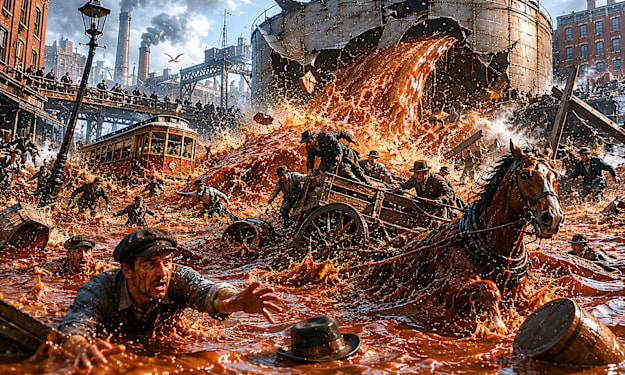
The Day Boston Drowned in Molasses
There are disasters that become etched into history through fire, smoke, and spectacle. Earthquakes split cities apart. Floods swallow entire towns. Explosions leave craters where buildings once stood. And then there are disasters so bizarre that they almost resist belief entirely.
By The Iron Lighthouse5 months ago in History
The New World Order
The New World Order The term “New World Order” (NWO) has become one of the most controversial and widely discussed ideas in modern politics and conspiracy theories. Some people believe it simply refers to changes in global politics and international cooperation, while others claim it represents a secret plan by powerful elites to establish a one-world government. Over the decades, the phrase has appeared in political speeches, historical documents, conspiracy books, and popular culture, creating fear, debate, and fascination around the world.
By Wings of Time 5 months ago in History
Natalia Yepifanova and Natalia Kravtsova: Ukrainian POWs, Azov Captives, and Families of the Missing
Natalia Kravtsova is a Ukrainian civil advocate and the mother of a captured Azov fighter who defended Mariupol. Through the NGO “WOMEN OF STEEL,” she advocates for prisoners of war, missing defenders, and their families. Her public work emphasizes humanitarian exchanges, public awareness, and sustained international pressure regarding Ukrainian captives held by Russia. Media Center Ukraine identifies her as the mother of a captured Azov fighter and defender of Mariupol, and earlier identified her with the “WOMEN OF STEEL” Council of Wives and Mothers of Ukraine’s Defenders NGO.
By Scott Douglas Jacobsen5 months ago in History
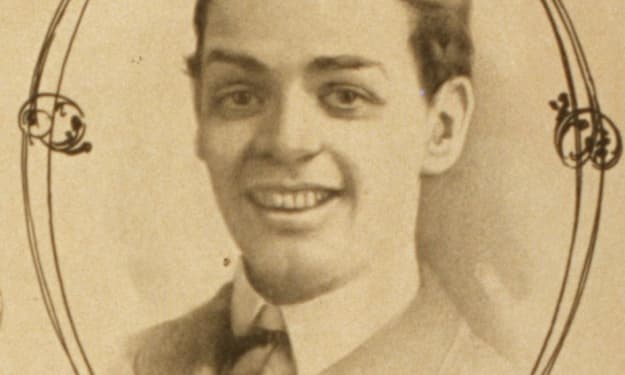
Jack Norworth: The Songwriter Who Sent America to the Ballpark
By Brian D’Ambrosio By the seventh inning of a baseball game, the ritual is as dependable as a close play at first base. Fans rise, stretch their legs, and sing words that have echoed through grandstands for more than a century: “Take me out to the ball game / Take me out with the crowd…”
By Brian D'Ambrosio 5 months ago in History
The African Kingdoms That Rivaled Ancient Rome
Let's be honest. When most of us think about the ancient world — the great empires, the dazzling cities, the military generals who changed the course of history — we think of Rome. We think of Greece. Maybe Egypt, if the curriculum was feeling generous that day. But here is what your history teacher never told you: while Rome was busy building its empire, Africa had already been there, done that — and in some cases, done it better.
By Shirley Oyiadom5 months ago in History
The Legend of Andrew Jackson’s Swearing Parrot
There are moments in American history so perfectly strange, so oddly specific, that they seem less like documented events and more like folklore invented late at night on a southern porch. The story of Andrew Jackson and his foul-mouthed parrot is one of those tales, almost unbelievable, yet, against all odds, apparently true.
By The Iron Lighthouse5 months ago in History
A Forgotten Story About A Woman Who Helped Win World War II
Long before World War II erupted into the deadliest conflict in human history, Europe was already struggling under the consequences of World War I. Countries devastated by economic collapse, political instability, and territorial losses became increasingly vulnerable to extremist movements. In Germany, the harsh terms imposed after World War I—including territorial losses, military restrictions, and economic reparations—created widespread resentment. These conditions helped fuel the rise of Adolf Hitler and the Nazi Party during the 1930s. As fascist governments expanded across Europe, another war became almost unavoidable. While political leaders and military commanders prepared for global conflict, an American woman named Virginia Hall quietly began a path that would eventually make her one of the most effective intelligence operatives of the entire war.
By History Seeker5 months ago in History
7 Unknow Stories from US History
1. Franklin: America’s Almost-Forgotten 14th State After the American Revolution, North Carolina struggled with major financial debt and decided to offer a massive stretch of western territory to Congress in hopes of easing economic pressure. The settlers living in the region, however, worried that they would lose political representation and military protection, especially against nearby Cherokee groups, and feared the land could eventually be sold to another foreign power. When North Carolina later reversed its decision and reclaimed authority over the territory, many frontiersmen rejected the move entirely and began organizing their own independent government. Delegates gathered in Jonesborough in 1784, created a constitution, elected officials, and declared the formation of a new state originally called “Frankland,” later renamed “Franklin” in an attempt to gain support from Benjamin Franklin. The region functioned independently for more than four years, operating almost like a separate republic with its own courts and administration. Leaders petitioned Congress for official statehood, but although several states voted in favor, they failed to secure the necessary two-thirds majority under the Articles of Confederation. During its brief existence, Franklin expanded territory through conflicts with Indigenous populations while tensions with North Carolina steadily worsened. By 1789, the experimental state collapsed under political and military pressure, and North Carolina regained control of the territory before it eventually became part of Tennessee. Interestingly, legendary frontiersman Davy Crockett was born during Franklin’s short-lived existence, and his father strongly supported the movement for independence.
By History Seeker5 months ago in History
The Chemist’s War: When Prohibition Turned Poisonous
There are chapters of American history that feel almost impossible to explain to modern audiences, not because they are obscure, nor because records are missing, but because the decisions made seem so wildly disconnected from common sense that they sound less like history and more like the plot of a dark political thriller. The poisoned alcohol crisis of Prohibition in the United States is one of those stories.
By The Iron Lighthouse5 months ago in History