Narratives
God's Purpose in Your Barrenness
This sermon has been viewed 30,874 times on Sermon Central. It has a 5-star rating. God’s Purpose In Your Barrenness Scripture: 1 Samuel 1:1-20 Summary: God had an ultimate purpose for the barrenness of biblical women such as Hannah in the Old Testament and Elizabeth in the New Testament.
By Margaret Minnicks3 months ago in History
The Forgotten Forest
The Forgotten Forest The locals called it The Forgotten Forest. It stretched for miles beyond the edge of Black Hollow, a small town hidden between mountains and mist. No one knew exactly how old the forest was. The trees were enormous, their twisted branches blocking most of the sunlight even during the day.
By BrightSteps3 months ago in History
Could the US–Iran War Start Again? The Risks, Triggers, and Road Ahead
Could the US–Iran War Start Again? The Risks, Triggers, and Road Ahead The war between the United States and Iran may have entered a period of reduced military activity, but many experts believe the risk of renewed conflict has not disappeared. While ceasefire agreements and diplomatic negotiations have temporarily lowered tensions, several major disputes remain unresolved. As a result, the possibility of the war starting again continues to concern governments, military planners, and financial markets around the world.
By Wings of Time 4 months ago in History
The World's Smallest Park (And Its Very Serious Leprechaun Problem)
America has no shortage of famous parks. There is Yellowstone, where geysers erupt from the earth with explosive force; there is Yosemite, where granite cliffs tower thousands of feet into the sky; and there is the Grand Canyon, a geological masterpiece visible from space. Then, in sharp contrast, there is a tiny circle of dirt in Portland, Oregon, roughly the size of a pizza. Welcome to Mill Ends Park.
By The Iron Lighthouse4 months ago in History
“Who Was Abraham Lincoln?” . AI-Generated.
The Life of Abraham Lincoln Abraham Lincoln was born on February 12, 1809, in a small wooden log cabin in Hardin County, Kentucky, United States. His family was very poor, and life in early America was extremely difficult, especially for farmers living in rural areas. His father, Thomas Lincoln, worked as a farmer and carpenter, but he earned very little money and often struggled to support the family. His mother, Nancy Hanks Lincoln, was a kind, gentle, and caring woman who deeply loved her children and tried her best to give them a peaceful home. When Abraham was still a small child, his family moved from Kentucky to Indiana in search of better living conditions and more land to farm. However, life in Indiana was not much easier. The family settled in a wild forest area where there were no proper roads, schools, or modern facilities. They had to build their own shelter using logs and live in very basic conditions. Every day life involved hard physical work such as clearing trees, farming, hunting for food, and building fences. Abraham Lincoln’s childhood was full of struggle and hardship. Education was very limited in that time and place. He attended school only for a few months in total throughout his life. However, even though formal schooling was rare for him, Abraham had a very strong desire to learn. He was naturally curious and intelligent. He loved reading books and would borrow them from neighbors whenever he got the chance. He often walked long distances just to get a book. At night, after completing hard work, he would read by candlelight or firelight. When Abraham was only nine years old, a very painful event happened in his life—his mother died. This loss deeply affected him emotionally. He missed her care and love throughout his life. Later, his father remarried a woman named Sarah Bush Johnston. She became Abraham’s stepmother and played an important role in encouraging him. She noticed his interest in reading and supported him by providing books and motivation to continue learning. As Abraham grew older, he started working different jobs to help his family survive. He worked as a farm laborer, rail-splitter (cutting wood logs for fences), boatman, store clerk, and surveyor. These jobs were physically demanding and required long hours of hard labor. Despite being busy with work, Abraham never stopped educating himself. He continued reading books and improving his knowledge in his free time. During his early adulthood, Abraham became interested in law, politics, and justice. He studied legal books on his own and slowly developed a deep understanding of how laws worked. Without attending a formal law school, he prepared himself for a legal career. In 1836, after studying and working hard, he successfully became a licensed lawyer. This was a major turning point in his life. As a lawyer, Abraham Lincoln quickly gained respect in his community. He was known for his honesty, fairness, and simple lifestyle. Unlike many other lawyers of his time, he did not try to trick people or use unfair methods. Instead, he focused on truth and justice. Because of his strong moral character, people began calling him “Honest Abe.” After becoming successful in law, Abraham Lincoln entered politics. He became a member of the Illinois State Legislature and later served in the United States Congress. During his political career, he strongly spoke against slavery. At that time, slavery was still legal in many parts of the United States, especially in the southern states. Lincoln believed that slavery was morally wrong and that all human beings should be free and equal regardless of race or background. His strong views on slavery made him both respected and criticized. Some people supported his ideas, while others strongly opposed him. However, Lincoln never changed his principles. He continued to speak for justice, equality, and human rights. In 1860, Abraham Lincoln was elected as the 16th President of the United States. This election was a historic moment, but it also created serious tension in the country. Shortly after his election, several southern states decided to leave the United States because they disagreed with his views on slavery. This led to a major national conflict known as the American Civil War in 1861. The Civil War was one of the most difficult and tragic periods in American history. It was a war between the northern states (Union) and the southern states (Confederacy). The country was deeply divided, and families were affected on both sides. Lincoln’s main responsibility as president was to preserve the unity of the United States and prevent it from breaking apart. During the war, Abraham Lincoln faced immense pressure. Thousands of soldiers were dying, and the nation was suffering. He had to make very difficult decisions that would affect the future of the country. Despite criticism and emotional stress, he remained strong and focused on his mission. One of the most important actions he took was the Emancipation Proclamation in 1863. This historic document declared that all enslaved people in the Confederate states would be freed. Although it did not immediately end slavery everywhere, it changed the purpose of the war and gave it a moral direction focused on freedom and equality. It also allowed African Americans to join the Union army and fight for their freedom. Abraham Lincoln also gave many powerful speeches during his presidency. One of his most famous speeches is the Gettysburg Address, delivered in 1863. In this short but meaningful speech, he emphasized the ideas of democracy, equality, and national unity. His words inspired millions of people and are still remembered as some of the greatest political words ever spoken. After several years of fighting, the Union finally won the Civil War in 1865. The United States remained united, and slavery began to be abolished across the country. Abraham Lincoln became a symbol of leadership, courage, and moral strength. Many people considered him a hero for saving the nation and fighting for human rights. However, just days after the war ended, tragedy struck. On April 14, 1865, Abraham Lincoln attended a play at Ford’s Theatre in Washington, D.C. During the performance, he was shot by John Wilkes Booth, a man who opposed Lincoln’s policies. Lincoln was seriously injured and taken to a nearby house, where he died the next morning on April 15, 1865. His death shocked the entire nation. People across America mourned deeply, and even his critics later recognized his greatness. Although his life ended early, his legacy continued to grow stronger over time. Today, Abraham Lincoln is remembered as one of the greatest presidents in United States history. His journey from a poor boy in a log cabin to the leader of a nation inspires millions of people around the world. His life teaches us important lessons about honesty, hard work, courage, and equality. The story of Abraham Lincoln proves that no matter how poor or difficult your beginning is, you can achieve greatness through determination, education, and strong moral values.
By Hafiz afridi4 months ago in History
The Man Who Returned $50,000 He Found on the Road. AI-Generated.
The Man Who Returned $50,000 He Found on the Road John Miller was an ordinary man living in a small town. He worked as a delivery driver and earned enough money to support his wife and two children. Life was not always easy for him. Bills had to be paid, the car often needed repairs, and sometimes money was very tight. Even though he faced many challenges, John believed in being honest and treating others with respect. One Monday morning, John started his day like any other. He woke up early, had breakfast with his family, and left for work. The weather was clear, and the roads were quiet. As he drove toward his first delivery location, he noticed something unusual lying near the side of the road. At first, he thought it was a piece of trash or an old bag. However, as he got closer, he realized it was a black briefcase. Curious, John stopped his vehicle and picked it up. The briefcase looked expensive and was surprisingly heavy. John placed it in his truck and continued driving until he found a safe place to stop. He opened the briefcase carefully. What he saw inside shocked him. The briefcase was filled with stacks of cash. John stared at the money in disbelief. He counted several bundles and quickly realized there was a huge amount inside. Later, he would learn that the total was nearly $50,000. For a moment, many thoughts rushed through his mind. His family needed money. His car needed repairs. His children would soon need school supplies. This money could solve many problems. But John knew one important thing. The money did not belong to him. He closed the briefcase and sat quietly. He imagined how worried the owner must be. Someone somewhere was probably searching desperately for the missing briefcase. John decided to do the right thing. After finishing his delivery route, he drove to the local police station. He explained where he had found the briefcase and handed it over to the officers. The police were surprised. Cases like this were rare. They thanked John and began investigating. Inside the briefcase, officers found documents that helped identify the owner. The money belonged to a local business owner named Robert Harris. Robert owned a construction company. Earlier that morning, he had withdrawn the money from a bank to pay workers and suppliers. While loading items into his vehicle, he accidentally left the briefcase on top of his car. As he drove away, it fell onto the road without him noticing. When Robert discovered the loss, he became extremely worried. He searched everywhere but could not find it. Losing such a large amount of money could seriously affect his business. Later that day, the police contacted him. When Robert arrived at the station and saw the briefcase, he could hardly believe it. Every dollar was still there. He immediately asked who had found it. The officers told him about John. Robert wanted to meet the honest man who had returned the money. The next day, they met at the police station. Robert shook John's hand and thanked him repeatedly. "You have no idea what this means to me," Robert said. "Many people would have kept the money." John smiled. "It wasn't mine," he replied. "Returning it was the right thing to do." Robert was deeply impressed by John's honesty. As a reward, he offered John several thousand dollars. At first, John refused. He had not returned the money expecting a reward. He believed honesty should not depend on receiving something in return. However, Robert insisted. Finally, John accepted a small portion as a gesture of gratitude. News of the story quickly spread throughout the town. Local newspapers wrote articles about John's actions. Radio stations discussed the story. People admired his honesty and integrity. Many residents stopped John on the street to congratulate him. Parents told their children about the story as an example of good character. Teachers discussed it in classrooms. Community leaders praised him during local events. John suddenly became well known, but he remained humble. He continued working as a delivery driver and living his normal life. One evening, a reporter asked him why he had returned the money. John answered with simple words. "My parents taught me that honesty is more valuable than money. You can lose money and earn it again. But if you lose your character, it is much harder to get it back." His words touched many people. Several weeks later, something unexpected happened. Robert Harris contacted John again. During their earlier conversations, Robert had learned that John was hardworking, responsible, and trustworthy. Robert's construction company was growing, and he needed a new operations manager. He offered the position to John. The new job came with better pay, health benefits, and opportunities for advancement. John was surprised. "I don't have management experience," he said. Robert smiled. "Skills can be learned," he replied. "Honesty and integrity are much harder to find." After discussing the opportunity with his family, John accepted the offer. Over the next few years, he worked hard and learned everything he could. His dedication impressed everyone around him. Eventually, he became one of the company's most respected managers. Looking back, John often reflected on the day he found the briefcase. Some people believed he had sacrificed a chance to become rich overnight. But John saw things differently. Keeping the money might have provided temporary comfort. Returning it gave him something much greater: self-respect, trust, and new opportunities. His decision also inspired others. Several people later shared stories of returning lost items after hearing about John's example. Small acts of honesty began creating positive changes throughout the community. Years later, the story was still remembered. Whenever people discussed integrity and good character, John's name often came up. His actions proved that doing the right thing is not always the easiest choice, but it is often the most rewarding. The briefcase filled with money could have changed John's life in one way. His honesty changed it in a much better way. And that is why his story continues to inspire people today. It reminds us that true success is not measured by how much money we have, but by the choices we make when nobody is watching. In a world where temptation can appear unexpectedly, John's decision serves as a powerful reminder that honesty still matters. One simple choice on an ordinary morning became an example that touched an entire community and changed a man's future forever.
By Hafiz afridi4 months ago in History
Finally! US & Iran Deal Reached – Is the War Really Over?
Finally! US & Iran Deal Reached – Is the War Really Over? After months of military confrontation, diplomatic pressure, and growing fears of a wider regional conflict, the United States and Iran have announced a framework peace agreement that could mark a turning point in one of the most dangerous crises of recent years. The announcement has generated hope across the world, but many analysts caution that the path to lasting peace remains uncertain.
By Wings of Time 4 months ago in History
The Underground City of the Believers: The Community That Chose Darkness
In the frozen wilderness of Imperial Russia, where endless forests stretched beyond the horizon and winter could swallow entire villages beneath snow and silence, rumors began circulating about a community that had vanished, not moved, not fled, but vanished.
By Veil of Shadows4 months ago in History
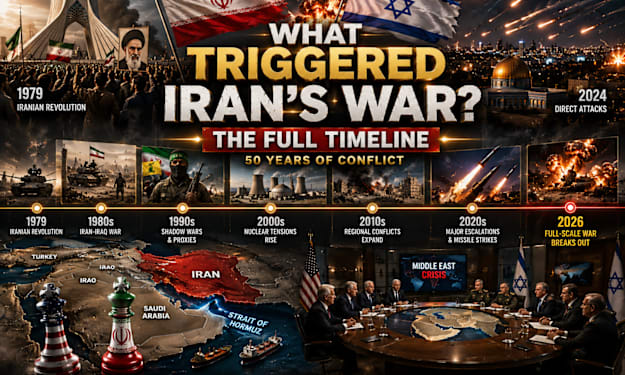
The Point That Triggered Iran's War – The Timeline & History of Middle Eastern Conflict
The Point That Triggered Iran's War – The Timeline & History of Middle Eastern Conflict The current conflict involving Iran did not begin overnight. It is the result of decades of political, religious, military, and geopolitical tensions that have shaped the Middle East for generations. To understand why the region remains unstable today, it is important to examine the timeline of events that gradually transformed rivals into enemies and turned regional disputes into a major international crisis.
By Wings of Time 4 months ago in History
Iran Destroyed a "$100 Million Toy"?
Iran Destroyed a "$100 Million Toy"? US Attacks Iranian Radars – Bahrain & Pakistan in Focus Tensions in the Gulf region have once again captured global attention as the United States and Iran continue to exchange military actions and political warnings. Recent reports indicate that U.S. forces conducted strikes against Iranian radar and surveillance facilities, while Iran responded with missile and drone attacks targeting locations associated with U.S. military operations in the Gulf. These developments have raised concerns about regional stability and the possibility of further escalation.
By Wings of Time 4 months ago in History
Superpower Strategy
1. Introduction: The Power of a Superpower The United States is one of the most powerful countries in the world. It has strong influence over global politics, economy, and security. Its foreign policy is not random; it is carefully planned to protect its interests and keep its power strong. Every action, whether it is making alliances or taking part in conflicts, follows a strategy. This strategy helps the U.S. stay ahead and shape the world according to its goals.
By Muhammad Zeeshan4 months ago in History