Narratives
The World's Fair That Put Human Beings on Display
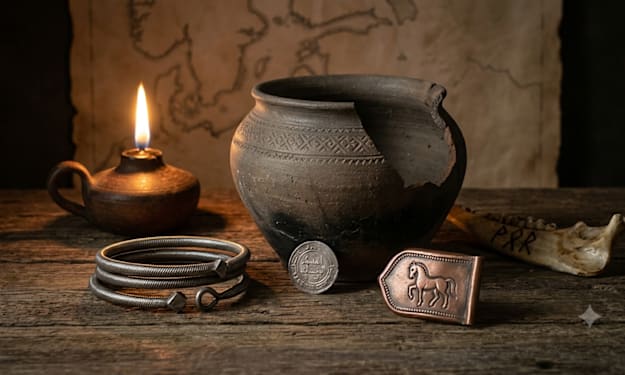
World's fairs have always been celebrations of possibility, places where inventors unveil remarkable machines, architects imagine the cities of tomorrow, and nations proudly display their greatest achievements. Visitors arrive expecting to see the future. That was certainly true in 1904. The Louisiana Purchase Exposition, better known today as the St. Louis World's Fair, was one of the largest international exhibitions ever held in the United States. Covering more than 1,200 acres, it welcomed nearly twenty million visitors over seven months. Electricity illuminated magnificent buildings, new technologies captured imaginations, and scientific discoveries promised a brighter century ahead. To many Americans, it represented the modern world at its finest.
By The Iron Lighthouse2 months ago in History
Radio Free Dixie: The Voice from Havana That Reached the Deep South
Late at night in the early 1960s, somewhere in Alabama, Mississippi, or Georgia, a listener turns the dial on an old radio. The familiar sounds of country music and local news drift past in a haze of static. Then, cutting through the darkness, comes something entirely unexpected: jazz music, a booming voice, and a message unlike anything else on American airwaves.
By The Iron Lighthouse3 months ago in History
The Day It Rained Meat in Kentucky
On a pleasant spring day in March of 1876, the residents of a small settlement in Bath County, Kentucky, witnessed something so bizarre that, nearly a century and a half later, historians and scientists are still talking about it. There were no dark storm clouds gathering overhead. No tornadoes churned on the horizon. No signs suggested that the day would become one of the strangest in American history. And then, without warning, meat began falling from the sky.
By The Iron Lighthouse3 months ago in History
How the US Army Tried to Conquer the Southwest with Camels.
If you were riding across the deserts of Texas in the late nineteenth century and spotted a camel lumbering over a distant ridge, you would have been forgiven for thinking the heat had finally gotten to you.
By The Iron Lighthouse3 months ago in History
The Darkest Night in White House History
On a hot August evening in 1814, Washington emptied out in a hurry. Families threw whatever they could grab into wagons and pulled out of the city. Soldiers moved the opposite direction, toward an enemy most of them doubted they could stop. By the time smoke started showing up on the horizon, it was obvious the young United States was about to have one of the worst nights in its short history.
By hassan khan3 months ago in History
The Town That Never Stopped Talking to the Dead
Most American towns have a story. Some were built around railroads, others grew beside rivers, mines, or factories. Entire communities sprang to life because someone discovered gold, drilled for oil, or saw promise in fertile farmland.
By The Iron Lighthouse3 months ago in History
America's Forgotten Concrete Arrows
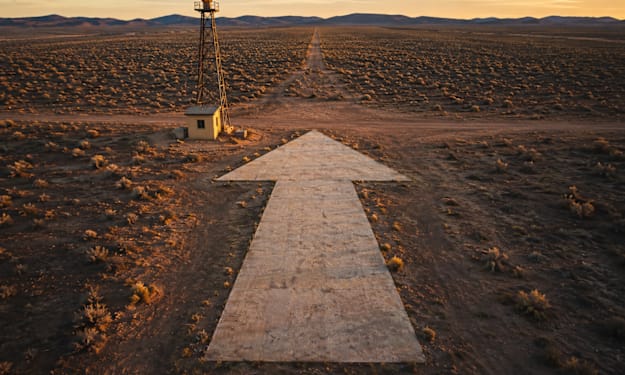
Imagine you're hiking through a lonely stretch of desert in the American West. The landscape is silent except for the wind; sagebrush sways in the distance, and the nearest highway is miles away. Then, without warning, you stumble across something that makes absolutely no sense: a gigantic concrete arrow. It stretches nearly seventy feet across the ground, pointing toward an empty horizon. There are no roads nearby, no signs explaining its purpose, no obvious destination. Just an enormous arrow, weathered by decades of sun and rain, as though some long-forgotten civilization left behind a monument no one bothered to explain. It sounds like the beginning of a mystery novel, but instead, it's one of the most fascinating chapters in American engineering history.
By The Iron Lighthouse3 months ago in History
June 24, 2026: Venezuela's Devastating Earthquake
June 24, 2026: Venezuela's Devastating Earthquake A Normal Day Turned Into Disaster On June 24, 2026, Venezuela experienced one of the strongest earthquakes in its recent history. What began as a normal day quickly turned into a frightening disaster as powerful shaking spread across parts of the country. Within seconds, homes, offices, schools, and businesses were affected. Many people rushed into the streets, unsure of what would happen next. The earthquake reminded everyone how suddenly nature can change lives. The Powerful Earthquake The earthquake measured more than 7 on the magnitude scale, making it a major seismic event. Reports said that two powerful shocks occurred within a very short time, increasing the fear among residents. The ground shook violently, causing buildings to sway and sending debris onto roads. In several areas, electricity and communication services were interrupted, making it difficult for families to contact one another during the first hours after the disaster. Damage Across Caracas and Nearby Areas The capital city, Caracas, and surrounding regions experienced strong shaking. Many buildings suffered damage, while some older structures partially collapsed. Cracks appeared in roads, walls, and bridges. Vehicles were trapped in traffic as frightened drivers stopped to avoid accidents. Public transportation also faced disruptions as officials inspected tracks, stations, and roads for safety before allowing normal operations to continue. Hospitals and Emergency Response Hospitals immediately activated emergency plans. Doctors, nurses, and rescue teams worked without rest to treat injured people. Ambulances moved continuously through affected neighborhoods, carrying patients to medical centers. Emergency shelters were opened for families whose homes were no longer safe. Volunteers distributed drinking water, food, blankets, and other basic supplies to those in need. Rescue Operations Rescue workers searched damaged buildings carefully, hoping to find survivors trapped beneath fallen concrete and broken walls. Heavy machinery was brought to the hardest-hit areas, while specially trained rescue dogs assisted in locating people under the rubble. Every successful rescue brought hope to worried families waiting nearby. At the same time, officials asked people to stay away from unstable buildings because aftershocks could cause additional collapses. Aftershocks Continue Aftershocks continued to shake the region during the following hours and days. Although many were smaller than the main earthquake, they created fresh concern among residents. Some people chose to sleep outdoors or in temporary shelters rather than return to damaged homes. Engineers inspected schools, hospitals, apartment buildings, and public offices to determine whether they were safe for use. Why Earthquakes Happen Earthquakes happen because enormous sections of the Earth's crust, called tectonic plates, are constantly moving. Venezuela is located in an area where these plates interact, making earthquakes a natural risk. Scientists cannot predict the exact time when an earthquake will occur, but they can study fault lines, monitor seismic activity, and improve warning systems. This knowledge helps governments prepare emergency plans and encourages communities to practice earthquake safety. Earthquake Safety Tips Experts always remind people that preparation saves lives. Families are encouraged to keep emergency kits containing water, food, flashlights, batteries, first-aid supplies, important documents, and medicines. During an earthquake, people should stay calm, protect their heads, and take cover under sturdy furniture if they are indoors. If they are outside, they should move away from buildings, trees, bridges, and power lines until the shaking stops. Economic Impact The economic impact of the disaster may continue for months. Repairing damaged roads, bridges, homes, schools, and hospitals requires significant time and financial resources. Businesses forced to close temporarily may lose income, while thousands of families could face expensive rebuilding costs. Governments, humanitarian organizations, and international partners often work together to provide emergency assistance and support long-term recovery efforts. Stories of Courage Despite the destruction, stories of courage quickly emerged. Neighbors helped rescue one another, shared food with strangers, and opened their homes to families who had nowhere to stay. Medical workers continued treating patients despite difficult conditions, while volunteers worked around the clock to deliver aid. These acts of kindness demonstrated the strength and resilience of communities facing an unexpected disaster. Looking Ahead The June 24, 2026, Venezuela earthquake serves as a powerful reminder that nature can be unpredictable. While buildings can be rebuilt and roads repaired, the safety of people remains the highest priority. Continued rescue operations, careful rebuilding, improved construction standards, and better disaster preparedness can help reduce the impact of future earthquakes. As Venezuela begins the long process of recovery, the determination and unity of its people will remain one of the country's greatest strengths.
By Hafiz afridi3 months ago in History
Maria Tallchief: Ballet, Discipline, and an Enduring American Legacy
By Brian D'Ambrosio During the late 1940s and 1950s, Maria Tallchief was one of the central figures in the emergence of American ballet. Her technique—fast, exacting, and musically alert—fit naturally into the choreography of ballet master George Balanchine and helped define a new American standard for this classical dance.
By Brian D'Ambrosio 3 months ago in History