
The Point That Triggered Iran's War – The Timeline & History of Middle Eastern Conflict
From the 1979 Iranian Revolution to Today's Regional Crisis: Understanding How Decades of Tension Led to War

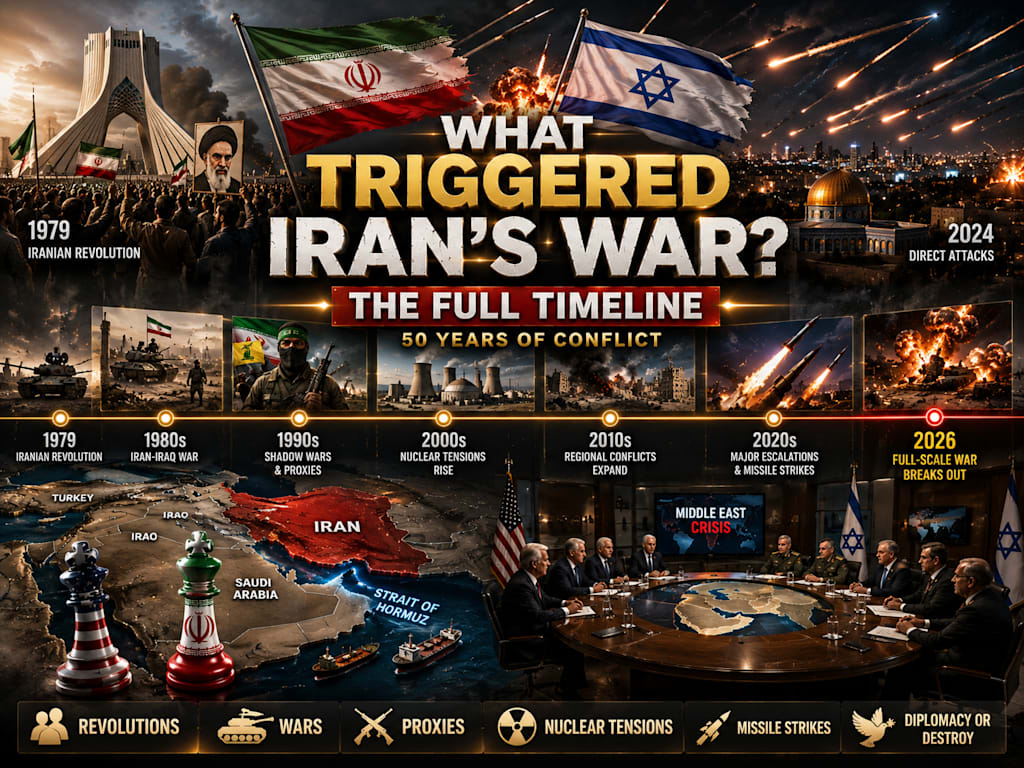
The Point That Triggered Iran's War – The Timeline & History of Middle Eastern Conflict
The current conflict involving Iran did not begin overnight. It is the result of decades of political, religious, military, and geopolitical tensions that have shaped the Middle East for generations. To understand why the region remains unstable today, it is important to examine the timeline of events that gradually transformed rivals into enemies and turned regional disputes into a major international crisis.
The story begins in 1979 with the Iranian Revolution. Before the revolution, Iran and Israel maintained cooperative relations. However, after the revolution, Iran's new leadership adopted a strongly anti-Israel position and severed diplomatic ties. This marked the beginning of a long period of hostility that continues today.
During the 1980s and 1990s, direct warfare between Iran and Israel did not occur. Instead, both sides became involved in what many analysts describe as a "shadow war." Iran supported armed groups such as Hezbollah in Lebanon, while Israel viewed Iran's growing regional influence as a major security threat. Over time, this competition expanded across multiple countries and battlefields.
A major turning point occurred in the early 2000s when concerns about Iran's nuclear program increased. Western countries and Israel argued that Iran's nuclear activities could eventually lead to the development of nuclear weapons, while Iran insisted that its program was intended for peaceful purposes. The dispute led to sanctions, diplomatic confrontations, and increasing military preparations.
The conflict intensified further after the Middle Eastern crises that unfolded during the 2020s. Regional rivalries became more visible, and tensions between Iran and Israel moved beyond proxy conflicts. In 2024, Iran launched a large-scale direct missile and drone attack against Israel following an attack on an Iranian diplomatic facility in Syria. This was the first time Iran directly targeted Israel on such a large scale, marking a historic escalation.
In 2025, another major confrontation known as the Twelve-Day War increased fears of a wider regional conflict. Military strikes, missile exchanges, and diplomatic breakdowns created an atmosphere where many observers believed a larger war was becoming increasingly likely. Although temporary ceasefires were reached, the underlying issues remained unresolved.
The immediate trigger for the 2026 war came after the collapse of negotiations and a dramatic escalation in military operations. On February 28, 2026, the United States and Israel launched large-scale strikes against Iranian military and strategic targets. Iran responded with missile and drone attacks against Israel, U.S. facilities, and regional targets. The conflict rapidly expanded into multiple fronts across the Middle East.
The war soon affected neighboring countries and critical global trade routes. Iran threatened and restricted activity around the Strait of Hormuz, one of the world's most important energy corridors. Oil markets reacted immediately, and governments worldwide became concerned about the potential economic consequences. Regional groups aligned with Iran also became involved, increasing the complexity of the conflict.
One reason the conflict is so dangerous is that it combines multiple issues at once. It is not simply a dispute between two countries. It involves questions of national security, regional influence, nuclear capabilities, military alliances, religious identity, and economic interests. These overlapping factors make finding a lasting solution extremely difficult.
Despite the violence, diplomatic efforts have continued. Recent reports indicate that mediators, including regional countries, have worked to secure ceasefires and reopen important trade routes. Negotiations regarding security arrangements and nuclear issues remain ongoing, although significant disagreements persist.
Today, the Middle East stands at a critical crossroads. The region faces a choice between continued confrontation and renewed diplomacy. The history of the conflict demonstrates that military victories alone rarely resolve deep-rooted political disputes. Long-term peace will likely require negotiation, compromise, and cooperation among regional and international actors.
In conclusion, the point that triggered the recent Iran war was not a single event but rather the culmination of decades of rivalry, mistrust, proxy conflicts, and failed diplomatic efforts. Understanding this history helps explain why the conflict remains one of the most important geopolitical challenges facing the world today.
About the Creator
Wings of Time
I'm Wings of Time—a storyteller from Swat, Pakistan. I write immersive, researched tales of war, aviation, and history that bring the past roaring back to life
Enjoyed the story? Support the Creator.
Subscribe for free to receive all their stories in your feed.
Comments
There are no comments for this story
Be the first to respond and start the conversation.