Analysis
Uncovering the Mysteries of a Roman Free City: Aphrodisias
One of the most remarkable archaeological sites in the area is Aphrodisias, which is tucked away in the Meander River valley in southwest Turkey. From the second century BC until the sixth century AD, this city, named after Aphrodite, prospered and left behind a wealth of archaeological artefacts.
By Francis Dami6 months ago in History
World War 3: The Conflict That Could Reshape the Future
World War 3: The Conflict That Could Reshape the Future The question of when and where World War 3 might occur has become one of the most debated topics in global politics. While no one can predict the exact timing, increasing tensions between major world powers, regional conflicts, and military build-ups are creating conditions that many experts believe could lead to a global conflict. Unlike previous wars, World War 3 would not be limited to one continent — it would likely involve multiple regions simultaneously and include cyber warfare, economic battles, and advanced military technology.
By Wings of Time 6 months ago in History
Thracian Dancing, Music, and Art
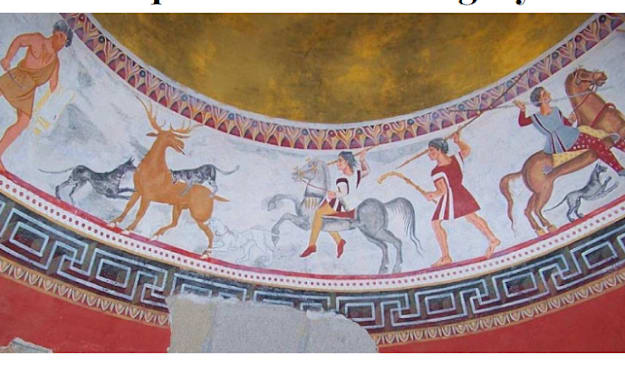
Even though the typical Thracian led a modest life, they did not lack culture. Thracians were renowned for their exquisite jewellery and striking metalwork, and art, music, and dance were important aspects of their way of life. Surprisingly complex metalwork is a hallmark of Thracian art.
By Francis Dami6 months ago in History
The Enigmatic Thracians: Revealing Their Distinctive Traditions and Culture
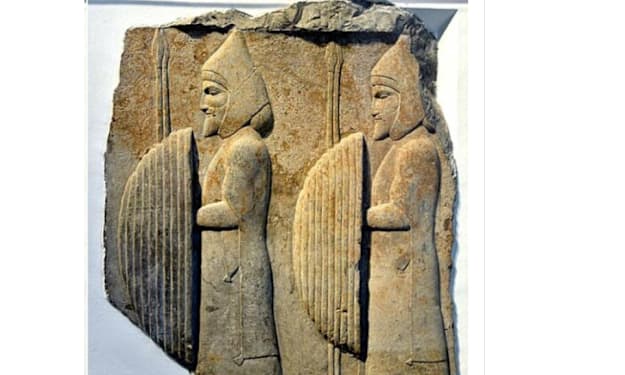
The Thracians, a mysterious civilisation that once flourished in the areas that now comprise Bulgaria, Greece, and Turkey, have proven difficult for historians to piece together. The Thracians were a significant force in the area for centuries, but they left no written records. Rather, we have to rely on the artefacts they left behind and the opinions of their neighbours, such as the Greeks and Romans.
By Francis Dami6 months ago in History
The Great Pyramid Algorithm: Integrated Edge Ramps Are Suggested by a New Study
According to recent computational research, a complex "Integrated Edge-Ramp" (IER) system may have been used in the construction of the Great Pyramid of Giza, perhaps resolving a 4,500-year-old architectural mystery. This model proposes a multi-channel system of ramps constructed directly into the pyramid's edges, challenging conventional notions of gigantic external ramps or intricate interior spirals. For the first time, the numbers truly add up.
By Francis Dami6 months ago in History
Edward the Confessor's Lost Seal Discovered After 40 Years
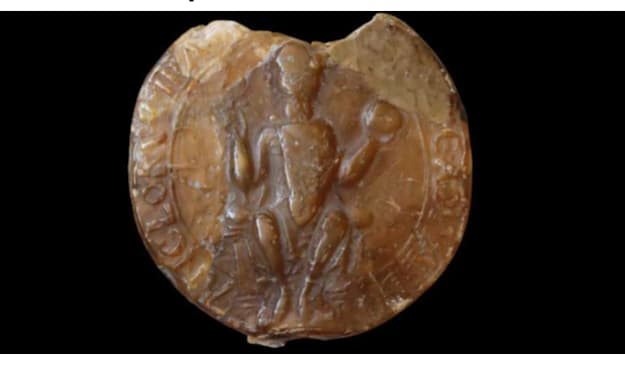
More than 40 years after it was thought to be lost, an Anglo-Saxon seal from the 11th century that belonged to King Edward the Confessor has been suddenly found in Paris. After being kept in the Archives Nationales for almost 200 years, the wax impression known as the "Saint-Denis seal" disappeared in the 1980s without any official explanation.
By Francis Dami6 months ago in History
On the chest of an Egyptian child mummy, a hidden mystery object was found.
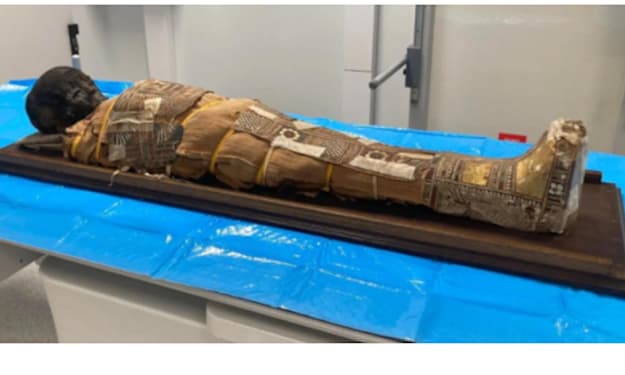
While studying a 2,000-year-old Egyptian mummy, Polish archaeologists uncovered an amazing finding. Intriguing doubts concerning the boy's identity and prehistoric burial customs were raised when scientists found a hidden object resting on his chest during the first-ever thorough scientific examination of the ancient remains. The discovery is already changing our understanding of Ptolemaic Egyptian funeral traditions.
By Francis Dami6 months ago in History
Cuneiform Tablets Show That the Legendary King Gilgamesh Was Real
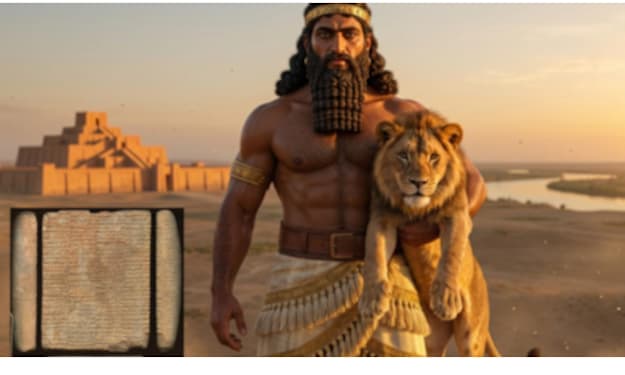
Researchers have now finished a thorough examination of the artefacts, more than a century after the National Museum of Denmark started collecting a sizable collection of inscribed clay tablets from the ancient Near East. "Hidden Treasures: The National Museum's Collection of Cuneiform Tablets," a ground-breaking effort, has digitised and catalogued these ancient manuscripts for the first time.
By Francis Dami6 months ago in History
Research Disproves the Legend of the Herlaugshaugen Ship Burial
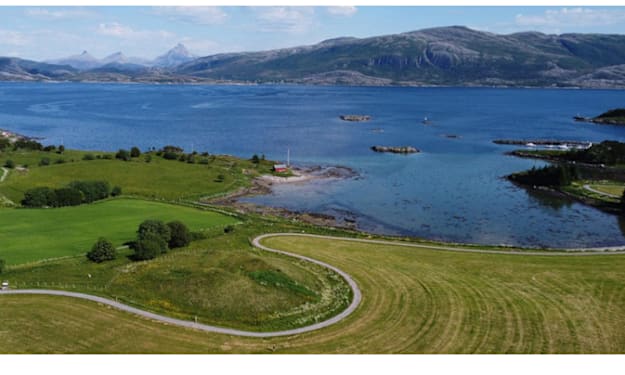
One of Scandinavia's oldest ship graves is located at the Herlaugshaugen burial mound on the island of Leka, off the coast of Norway, according to a recent study. The discovery, which dates to approximately AD 700, provides a crucial chronological connection between the later, well-known Norwegian ship mounds of the Viking Age and the well-known early seventh-century ship burials of Anglo-Saxon England, most notably Sutton Hoo.
By Francis Dami6 months ago in History
Weapons from the Caste War Discovered Submerged in Yucatán Cenote
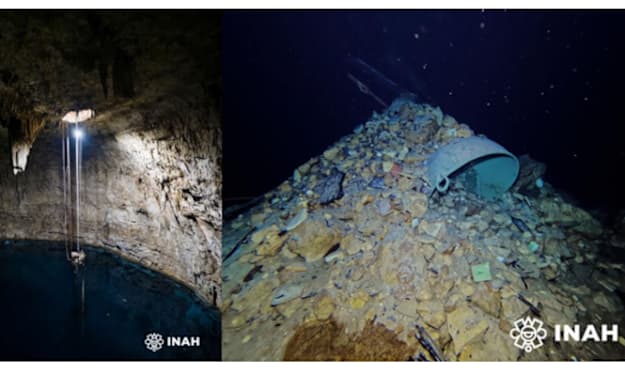
Weapons from the Caste War Discovered Submerged in Yucatán Cenote An incredible collection of 19th-century weapons has been discovered in a submerged archaeological site located deep beneath the Yucatán Peninsula. A wide variety of artefacts concealed below the Síis Já cenote, situated beneath the Ex Convento de San Bernardino de Siena in Sisal, Valladolid, have been documented by archaeologists from Mexico's National Institute of Anthropology and History (INAH).
By Francis Dami6 months ago in History
Are Aliens Coming to Earth
Three weeks before NASA went completely silent on the subject, a classified radio signal — non-random, perfectly structured, and repeating every night at exactly 3:17 AM — was picked up from a point in deep space that should have been completely empty. My father was the one who found it. And then he disappeared.
By imtiazalam6 months ago in History
The Great Wall Of China;The Wall Having No Boundries
The Great Wall of China – The Wall Having No Boundaries There are structures built to be seen and then there are structures built to be felt. The Great Wall of China is not just a wall but a story written in stone, a whisper carried by the wind, and a testament to ambition so vast that it refused to recognize limits. It stretches across mountains, deserts, and plains as if the earth itself once decided to draw a line between fear and survival, yet the truth is far more complex. This wall was never just about protection; it was about power, identity, sacrifice, and a dream of permanence in a world that never stops changing. More than two thousand years ago, before it became a symbol of wonder, it was an idea born out of fear. China was not yet unified but divided into rival states constantly at war, and from the north came nomadic tribes who moved swiftly and struck without warning. To those early rulers, danger felt endless, so they began to build not one wall but many. These early fortifications were simple, made of packed earth and wood, imperfect yet necessary, each kingdom hoping to defend itself against the unknown. But scattered walls could not unify a divided land. In 221 BCE, Qin Shi Huang changed everything by conquering the rival states and declaring himself the first emperor of a unified China. With unity came the challenge of defending a vast empire, and the northern threat remained constant. Qin Shi Huang envisioned something greater than isolated defenses, ordering the existing walls to be connected, expanded, and strengthened into a single continuous barrier that would stretch beyond imagination. This ambition came at a tremendous cost, as hundreds of thousands of workers including soldiers, farmers, and prisoners were forced into labor under brutal conditions, hauling materials across mountains and deserts where many lost their lives. It is often said the wall is the longest cemetery on earth, a haunting reminder that beneath its stones lie countless untold stories of sacrifice. Despite this, the wall continued to rise, not as a straight line but as a structure that adapted to the land, twisting over mountains and valleys like a living thing. Watchtowers stood as silent guardians, where signals of smoke by day and fire by night could travel great distances, making the wall not just a barrier but a system of communication and defense. Over centuries, dynasties rose and fell, and the wall evolved with them, sometimes neglected and sometimes rebuilt stronger than before. The most iconic sections seen today were shaped during the Ming Dynasty when the threat from the north intensified once again. This time the wall was reinforced with bricks and stone, with massive gates and stronger towers, transforming it into an architectural masterpiece admired across the world. Yet for all its strength, the wall was never completely impenetrable, as history shows that no barrier can fully stop human determination. Invaders found ways around it, through it, and sometimes even within it, proving that while the wall could delay and warn, it could not eliminate conflict. This is the paradox of the Great Wall, built to divide yet now a symbol that unites. Today, people from across the globe walk along its ancient stones, not out of fear but out of admiration, witnessing what humanity can achieve through vision and persistence. Standing on the wall feels surreal, as it stretches endlessly in both directions, with no clear beginning or end, only a sense of continuity. A traveler once stood on the wall at sunrise as mist rolled over the mountains and golden light touched the stones, bringing them to life. Walking slowly, he felt the weight of history beneath his feet and realized something profound. This wall, built to create boundaries, had none. It transcended time as much as distance, connecting generations across centuries and carrying the echoes of those who built it. It stood not only as a defense against enemies but as a monument to human endurance, ambition, and resilience. In the end, the Great Wall is not just about what it kept out but about what it represents, a reminder that even the grandest boundaries can transform into bridges, and even the strongest walls can tell stories that bring the world together.
By Hamza Habib6 months ago in History