
Thracian Dancing, Music, and Art
The Thracian Economy

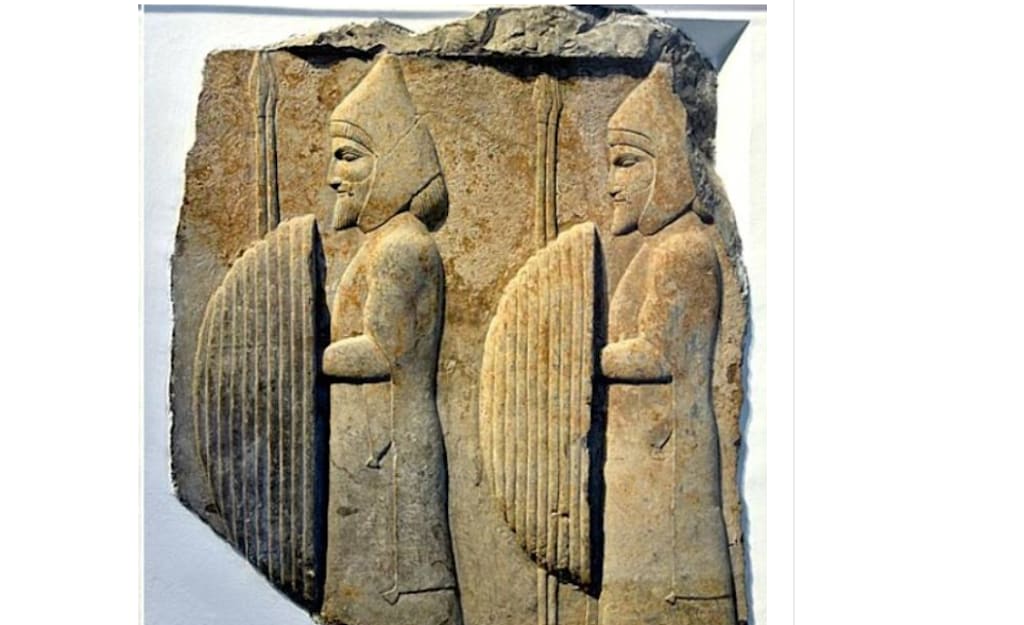
Even though the typical Thracian led a modest life, they did not lack culture. Thracians were renowned for their exquisite jewellery and striking metalwork, and art, music, and dance were important aspects of their way of life. Surprisingly complex metalwork is a hallmark of Thracian art.
Thracian craftspeople created everything from exquisite jewellery made of gold and silver to intricately adorned weapons and customised ritual objects. These artefacts frequently had intricate patterns and themes that were influenced by mythology, nature, and animals.
The Thracians' mastery of metalworking techniques like repoussé, filigree, and granulation is demonstrated by the craftsmanship found in objects like the Panagyurishte Treasure and the Rogozen Treasure.
The Thracians frequently used music to accompany their social interactions. The Thracians played a variety of musical instruments, such as drums, harps, lyres, and flutes. They even had a bagpipe of their own, called the Gaida. This instrument was widely used for both joyous and serious occasions, and it is thought to have originated in Thrace.
Religious ceremonies and rituals frequently included musical performances. The Thracians thought that the songs would guarantee harmony within the community and invoke the favour of the gods. The Thracians frequently let their hair down to the sound of music.
It goes without saying that music requires some dancing. Another crucial component of Thracian culture was dance, which was frequently performed at social events, festivals, and religious rites.
The Thracian dances were vivacious and expressive, with complex footwork and rhythmic motions. These dances, like those in many other communities, functioned as a kind of storytelling, using choreographed performances to communicate myths, historical occurrences, and cultural values.
The Thracian Economy
The majority of Thracians led agrarian lives, as was already mentioned. They may have supplemented their income with simple crafts, but they lived off of what they planted and raised. They poured what they didn't use themselves into the Thracian economy through commerce with other countries or between tribes.
Commerce and Trade
Thrace was situated at the meeting point of Asia and Europe. This made it possible for them to trade both locally and over vast distances. They were known to trade products with powerful civilisations such as the Greeks, Persians, and subsequently the Romans, including fruit, wine, and metal works. Agricultural goods, animals, and raw minerals like iron, silver, and gold were important trade commodities.
The Thracians were known for their expert workmanship, especially in metalworking, in addition to these fundamental resources. Throughout the ancient world, their jewellery, weaponry, and ornaments were in great demand. Thracian villages' economic prosperity was boosted by luxury products, which were important trading commodities.
The ruling elite held the majority of Thrace's resource-rich mines, and its metalworkers were employed at the leaders' and nobility's request. This meant that only the higher classes were able to benefit from the enormous wealth that Thrace's mines and metalworkers produced.
Currency and Barter
Thracian society's economy was mostly built on bartering in its early years. But as Thrace engaged in more trade with its neighbours, it started to adopt their economic strategies.
Coins from the Greek and later Roman eras have been discovered in Thracian lands, indicating that they were utilised for commerce. Thracian markets were included into the larger economic networks of the ancient world and commerce was made easier by the use of coinage.
Thrace's religion
When discussing religion in Thrace, we need to use caution. Apart from the artefacts they left behind, we are left to rely on old sources for knowledge because the Thracians left no written record. In this regard, the historian Herodotus has been a significant source of knowledge, although many contemporary historians doubt the veracity of his findings.
He may have altered some features of Thracian religion to make them more understandable to his Greek followers. Although the Greeks had a significant influence on Thracian culture, the Scythians and Persians to the north and east had a greater influence on their belief system. Some of Thrace's gods were given Greek names only after Greece colonised the coastal regions of Thrace.
Deities and the Pantheon
Although the number of gods that the Thracians truly worshipped is unknown, they were polytheistic. Herodotus stated that they worshipped just three gods, yet he contradicted himself by listing numerous other deities. One of the most significant was the Great Mother goddess, who represented fertility and the wealth of nature, much like Cybele in the Phrygian mythology.
Another well-known character, Zalmoxis (also known as Orpheus), was venerated as a demigod or hero and was connected to immortality and the underworld. Hunting and the wilderness were symbolised by local deities such as Bendis, who was associated with Artemis.
Symbolism and Cosmology
According to Thracian cosmology, the elements of Earth, Air, Water, and Fire—represented in their sacred imagery—interact harmoniously to form the universe. These cosmic elements—air above, earth in the center, and water below—were symbolically represented by the horned eagle clutching a hare and a fish, signifying their interrelated worldview and respect for natural forces.
Greek Influence and Syncretism
Greek gods were assimilated into the Thracian pantheon together with regional deities as a result of Greek colonisation. Apollo, for instance, was associated with the local gods Derainos, Zerdēnos, and Kendrisos; Hermes with Perpheraios; and Artemis with Bendis and Basileia. The reciprocal impact and cultural adaptation between Greek and Thracian religious traditions were evident in this syncretism.
The idea of timelessness
The fact that Thracian religion did not see time as linear may be its most fascinating feature. They did not see history or their own mythology as apart from the present, in contrast to most other regions. Rather, the Thracian religion held that their holy stories were happening concurrently in a timeless present.
Their heroes were thought to carry on their heroic actions in an eternal realm where they were entwined with the world of the living, creating a bridge that blurred the lines between the divine and mortal realms. This would be the same as if contemporary Christians thought Jesus was living in another world and was currently turning water into wine.
Religious Rituals and Practices
Religious ceremonies, which often featured dancing, singing, and sacrifices, were the center of Thracian civilisation. These customs were performed to honour the gods, gain their favour, and ensure the well-being of the community.
Human sacrifices were sometimes performed in addition to animal sacrifices, particularly during royal funerals. The Thracians believed that by offering such sacrifices, they could appease the gods and ensure a prosperous and tranquil existence.
Ritual feasting, where groups of people congregated to worship the gods by sharing food and drink, was another significant custom. These feasts strengthened social bonds and provided an opportunity for communal dedication and delight.
Sacred Places and the Priesthood
A priesthood oversaw rites and kept up holy locations in the Thracian religion. As go-betweens for the people and the divine, priests and priestesses occupied significant roles in their communities. They were in charge of carrying out rituals, deciphering omens, and conserving religious information.
In Thracian religious life, sacred locations like temples, altars, and natural elements like rivers and mountains were essential. These locations were frequently the center of pilgrimages and religious assemblies since they were thought to be the homes of the gods. One of the most important Thracian holy places is the sanctuary of Perperikon, which is said to be an oracle center devoted to Dionysus.
Getting married
Their views on marriage and polygamy were among the most intriguing features of Thracian religion and society. Male Thracians, particularly those from higher social classes, were frequently polygamous. Rich and influential men frequently had several spouses, which was a reflection of their social and financial standing.
Marriage was frequently more about politics than romance, just like in many other civilisations. It was customary for leaders to marry solely to strengthen their relationships and for aristocrats to marry for power. Arranging an intertribal marriage that was approved by the leaders of both tribes was one of the most popular ways for various Thracian tribes to demonstrate their unity. One spouse could have women from several tribes thanks to polygamy. This was an effective method of combining several alliances at once.
Regarding female sexuality, the Thracians were likewise unusually tolerant. The Thracians thought virginity of little significance, in contrast to many other ancient (and contemporary) communities. Unmarried women were free to select their partners and had a great deal of autonomy in their sexual interactions. In stark contrast to the more rigid rules found in many modern societies, they were free to interact with partners of their choosing without fear of social censure.
We still don't know a great deal about Thracian civilization, and regrettably, a lot of what we do know must be viewed with caution. That's unfortunate because Thracian society appears to have been an intriguing blend of various cultures. They weren't the simple hired guns as some historical accounts would have us think.
The Thracians created a culture that struck a balance between tradition and adaptability, from their unique marital rituals and economic practices to their polytheistic pantheon and cosmological beliefs. Their identity and interactions within the ancient world were formed by their worldview, which was defined by a timeless understanding of mythology and a profound respect for natural forces. The Thracians' heritage endures as a testament to the diversity and tenacity of prehistoric societies in
About the Creator
Enjoyed the story? Support the Creator.
Subscribe for free to receive all their stories in your feed.
Comments
There are no comments for this story
Be the first to respond and start the conversation.