
Cuneiform Tablets Show That the Legendary King Gilgamesh Was Real
Gilgamesh's Name on a Royal List

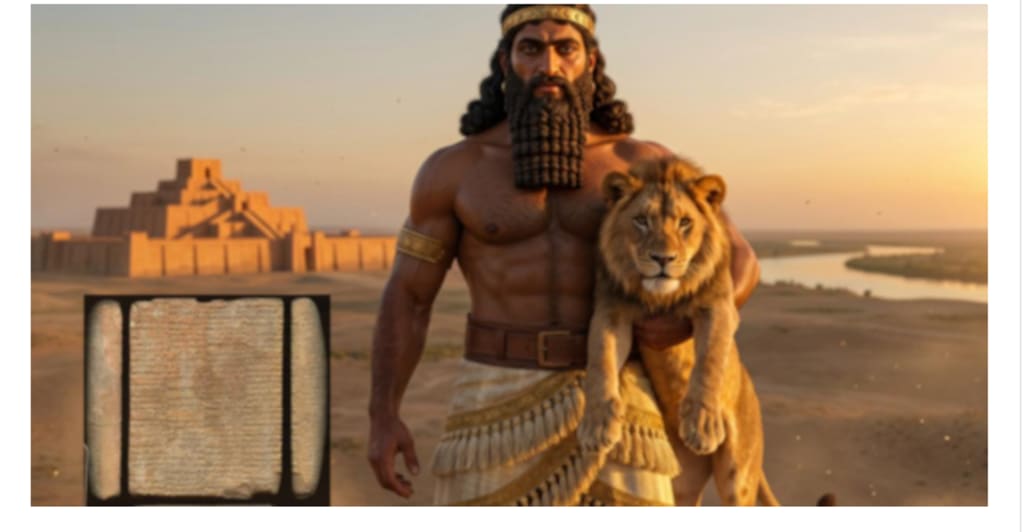
Researchers have now finished a thorough examination of the artefacts, more than a century after the National Museum of Denmark started collecting a sizable collection of inscribed clay tablets from the ancient Near East. "Hidden Treasures: The National Museum's Collection of Cuneiform Tablets," a ground-breaking effort, has digitised and catalogued these ancient manuscripts for the first time.
One of the most amazing discoveries is a royal list that features the fabled king Gilgamesh, offering unique proof that the protagonist of the oldest epic poem in history might indeed have existed.
The National Museum of Denmark and the University of Copenhagen worked together to investigate documents that are often older than 4,000 years. Cuneiform writing, a communication technique that first appeared in ancient Mesopotamia some 5,200 years ago, was used to write these records in the now-extinct Sumerian and Akkadian languages.
With assistance from the Carlsberg Foundation, the Augustinus Foundation, and the Edubba Foundation, the project was headed by Nicole Brisch of the University of Hamburg and Anne Haslund Hansen of the National Museum.
Gilgamesh's Name on a Royal List
A school book that lists kings who ruled at the end of the third millennium BC is the particular tablet that has generated such interest. Gilgamesh, the main character in the well-known Epic of Gilgamesh, is another recognised example of this similar royal list. Troels Pank Arbøll, an Assyriologist who oversaw the study, emphasised its importance:
Because of this, this royal list is among the few artefacts that raise the possibility that Gilgamesh actually existed. We were unaware that we had a copy of the list in Denmark. It's really amazing."
A freshly undiscovered copy of the Sumerian King List was found in Denmark, adding a new chapter to its amazing tale. The Sumerian King List is already among the most significant texts in ancient history.
For for a century, the collection had been kept in the museum's storage rooms, virtually unstudied. In 1939, a sizable amount of the lands were donated by Thorkild Jacobsen, the first individual to graduate from the University of Copenhagen with a degree in Assyriology.
Researchers are now able to categorise a diverse collection of documents, such as accounting records, correspondence, medical treatments, and a number of magical spells of significant historical significance, thanks to the use of digital techniques and philological research. Through the Cuneiform Digital Library Initiative, the effort has made the complete collection accessible to scholars worldwide.
Royal Protection and Magical Spells
The collection uncovered an intriguing variety of other works in addition to the tantalising evidence of Gilgamesh. The Syrian city of Hama, which was sacked and pillaged by Assyrian forces in 720 BC, is the source of an important collection of tablets. In their hasty retreat, the Assyrians left behind some clay tablets but returned with most of the loot to their capital, Assur, in modern-day Iraq.
These approximately 3,000-year-old manuscripts, which were discovered among the remnants of what archaeologists think to have been a sizable temple library, contain both magical spells and medical remedies. "All the other texts had disappeared," according to Arbøll.
The fact that almost no other cuneiform tablets on these topics have been discovered in the same area during that time period highlights how unique these surviving fragments are.
The scholars were especially interested in a book from Hama that described an anti-witchcraft rite intended to protect the Assyrian king from bad luck and political unrest. Small wax and clay figurines were burnt during the all-night ritual, during which an exorcist performed a predetermined set of incantations to allay the deep-seated worries of demonic threats to royal authority.
Beer receipts, bureaucracy, and a century of collection
Another set of manuscripts under analysis originates from Danish excavations conducted in 1957 at Tell Shemshara in northern Iraq. These tablets include numerous administrative records and correspondence from a local chief to an Assyrian monarch circa 1800 BC.
These documents demonstrate the sophisticated bureaucracy required to run the highly developed urban cultures of ancient Mesopotamia. As Arbøll noted, many of the cuneiform tablets that have survived today bear witness to this highly developed administrative culture, which was the primary cause of cuneiform writing.
One of the most realistic depictions of ancient daily life was discovered by researchers among these administrative texts: an extremely old beer receipt, demonstrating that the management of products and the documentation of routine transactions were already essential aspects of existence thousands of years ago.
The contrast between practical beer tabs and great epics with Gilgamesh and mystical ceremonies for kings emphasises the complexity and diversity of Mesopotamian life, which is preserved in these timeless clay tablets. These amazing records are now available to the world for the first time thanks to the publication of the National Museum of Denmark's complete catalogue of cuneiform texts.
About the Creator
Enjoyed the story? Support the Creator.
Subscribe for free to receive all their stories in your feed.
Comments
There are no comments for this story
Be the first to respond and start the conversation.