
The Enigmatic Thracians: Revealing Their Distinctive Traditions and Culture
The Thracian Way of Life

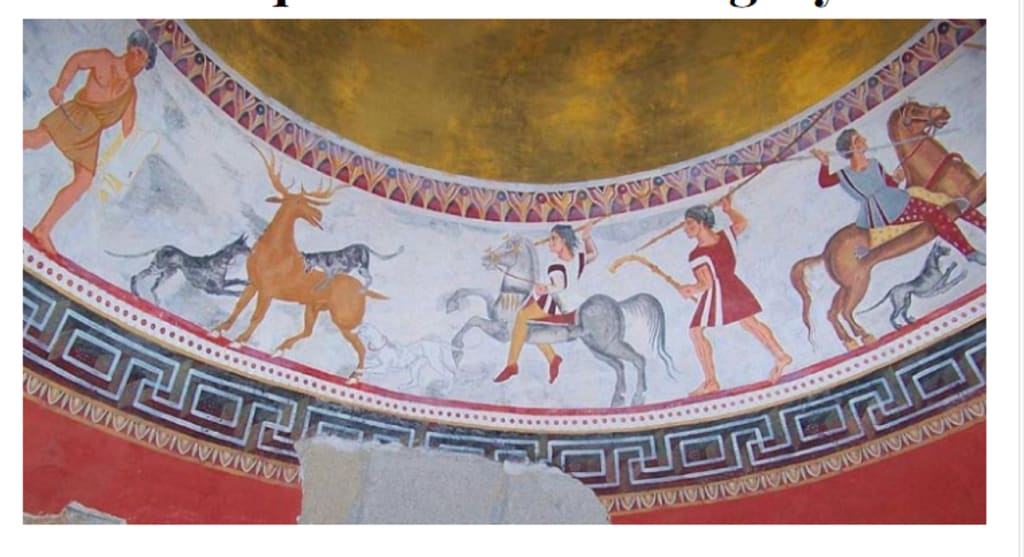
The Thracians, a mysterious civilisation that once flourished in the areas that now comprise Bulgaria, Greece, and Turkey, have proven difficult for historians to piece together. The Thracians were a significant force in the area for centuries, but they left no written records. Rather, we have to rely on the artefacts they left behind and the opinions of their neighbours, such as the Greeks and Romans.
We are aware that they were expert artisans and ferocious warriors with a rich civilisation greatly impacted by nearby forces. Although a lot has been written about the Thracians' military, we want to focus on the people themselves, their daily lives, and their culture.
The Thracian Way of Life
A little background information never hurts anyone, even though the main focus of this article will be life in Thracian society. Around the second millennium BC, Indo-European tribes landed on the Balkan Peninsula, which is where the Thracians had their start. Their powerful neighbours, the Greeks, Persians, and eventually the Romans, had a significant impact on their early history. Homer's Iliad contains the earliest reference to the Thracians as a people.
The Thracians were a collection of tribes with similar cultural characteristics rather than a single, cohesive empire. The Odrysians, who were well-known in the fifth century BC, were the tribe that swayed the most. The Odrysians greatly increased their strength under monarchs like Teres and Sitalces, to the point where they formed alliances and engaged in wars with more powerful nations like the Persians and Athens. The Thracians gained notoriety as mercenaries during the Persian Wars.
Thrace was regularly attacked due to their lack of unity. The campaigns led by Philip II of Macedon and his notorious son, Alexander the Great, were the most significant. A mingling of cultures and military tactics resulted from the Macedonian conquest of much of Thrace by the fourth century BC.
The Roman conquest marked the real loss of autonomy for Thrace. Thrace became the province of Thracia after the Romans captured it in AD 46. It brought an end to Thracian independence as its tribes understood it, but it also ushered in a time of very stable and prosperous conditions. Many elements of Thracian culture survived, albeit assimilated into the larger Roman environment, and Thracians continued to serve as soldiers in the Roman army.
An Ordinary Thracian's Day
The typical Thracian led an agrarian lifestyle centred on farming, animal husbandry, and simple crafts. The majority of Thracians inhabited tiny communities with simple dwellings made of clay, wood, and reeds. The owners of these modest but useful dwellings lived, slept, and prepared meals in a single room. It's similar to renting an apartment in London or New York.
The Thracians were skilled farmers who grew rye, wheat, and barley. They were also known to cultivate a variety of fruits and vegetables, including grapes, when they were in season. The Thracians were known for producing good wine, therefore these grapes were very significant.
Thracians raised a variety of animals, but horses were particularly valued since they represented wealth and social standing. While women stayed at home and took care of household duties, Thracian males typically worked in the fields or went hunting during the day. Women would spin and wave flax and wool to make clothes while they weren't cooking, cleaning, and raising children.
Bread, oatmeal, cheese, and meat were common yet substantial meals in Thracian homes. Every day, they drank wine, which was frequently flavoured with honey and herbs. The Thracians were renowned for their communal feasts, which featured music, dance, and an abundance of food and wine.
The Thracians were a social group as well. Thracian society relied heavily on social relationships and ties to the community. Villages frequently had central meeting spots where residents would congregate to celebrate holidays, exchange news, and carry out religious rites. The cohesiveness of Thracian civilisation was preserved by these events, which strengthened ties to the community and cultural identity.
Social Organization
The Thracian way of life described above may seem straightforward and picturesque, yet their culture was extremely tribal and hierarchical. Every tribe had its own social dynamics and leadership. Thracian society had everything from slaves and peasants to nobles and lone rulers, and it had a complicated structure both within and across tribes. Every individual in society had a unique job to play and contributed to the operation of their community.
Slaves
Regretfully, slavery was a well-established institution in Thracian culture. Thracian slavery was extremely similar to Greek slavery. The majority of slaves were either debt-ridden citizens or prisoners of war. They carried out the most labour-intensive jobs, such as manual labour in mines and on farms.
The most fortunate slaves were employed as domestic helpers. They were still at the bottom of the social scale and had little rights, even if they weren't mistreated as slaves from other ancient societies.
Commoners and Peasants
Peasants and commoners who worked the land made up the great majority of Thrace's population. They lived simple lives similar to the one mentioned above. Although they had little political influence, they were primarily responsible for the economic stability of Thracian society. Certain things are always the same.
Warriors
Thrace's soldiers occupied a prominent place in the social structure, and the country was proud of their warriors. They were well-liked, frequently descended from aristocratic families, and renowned for their valour and fighting prowess. In order to defend the tribe and take part in raids and battles, warriors were essential. Additionally, they worked as mercenaries in foreign armies, using their military skills to boost their tribes' riches and status.
The Executives
The Thracian nobility comprised the higher classes of Thracian society. These powerful noble families and affluent landowners possessed a great deal of authority. Compared to commoners, they had a superior level of living and resided in bigger, more ornate homes. As go-betweens for the people and the gods, the nobility frequently possessed both political and religious power.
Each tribe had a chieftain or king above the nobility. These leaders, who had the backing of the nobility, were in charge of making important choices about tribal affairs, alliances, and warfare. They were frequently identified by their riches, which was demonstrated by ornate interments and the ownership of valuables like silver and gold artefacts.
About the Creator
Enjoyed the story? Support the Creator.
Subscribe for free to receive all their stories in your feed.
Comments
There are no comments for this story
Be the first to respond and start the conversation.