literature
Geek literature from the New York Times or the recesses of online. Our favorite stories showcase geeks.
Through the Looking-Glass by Lewis Carroll
Macmillan & Co. first published Lewis Carrol's sequel to Alice's Adventures in Wonderland on the 27th of December 1871 in order to coincide with the Christmas sales of bookstores. It's full title was to be Through the Looking-Glass and What Alice Found There and would initially run 9'000 copies with a red cloth covering which would contrast to the previous book's green cover. Illustrated by Sir John Tenniel, just like the first book, these texts both contain some of the most iconic images associated with the literature which very clearly formed the basis of the cartoons in the Disney cartoon film in the 1950s.
By Annie Kapur6 months ago in Geeks
Book Review: "The Shepherd's Life" by James Rebanks . Top Story - May 2026.
Relaxation in books is not something many people look for and so when the Daily Fail called this book the 'surprise' hit of the year it wasn't just because they were surprised their journalists could read - it was also due to the slowness of the atmosphere within Rebanks' autobiography. There's a calm to reading about the Lake District in the same way that when we read certain idyllic poems by Wordsworth, we often have the feeling of being there wash over us. Rebanks will mention Wordsworth many times and from the outset, understands that though a formative education wasn't useful to a shepherd, there was much more to be learnt from being around the farming areas. A brilliant and vibrant autobiography of growing up in one of the most beautiful places in all of the UK - the author showcases a life that is very special, something the tourists would always try to understand but never will entirely.
By Annie Kapur6 months ago in Geeks
Book Review: "If Walls Could Talk" by Lucy Worsley
Lucy Worsley is perhaps one of my favourite writers of the year so far. Her books on Jane Austen (aptly titled Jane Austen at Home and dealing with the writer's domestic and writing life in tandem), Agatha Christie (in which she rightly forms the opinion that this woman was both a reserved ladylike writer and a pioneering feminist icon) and Queen Victoria (where we are met less with a biography and more of an episodic view of the queen's life) have been an absolute delight to read. I had to continue the trajectory I was on in delving into her work and thus turned to her shorter book, again episodic but this time not a biography of a person - but rather a biography of the home.
By Annie Kapur6 months ago in Geeks
Book Review: "Queen James" by Gareth Russell (Pt. 3)
Whilst Robert Carr is climbling the social ladder, Anne of Denmark is surely getting the short end of the stick. Gareth Russell's darkly colourful book about the reign of James I is definitely looking more melancholic now as we are on the road to Prince Henry's demise. He writes this by establishing that the court was still in intrigue and gossip about the favourites. But of course, Henry was getting sicker and sicker. He had contracted a horrific illness which made his mother and father knowingly very anxious as he was the heir apparent.
By Annie Kapur6 months ago in Geeks
When Is a Move Final?
The Commitment Problem in Modern Chess Modern chess operates under a fractured commitment model that no longer aligns with how players think, how turns function in most games, or how chess itself is actually played across physical and digital formats. At the heart of the problem is that chess treats physical contact with a piece as binding commitment while simultaneously relying on a separate explicit action to end a player’s turn. This creates a logical contradiction: a move becomes final before the turn is over. In most turn-based games, interaction with game components is provisional until the player explicitly signals the end of their turn. Chess is an anomaly in this respect, and the inconsistency becomes increasingly visible in modern play.
By Peter Thwing - Host of the FST Podcast6 months ago in Geeks
Book Review: "Queen James" by Gareth Russell (Pt. 2)
We see the end of the Queen's coronation and Gareth Russell talks us through the oddities in the marriage, such as how well or to what extent Anne of Denmark knew of her husband's liasons with men. When it came to the political atmosphere of Scotland though, James was wasting no time in growing the economy. Gareth Russell does refer and refer often to the fact that James' reign was probably one of the more prosperous for Scotland (I don't think it was prosperous for England though when he came into power in 1603). But, as we leave the time in which James and his wife were being celebrated whilst intrigue took over the palace, we shift into the era of the witch trials.
By Annie Kapur6 months ago in Geeks
Book Review: "Queen James" by Gareth Russell (Pt. 1)
So, I've been reading a lot of historical nonfiction lately as you can tell and I have definitely been waiting until I had enough money to buy this masterpiece (which again, I found for a bit cheaper than it was going in the chain bookshops). After reading The Scapegoat by Lucy Hallett-Hughes, I thought that perhaps it was a good idea to make my way to Queen James by Gareth Russell to understand the king of the era a bit more. I have previously read The Palace also by Gareth Russell and there is a bit about James covered within, but I need a book which pays attention to his life, his rule and of course, his sensational favourites. This proved the perfect text for that task.
By Annie Kapur6 months ago in Geeks
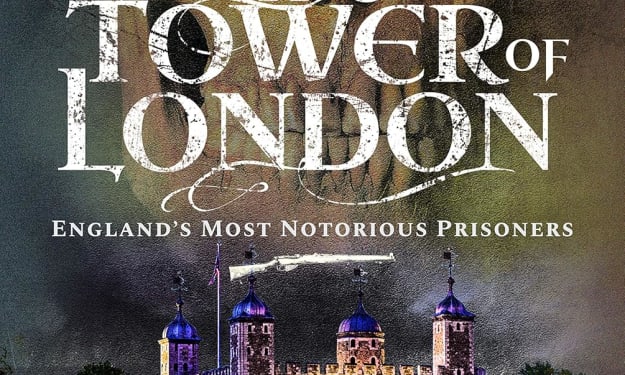
Book Review: "A Hidden History of the Tower of London" by John Paul Davis (Pt. 6)
And so, we meet the road to the end of the book with today's entry. We begin by also seeing the end of what the author calls "The Golden Age" of Britain. We are constantly hinted at that the execution of Sir Walter Raleigh will take place and though it does take some time, the man himself declining with age naturally so that it probably would have been less controversial to let him die, it was still carried out in the appropriate fashion befitting a death sentence. The author goes on to state though, that this one was far different to the others. There was, in fact no celebration once Raleigh's head was removed but a solemn silence. The shift in atmosphere from something more spectacle to a darkness more fitting of a cortege means that we as readers are too, about to see a shift in the sphere of execution. The randomness of the trigger happy monarchs would come to reflect their characters in ways more than one.
By Annie Kapur6 months ago in Geeks
The Radetzky March by Joseph Roth
Background and Context: I haven't read this book for a long time but only included it because I recently saw it on social media. I once loved reading Joseph Roth's wriitng and yet, this one flew completely under my radar until a few years' back. Even though I probably enjoyed 'Weights and Measures' more. I still had to write about 'The Radetzky March'.
By Annie Kapur6 months ago in Geeks
Book Review: "A Hidden History of the Tower of London" by John Paul Davis (Pt. 5)
It is strange that the author all at once states that Elizabeth I both focused on tolerance and yet, locked more Catholics in the Tower. Catholic panic was back in swing as were the opportunities to remove Gloriana from the throne and install Mary, Queen of Scots - a Catholic. The Catholic and Protestant whinging grows louder amongst those who start the scheming and planning - you can only guess where they end up? Of course, this book is about the Tower of London! And so, executions must go ahead and there was definitely no shortage of them.
By Annie Kapur6 months ago in Geeks
Book Review: "A Hidden History of the Tower of London" by John Paul Davis (Pt. 4)
Chapter 10 showcases exactly how far Henry VIII goes in his paranoia. John Paul Davis implies that the King, now more paranoid after the death of Anne Boleyn is on the lookout far more often, is far more willing to send people to the Tower and to have them executed. People were forced to confess, even if they had not actually done anything wrong themselves, but knew people who did - some were even complete fabrications under torture. This is also where the Medieval form of hanging, drawing and quartering became a lot more fashionable. The author shows the King becoming more and more violent and so, we are obviously going to concentrate on individual executions.
By Annie Kapur6 months ago in Geeks
Book Review: "A Hidden History of the Tower of London" by John Paul Davis (Pt. 3)
People are now arrested for not being the correct religion, being executed on Tower Hill. It's the late 1400s and the book is starting to move back towards what is actually going on within the Tower walls rather than court politics. Killing Clarence proves a huge mistake and Edward IV's kingship is beginning to take a turn for the worst - he is described by the author as a shadow of the man he once was. Though, in my own readings, he seems to be a man who was both a brute and a glutton. When he dies, he puts his brother, the Duke of Gloucester in charge of Edward V - who is still yet a child. Though it is clear that the Duke of Gloucester has plans to get the throne for himself and crown himself Richard III.
By Annie Kapur6 months ago in Geeks