
Through the Looking-Glass by Lewis Carroll
Why It's a Masterpiece (Week 115)

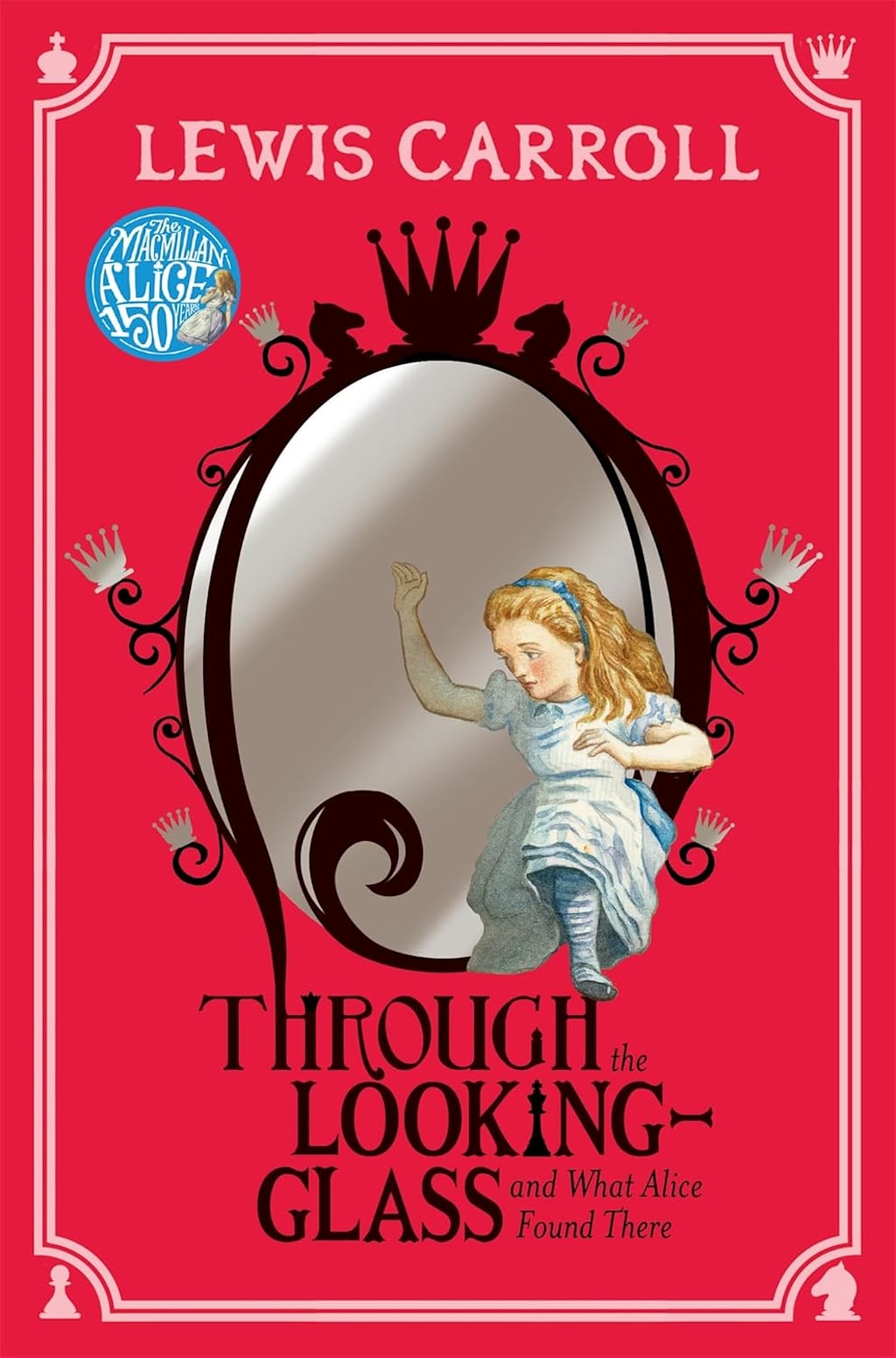
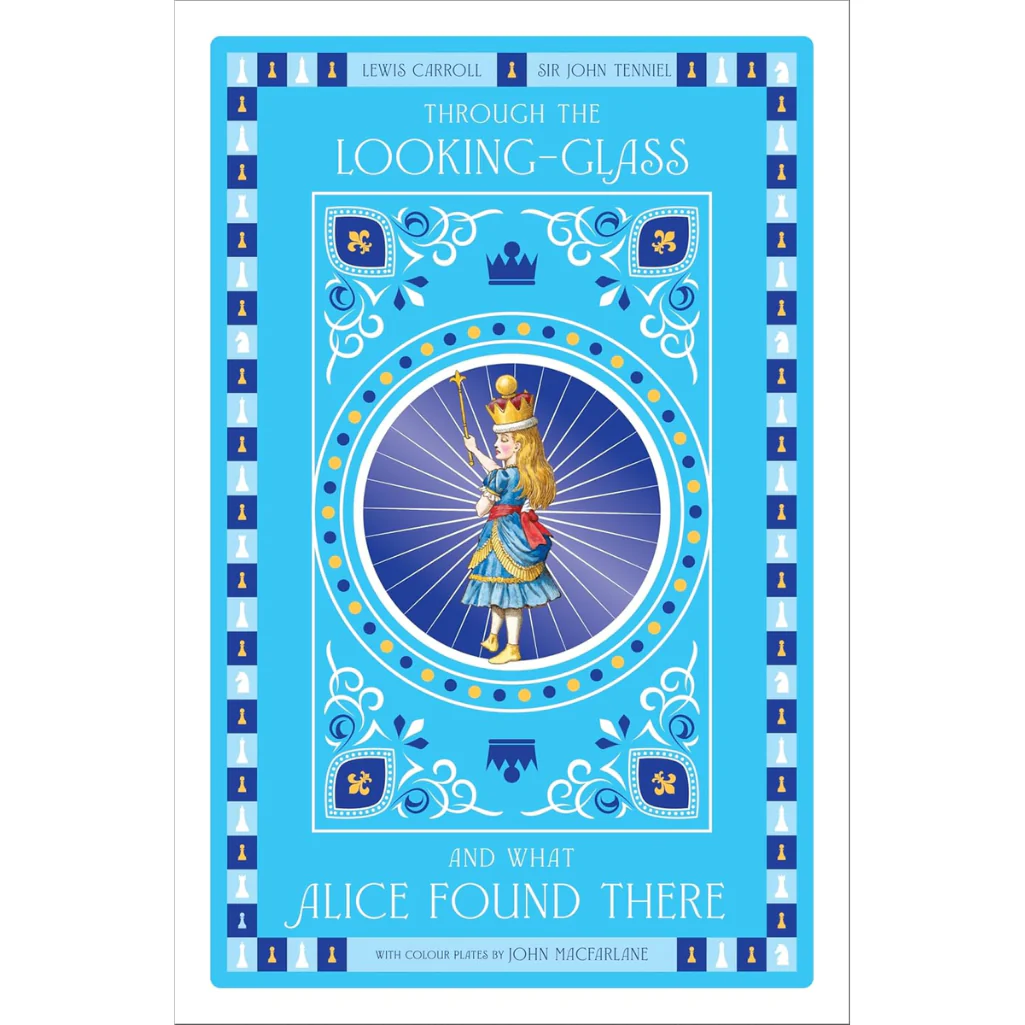
Macmillan & Co. first published Lewis Carrol's sequel to Alice's Adventures in Wonderland on the 27th of December 1871 in order to coincide with the Christmas sales of bookstores. It's full title was to be Through the Looking-Glass and What Alice Found There and would initially run 9'000 copies with a red cloth covering which would contrast to the previous book's green cover. Illustrated by Sir John Tenniel, just like the first book, these texts both contain some of the most iconic images associated with the literature which very clearly formed the basis of the cartoons in the Disney cartoon film in the 1950s.
It received attention for being more complex than its predecessor and most obviously, contained some of the characters who are often wrongly associated with the first book in the series such as: Tweedle Dee and Tweedle Dum and the Jabberwocky. Perhaps it is this that has allowed Lewis Carroll's books to endure for so long - they are clear for both adults and for children. Even at an older age, to discover things from Alice's Adventures in Wonderland and Through the Looking-Glass is something quite exciting that don't only pertain to using metaphors which relate to disappearing into a new world (i.e 'down the rabbit hole' and 'through the looking-glass').
Plot
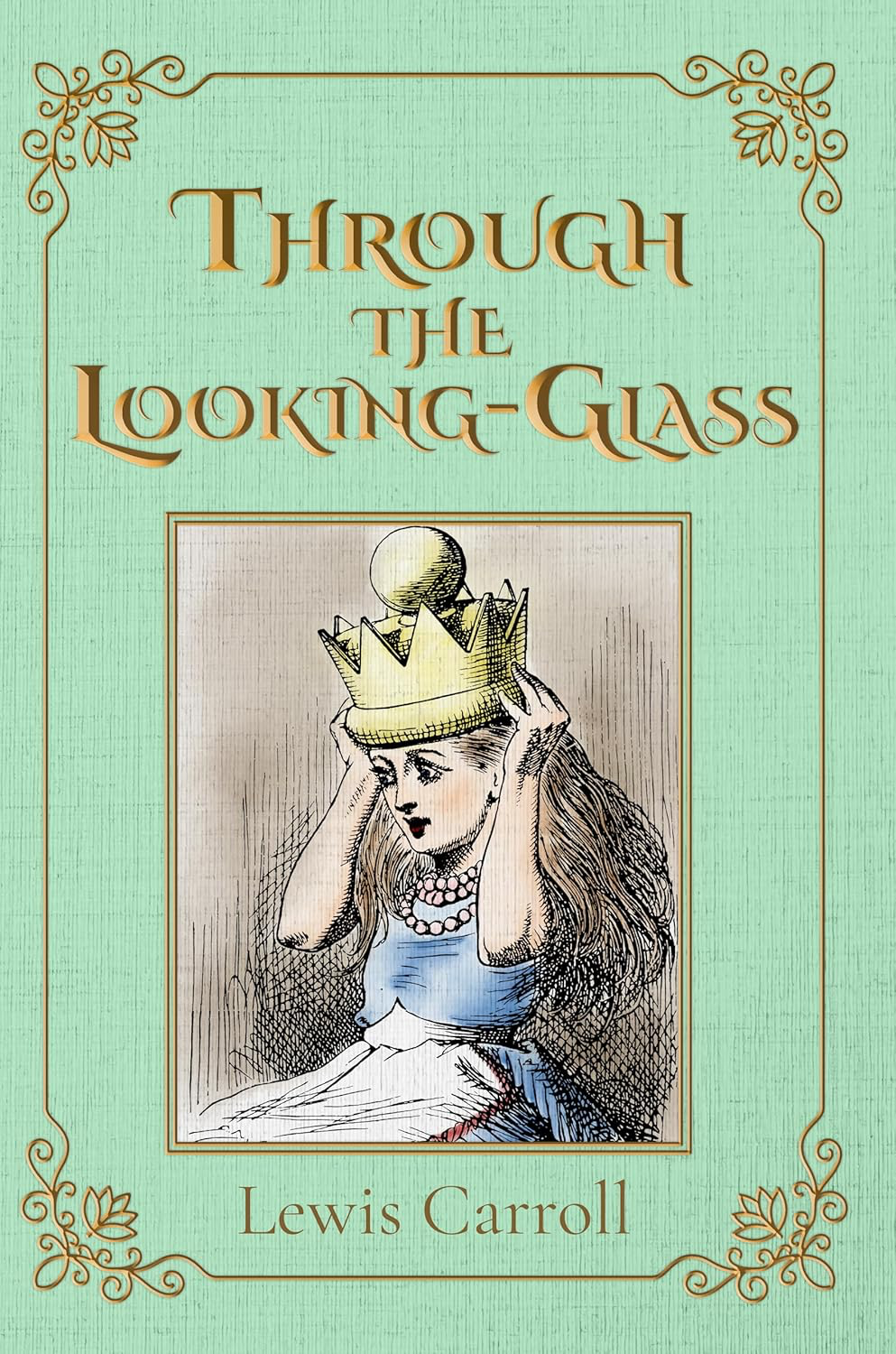
Alice is playing with her kittens, speaking to them almost as if they are live children and she is the adult mother - an act of imaginative play normally committed to be children. After a moment or so of this play, she steps through a mirror in which everything is reversed like a reflection. This is an alternative world and logic is often turned upside-down. Referred to as 'the looking-glass house', this is the start point for Alice's journey into this new Wonderland-like world.
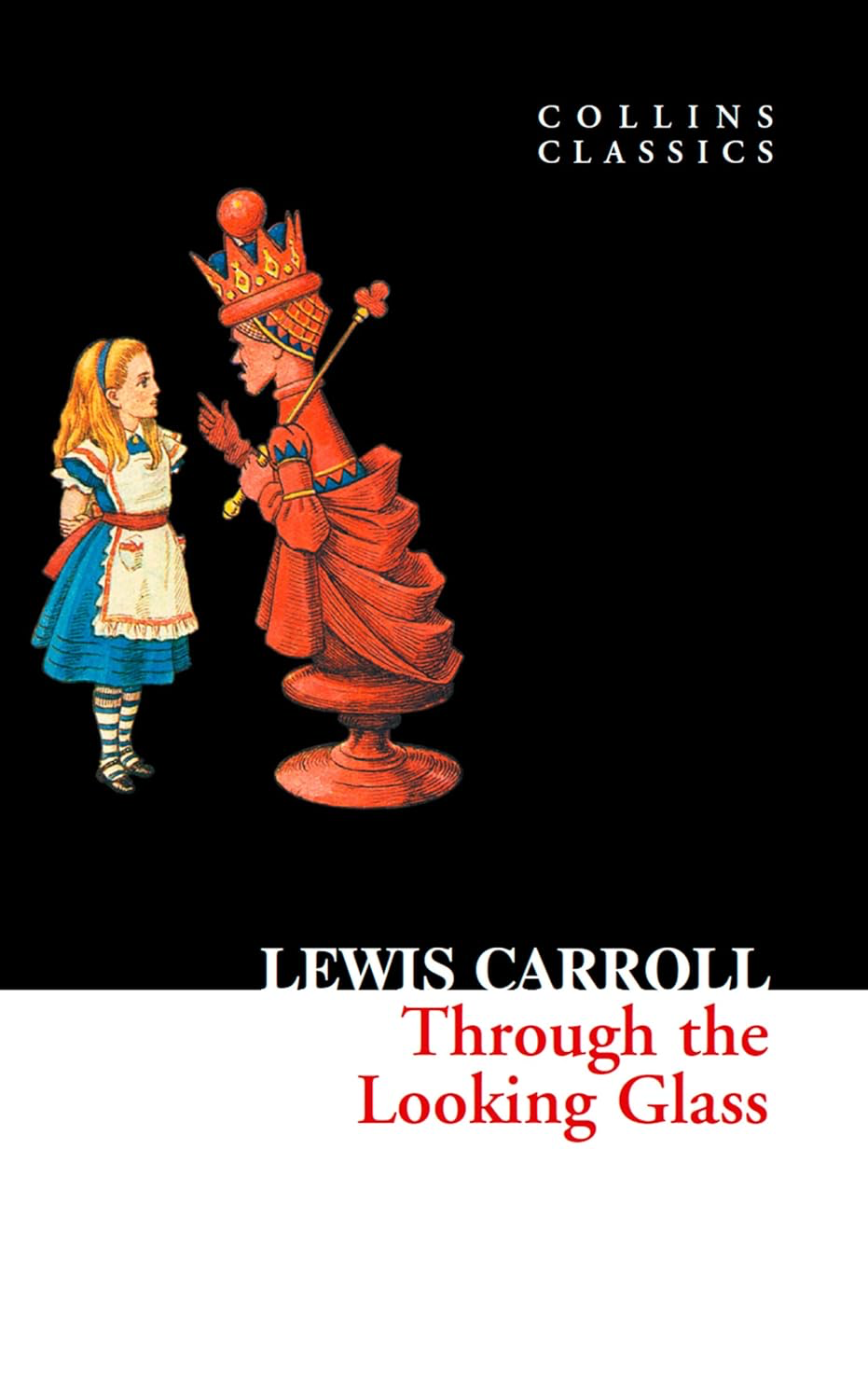
Unlike the whimsy of Wonderland in which dark undertones hide beneath the surface, the world of the looking-glass is made up of a chessboard and is pretty overtly dark. Alice becomes a white pawn and it told that she could be the queen if she were to only make it to the other end of the board. On her way, she meets some flowers that are quite rude and the strict Red Queen who explains to her the rules of the chessboard.
After this, she takes a weird train ride where she meets a whole lot of insects that have been invented for this looking-glass world and then she encounters a set of twin brothers named Tweedle Dee and Tweedle Dum who tell what is possibly my favourite story in the whole series: The Walrus and the Carpenter. After this, she meets the famed White Queen who claims to be able to remember things before they actually happen.
Alice enters a forest where she and others temporarily forget their names and a boat ride with the White Queen turns into a shop where logic continually shifts around. By this point, it is clear that the book has become a complex world of reversed images and juxtapositions. One of these characters is met next: Humpty Dumpty. Humpty Dumpty seems to redefine the rules of the world for Alice as she moves along the chessboard. She even witnesses a symbolic English coat-of-arms fight between the lion and the unicorn.
After reaching the other side of the chessboard, Alice is crowned queen and then is left with a bunch of nonsensical riddles by the other two queens. When she wakes up in her own world, she thinks about whether the dream was her own or whether it was the Red King's all along...
Into the Book
Reversal and Mirror Images:
One of the key themes from the book is obviously reversal and mirror images. This not only involves juxtapositions but also includes the reversal of expectation. In one part of the book, Alice is told to run as fast as the Red Queen in order to keep up - but this is only to find she hasn't moved anywhere at all. This reversal of expectations leaves the reader, and Alice, utterly confused.
Another way expectations are reversed is through the White Queen's ability to interpret the meaning of actions before they've happened - essentially she lives in reverse. This only makes sense when we see the scarf scene with Alice and even then, it is difficult for the reader to rationalise. But this also a juxtaposition to the ideas presented by the Red Queen which are quick and stern but go one way which Alice finds it impossible to go in.
Of course this is an extended metaphor for growing up, when expectations and reality don't quite meet up and there aren't quite as many rules that it is possible to follow anymore - no matter how much you may want to follow them. Carroll's depictions of the fragility of logic are buried deep within this theme and are similar to those running through the first book.
“Now, here, you see, it takes all the running you can do, to keep in the same place. If you want to get somewhere else, you must run at least twice as fast as that!”
- Through the Looking-Glass by Lewis Carroll
Identities:
Another key theme of the book is identity and this is shown through the symbolism of changing names and ideas. We can see how Alice goes from just a pawn on a chessboard to the queen in some twelve chapters, with twelve being significant because it is also the age at which we enter adolescence. Alice's journey around the chessboard mimics the changes faced at these stages which are often filled with miscommunication, misunderstandings and bad encounters with authority figures.
When Alice loses her own name, she also starts to question her identity as a person. This is quite significant to be written into a book of its time as it wasn't common for young women to question who they wanted to be. For example, we have the forest scene where she is very confused about who she is supposed to be, this leads her to believe that she may in fact, be a character in another person's dream. It mirrors the way in which we come to understand ourselves as not actually being known as whole identities by others, but actually known as only a small slice of ourselves.
“I wish I could manage to be glad!" the Queen said. "Only I never can remember the rule. You must be very happy, living in this wood, and being glad whenever you like!”
- Through the Looking-Glass by Lewis Carroll
Games and Rules:
The next key theme/motif that is probably the most prominent in the text is games and rules. It is the book's own version of structure vs. chaos. The entire narrative is built around the framework of a chess game, where Alice begins as a pawn and aims to reach the eighth square to become a queen. The looking-glass world appears chaotic, but it is underpinned by strict, often arbitrary rules of: chess, poetry, etiquette, and time. These can have the strangest consequences and the episodic nature of the novel definitely shows the reader how important it is that Alice conquer the chaos and restore order to herself.
One of the key examples of this motif of games and rules is the way in which Alice is transported to the train containing the weird insects and the odd rules. It's not only nonsensical but it is also quite unsettling for Alice to be around such strange creatures. It is reflective of how one must grow up and play the game on their own, even if they don't like being by themselves. It is, at its base, a warning about stranger-danger and at its peak, a rule that young women must be careful of their surroundings lest they encounter a giant gnat.
Why do you wish I had made it?' Alice asked. `It's a very bad one.'
But the Gnat only sighed deeply, while two large tears came rolling down its cheeks.
You shouldn't make jokes,' Alice said, `if it makes you so unhappy.”
- Through the Looking-Glass by Lewis Carroll
Why It's a Masterpiece
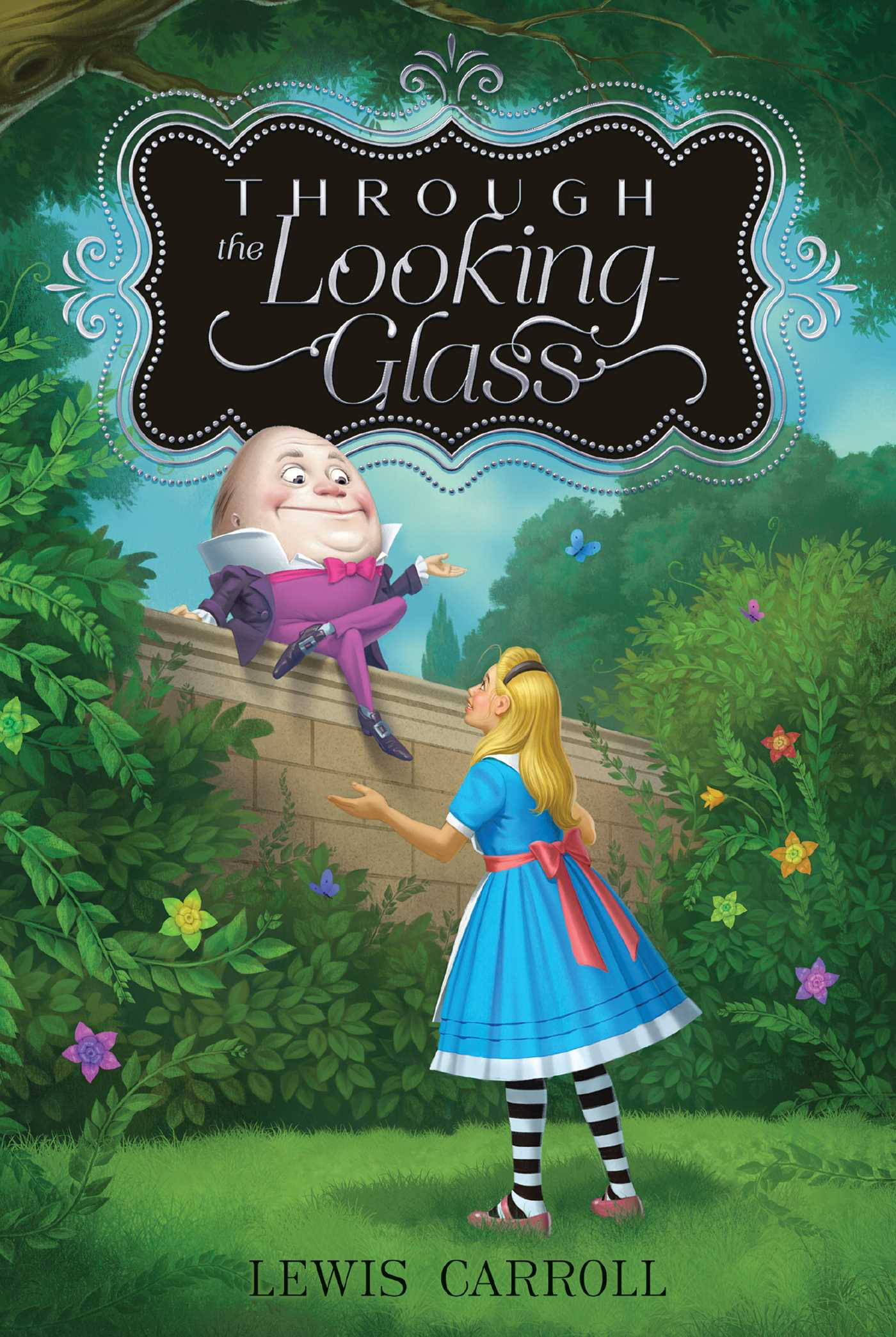
With the success of the first book, it is no surprise as to why this book was generating such great sales during the post-Christmas period. It received acclaim with positive reviews citing Carroll's playfulness in language and Tenniel's illustrations. As it is more complex than the first book, it was discussed as less accessible for children, however I think we need to remember that Through the Looking-Glass was not necessarily written for children though it was about them. It endures today because of its ability to be read by a slightly older audience, one which was the pre-teen world who were dealing with everything that teenagers have always dealt with.
Conclusion
I have often enjoyed reading this book and I think, because of the fact I've been thinking about it so much in order to write this piece, that I might go and give it a re-read. If you have not read this book already but you have read the first one then you probably want to prepare yourself for a slightly different perspective than what you were hoping. With a legacy shrouded in conspiracy theories and oddities, Lewis Carroll's fiction lives on as playful as it is dark and metaphorical.
***
If You Liked This, Then Read:
- Alice by Christina Henry
- After Alice by Gregory Maguire
- The Looking-Glass Wars by Frank Beddor
***
Next Week: Darkness at Noon by Arthur Koestler
About the Creator
Annie Kapur
"Et in Arcadia Ego"
***
I am:
🙋🏽♀️ Annie
📚 Avid Reader
📝 Reviewer and Commentator
🎓 Post-Grad Millennial (M.A)
***
I have:
📖 300K+ reads on Vocal
🦋/X @AnnieWithBooks
📸 ThePrancingPonyBakery
🔗 PrancingPonyBakery.com
***
🏡 UK
Enjoyed the story? Support the Creator.
Subscribe for free to receive all their stories in your feed. You could also become a paid subscriber, letting them know you appreciate their work.
Comments
There are no comments for this story
Be the first to respond and start the conversation.