
Book Review: "Queen James" by Gareth Russell (Pt. 1)
Chapter 1 to Chapter 7

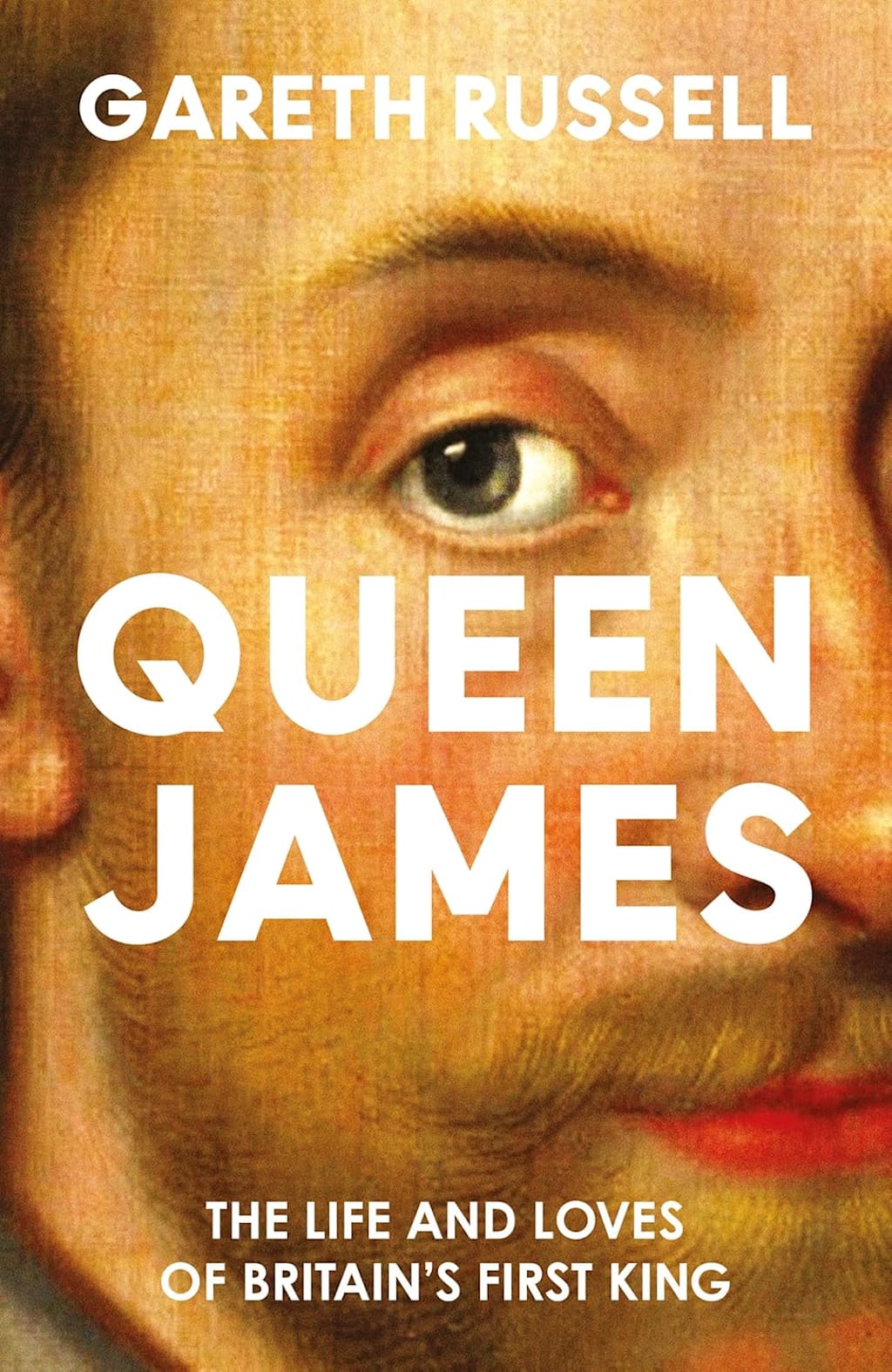
So, I've been reading a lot of historical nonfiction lately as you can tell and I have definitely been waiting until I had enough money to buy this masterpiece (which again, I found for a bit cheaper than it was going in the chain bookshops). After reading The Scapegoat by Lucy Hallett-Hughes, I thought that perhaps it was a good idea to make my way to Queen James by Gareth Russell to understand the king of the era a bit more. I have previously read The Palace also by Gareth Russell and there is a bit about James covered within, but I need a book which pays attention to his life, his rule and of course, his sensational favourites. This proved the perfect text for that task.
The book begins the life of King James in uncertain circumstances. The life of Mary, Queen of Scots is far from an easy ride. After opening the book with a murder, the reader will notice that the author takes a sombre and rather dark tone - much darker than the one set out in his previous book, The Palace (if you were not to count the 'Haunted Gallery'). The birth of the Scottish king is one filled with ambiguity about the future. Violence is not uncommon and the shooting of James whilst he was still in the womb seemed like such a possibility that when Mary brought it up again, her husband promptly went on the defensive. Gareth Russell presents one tragedy after another, a palace filled with strife and a darkness surrounding the birth of the boy king, one that was seen as miraculous.
Mary's breakdown over the fight with her husband causes her to vomit blood and suffer nervous breakdowns - something presented as a theme amongst the family: strong emotional responses. Her terrifying time on the throne is followed by her own deposition shortly afterwards. Gareth Russell may not present this as something positive for Scotland but definitely presents it as an inevitability. After scandalous love affairs and poor political decisions, King James is crowned the king of Scotland when he is still a small child.
Again, the writing is dark, intense and filled with intrigue and whispers - the nonfiction atmosphere blending with the storytelling in which Russell very carefully toes his opinions on a fine line. The political whippings of this country is only the beginning and because of his precicious position, James will very unfortunately move it into England later on, in the years when he will be named successor to Elizabeth I. Whilst Mary tries to regain access to her throne as well, we will see in future chapters that Russell's writing is doing the exact same thing - taking us on a trip into the political darkness and serving it with a side of tragedy and untimely death.
I think that sometimes we forget that England and Scotland are two different countries and in history, once had two different governing bodies. For example: Gareth Russell goes through the 'clan' culture of Scotland in which there were still family feuds and parliamentary action against it. The aristocracy running the Scottish parliament is not something that is unknown to England either. The pains for the crown may have been similar, but I have to say that James' childhood seems a lot more violent than I actually had imagined before reading this book.
But, Russell continues to cover the lighter side of life (if there was one) in which the young King James is learning about his love for languages such as Latin and French - two languages of many that he became fluent in very quickly. Whereas the people he has around him may have been booksmart but were perhaps more critical of the state of his mother. They would regularly refer to her as a tyrant and as a number of other repulsive names. Though I think that this was done in faith of keeping with 'the group' at the time (the same group that deposed the Queen), I don't think that this was a true reflection of her character and the author seems again, to toe upon that strange line.
Throughout all this though, we can also see James' opinions building. His arrogance which he would mistake for assertiveness of position would come to haunt him badly in his later life so much so he would pass the ideas to his son and these same ideas would start the English Civil Wars. This was especially true upon the point that James reaches his 12th birthday. Gareth Russell makes a sidenote to explain that the 12th birthday was a sort-of checkpoint of being halfway to adulthood. As he was the king, it was an even bigger deal for the kingdom that this boy was turning into a man, and a man with not just strong opinions but with strange friendships that some did not approve of.
The cult of personality surrounding James seems to have sprung up from murder, rage and terror - a perhaps trauma response therefore, to his horrific past, especially concerning his parents. We do feel sorry for him and yet we still understand that maybe he could have done the job a bit better. When James finally goes to Edinburgh for example, the whole celebratory atmosphere comes alive. On one hand there is a festival mood to the situation in which parties are happening all over the city for the arrival of the King. On the other hand, James knew full well that because of this response to him arriving in the key city, he was most likely expected to do great things. It's something the author presents as conflicting but then again, this is not unusual of kingship throughout the ages.
Once this is understood we get the fall of Lord Morton - a massively important figure in James' inner-circle. His laissez-faire approach to money concerning the crown was starting to seep into public knowledge and thus, he became bolder with his attitudes and opinions towards the country and towards James. Eventually, he found himself overthrown and struck from his position before being executed. This first execution signed off by James would cast a long and thoughtful shadow over his reign. It was the notion of favourites and that old 'cult of personality' that would follow James to his grave.
Esme Stewart is another character explored by the author. Becoming so close to the teenaged king he was ultimately suspected of grooming, he echoed something of a favourite and thus became the most privately hated man in court. This would prove a time of religious and moral strife for James who was from the outset, suspected of being in love with men. However, his political systems would fair well and thus, he would be locked under an analysis of his persona, his character, his nature, from the very moment he would step into the room. Gareth Russell presents this as an inevitability as James was not particularly known for being quiet. An ability to assert himself would have been what perhaps attracted him to the "ambitious" Patrick - another favourite.
A Piers Gaveston-like figure, he gained power and status as he became closer to the King, and of course the rumours did not stop spreading across the court of intrigue. But when Mary, Queen of Scots is executed under the reluctant order of Queen Elizabeth I, the book's tone turns back to the darkness echoed from the introductory chapters in which Mary's life and issues set up the instability of character in the boy king. The conflicting evidence of how James reacted is explored by Gareth Russell as being everything from apathy to a complete breakdown and brooding silence.
As Patrick falls, the Early of Huntley rises as yet another figure in circle of favourites. It is here that Gareth Russell tells us rightly the meaning of the word "bedfellow" as in our day, it seems rather archaic. The idea behind this word alone is that there is little subtext to it that is sexual. Instead it is the words around it which suggest so. The idea of a "bedfellow" was more or less just James having a trauma response to being abandoned by his mother and left alone for most of his life. He wanted someone to sleep next to and that was all. The sexual subtext of this word is produced by the phrases around it and thus, becomes sexual. This is very useful to learn when you're dealing with the letters of James I to his favourites.
But as the next part of the story rolls around, James must get married and so, he chooses the one who is a) not Scottish and b) popular with the court and people. And this is where he marries the resolute Princess Anne of Denmark. Gareth Russell definitely shows James' calculating nature as Anne, who cannot make the journey to Scotland due to bad weather is collected by her future husband. Again, Gareth Russell presents that even though she eventually arrived in Scotland - James and his wife were both aware of their roles.
When we see chapters 8 to 14, we will see the next section of James' reign become more and more complex. Russell's book is a brilliant blend between giving us the information we require from the book whilst also keeping it interesting enough to keep reading the side-stories he goes on to. For example: in one of the chapters, we get a good hearty history of the Danish royal family and how Anne (he calls her by her Danish name, Anna) grew up. It is a wonderful book and I am glad I am continuing to read Gareth Russell's work.
About the Creator
Annie Kapur
"Et in Arcadia Ego"
***
I am:
🙋🏽♀️ Annie
📚 Avid Reader
📝 Reviewer and Commentator
🎓 Post-Grad Millennial (M.A)
***
I have:
📖 300K+ reads on Vocal
🫶🏼 Love for reading & research
🦋/X @AnnieWithBooks
***
🏡 UK
Enjoyed the story? Support the Creator.
Subscribe for free to receive all their stories in your feed. You could also become a paid subscriber, letting them know you appreciate their work.
Comments
There are no comments for this story
Be the first to respond and start the conversation.