
Book Review: "A Hidden History of the Tower of London" by John Paul Davis (Pt. 3)
Chapter 7 to Chapter 9

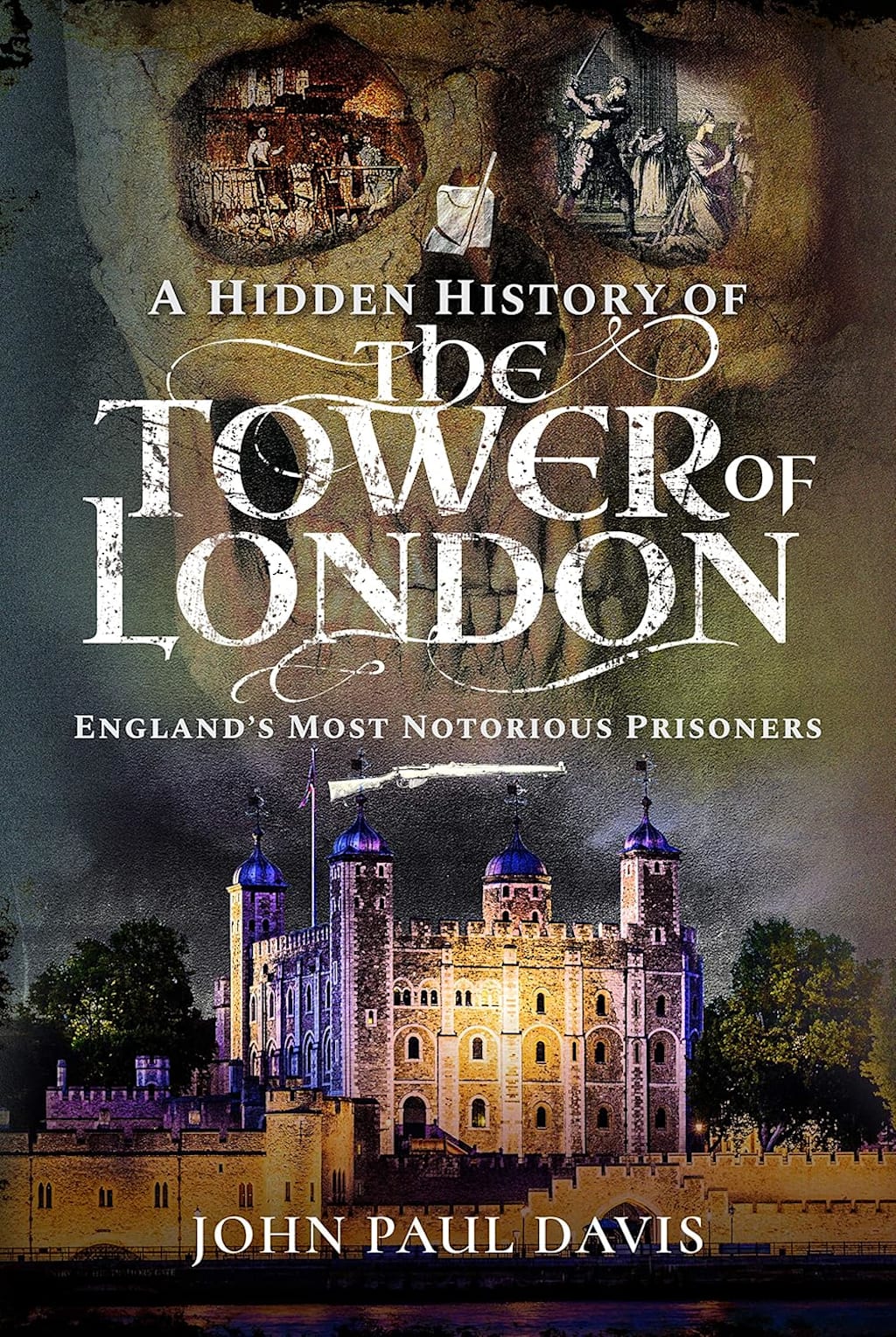
People are now arrested for not being the correct religion, being executed on Tower Hill. It's the late 1400s and the book is starting to move back towards what is actually going on within the Tower walls rather than court politics. Killing Clarence proves a huge mistake and Edward IV's kingship is beginning to take a turn for the worst - he is described by the author as a shadow of the man he once was. Though, in my own readings, he seems to be a man who was both a brute and a glutton. When he dies, he puts his brother, the Duke of Gloucester in charge of Edward V - who is still yet a child. Though it is clear that the Duke of Gloucester has plans to get the throne for himself and crown himself Richard III.
Edward V and the Duke of York would soon become the famed Princes in the Tower and thus, nothing is really known about what actually happened to them. It is here we see the shift. The author drops the idea of covering too much party politics, instead choosing to visit the inside walls of the Tower - making the book a far more interesting read once again. With a delayed coronation that was pushed back so many times that he eventually disappeared, Edward V was never seen again. The author is back riding the great horse of intrigue - we get a dark and twisted narrative about how the Tower becomes a home, a hall, a banqueting location and a horrific prison.
There is a physician in the Tower though, it is now known why and when Richard III is killed in the Battle of Bosworth Field, he is released. Richard III very clearly had some issues with anyone who dared to make any jokes about him or have any freedom of thought whatsoever - even criticising him could get someone beheaded or hanged. The author paints him as a combination between the paperwork and the Shakespeare play, which I think is quite accurate given the circumstances of there being evidence he was probably not responsible for the Princes in the Tower dying, but there's no smoke without fire when it comes to the Shakespeare play's depiction of him.
Henry VI would release some of the prisoners and even some of them would gain employment within the prison walls, some working with the crown jewels and being quite reliable. This was strange because Henry VI presented a stable time and yet, his son would make England not only unstable but broke and completely flattened. This is where the story begins to return to the Tower and again, we get interesting stories about people who were there, living within and experiencing what the Tower had to offer (or did not). Honestly, I am very much enjoying these sections and the section regarding Henry VIII is even darker and more about the Tower and its victims.

During a first rebellion to Henry VII, many people were executed after a pretender tried to impersonate an imprisoned royal and eventually, we get Perkin Warbeck. He came to claim the throne. However, it all eventually fell apart and Warbeck was brought to the Tower. The first pretender was beheaded and the second was hanged. Medieval punishment was being brought back. Hanging, drawing and quartering may have been around, but the rack was also now a greatly used method of torture.
This chapter returns to form and thus, the reader is happy that we aren’t just getting party politics. Uprisings are important because they tell us who will be captured, but intrigue and gossip, party alignments etc. seem less important because we can learn about who was locked in the Tower whichever way. The Tower needs to be the centre, not the royal family members. This chapter is where we get that coming back - just like we saw in the first chapters.
When we move on to Henry VIII, we start with the marriage of Prince Arthur and Catherine of Aragon. But the author wastes no time in telling us that Arthur dies, Henry takes the throne and there couldn't be a worse thing to happen in England. Jousting and the Troubadour Court is coming back and the Tower is being revamped, especially the King and Queen’s quarters, the rooms and banquet halls are decorated. The menagerie became an ‘unwelcome distraction’ for Henry VII and he would thus be the last King to call the Tower his home.
Becoming King in 1509, Henry VIII would behead two people who were imprisoned in the Tower by 1510, something the author seems to imply was cruel about him and yet, we will see much crueller stuff - we know it. Let's see: many of the Yorkists and the pretenders spent almost 40 years in the Tower and lots of them were executed and the Welsh were accused of conspiring with the Scottish to get the Welsh monarchy back and so, the people involved were imprisoned in the Tower and then executed in 1531. This was all well and good - Henry VIII spends the first decade or so of his reign basically executing anyone who is a threat to him. But then he brings in 'coin offences' and five people are hanged, drawn and quartered.

Books are being banned and so, heretical books see nine more people imprisoned and tried for heresy. Eventually one would be martyred at the stake in 1533 and another would be whipped and then burned at the stake. The author goes on to tell us the story of a man named John Wolfe. He spent the summer of 1533 in the Tower and then released, only to be rearrested with his wife a month later - sentencing them both to death. However, after he escaped, his wife charmed the guards and escaped as well. However, she was eventually returned to her cell after being caught attempting to flee on horses. Her husband was then recaptured and they both died in 1534. They were tied to the walls on the river during low tide. The water level would slowly rise, drowning the couple. Now, this is far more interesting than reading about the party politics of Margaret Beaufort, everyone knows that story already. I want to hear the walls of the Tower talk with the whispers of ghosts.
The Holy Maid of Kent predicted the King’s death and was arrested in 1533 and held in the Tower. Her allies were tortured. They were all condemned to death. She would be the first and only woman to be beheaded there. Again, another person I would have never have heard of if the author had focused solely on the party politics of the time. I can honestly say that this part is far more enjoyable than the part on the Wars of the Roses.
But then there is Thomas More. One of the most powerful men in England for a while before Henry VIII decides that one day, enough is enough of this man. Henry would regret the death of Thomas More and blame Anne Boleyn for it. I write more about this in my review of Alison Weir's Henry VIII: King and Court in which the Boleyns are seen as conspirators and More gets in their way. More resigns in 1532, passing the torch to Thomas Cromwell. The King ordered for More to be taken to the Tower. He was put in a slightly nicer place than the other prisoners, he was also allowed freedoms including to attend mass. His main issue was being apart from his wife and children even though the hardships of prison weren’t really moving him. In the following years, he made a great speech and yet, he knew death was coming to him. More’s situation gets worse and worse as his writing equipment is slowly removed and thus, he was about to be charged with treason and condemned to death. In 1535, he was beheaded - martyred. His head was placed on a pike.
Of course, Anne Boleyn is finally beheaded there in 1536 and this does not end Henry VIII's reign of terror. He involves the Tower in everything and so, I can imagine we are going to get some far more interesting stories from the second half of his reign. I can only imagine...
About the Creator
Annie Kapur
"Et in Arcadia Ego"
***
I am:
🙋🏽♀️ Annie
📚 Avid Reader
📝 Reviewer and Commentator
🎓 Post-Grad Millennial (M.A)
***
I have:
📖 300K+ reads on Vocal
🦋/X @AnnieWithBooks
📸 ThePrancingPonyBakery
🔗 PrancingPonyBakery.com
***
🏡 UK
Enjoyed the story? Support the Creator.
Subscribe for free to receive all their stories in your feed. You could also become a paid subscriber, letting them know you appreciate their work.
Comments
There are no comments for this story
Be the first to respond and start the conversation.