
Book Review: "If Walls Could Talk" by Lucy Worsley
5/5 - this journey through the domestic past is both fun and intriguing...

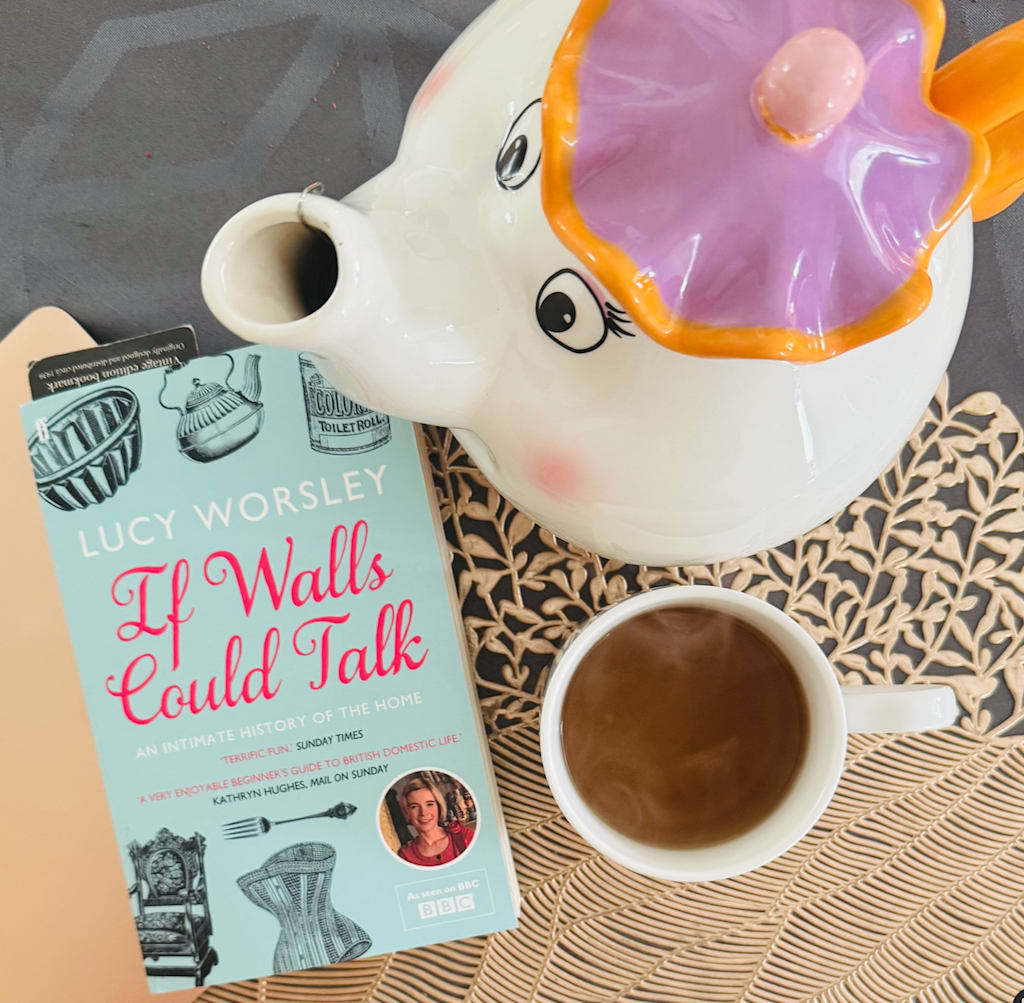
Lucy Worsley is perhaps one of my favourite writers of the year so far. Her books on Jane Austen (aptly titled Jane Austen at Home and dealing with the writer's domestic and writing life in tandem), Agatha Christie (in which she rightly forms the opinion that this woman was both a reserved ladylike writer and a pioneering feminist icon) and Queen Victoria (where we are met less with a biography and more of an episodic view of the queen's life) have been an absolute delight to read. I had to continue the trajectory I was on in delving into her work and thus turned to her shorter book, again episodic but this time not a biography of a person - but rather a biography of the home.
If Walls Could Talk pays careful attention to what went on in the favourite rooms of the house, the different domains of different times and the ways in which purpose, intent and even materials changed and changed often. In our hands we have her three bigger novels with the understanding that she has stepped into and lived within these lives. But now it is time to take her hand and walk into this ever-changing home. We start with the bedroom.
Lucy Worsley details the bedroom as a location subject to change from before the Medieval era, when it wasn't even a thought. We are met with a time in which everyone slept, dined and lived in a communal fashion and nobody had their own private quarter to retire to at the end of the day. Worsley is correct in her analysis (I believe) in that the movement to 'bedrooms' was pretty inevitable. Yet, the conceptual bedroom even though it was still in its infancy a little into the Medieval period - was still a communal place. As I have read books on James I (who lived well into the Renaissance), he too had bedfellows and people sleeping in the same room as him. Worsley's analysis of the bedroom therefore becomes more of a story of what went in and what came out. She lists them as four different domains: sleep, birth, sex and death - with birth and death being outsourced later, to the hospital.
In her analysis of the bedroom over the chapters, we are relocated to different times in which we not only see how birthing was kept in a private bedroom - but also how these things were celebrated as a communal experience to anyone allowed inside. The different apparatus associated with birthing was very interesting to read about as Worsley details that this was the only time when men were allowed access to the birthing quarters. We also learn about the fact that people were expected to die in their own beds. This is a grim move from the miracle of birth but death was considered something sacred and very communal in its affairs. The bedroom was often prepared and the patient would be seen in the days and weeks before their death. This part reminded me rather of the chapter on the death of Prince Albert in Worsley's other book: Queen Victoria. This is in which Albert is moved to the blue room and visited by many people before his death. Victoria also received the same treatment upon her own.
In the section concerning the bathroom, Worsley details how we went from communal (yes, communal) usage to private usage, how we lived before indoor plumbing and flushing toilets and atop of this, how things like toilet paper changed our lives for the better. I have to say the nature of the chamber pot still baffles me but what baffles me even more is the jobof the 'Groom of the Stool' who's job it was to go with the king to the bathroom. This man is detailed quite a bit in Alison Weir's Henry VIII: King and Court and Gareth Russell's The Palace as being an important person in the household. However, the person tending to the chamber pots of the rich and lazy was often called the necessary woman. Her job was to empty the chamber pots (in some cases out of a window and into a street) and freshen them up by cleaning them and putting in some herbs.
Another thing that baffled me was the cleaning of teeth which as we all know, was not popular during the reign of Elizabeth I who was detailed as having blackened teeth. Lucy Worsley states that brushing one's teeth was uncommon but cleaning one's teeth was a duty that wasn't tended to too well until our more modern times. During the Tudor period for example, she looks at the lack of cleaning of the teeth in comparison to how much sugar and confectionary was consumed. It is scary and of course, there were rotting teeth everywhere.
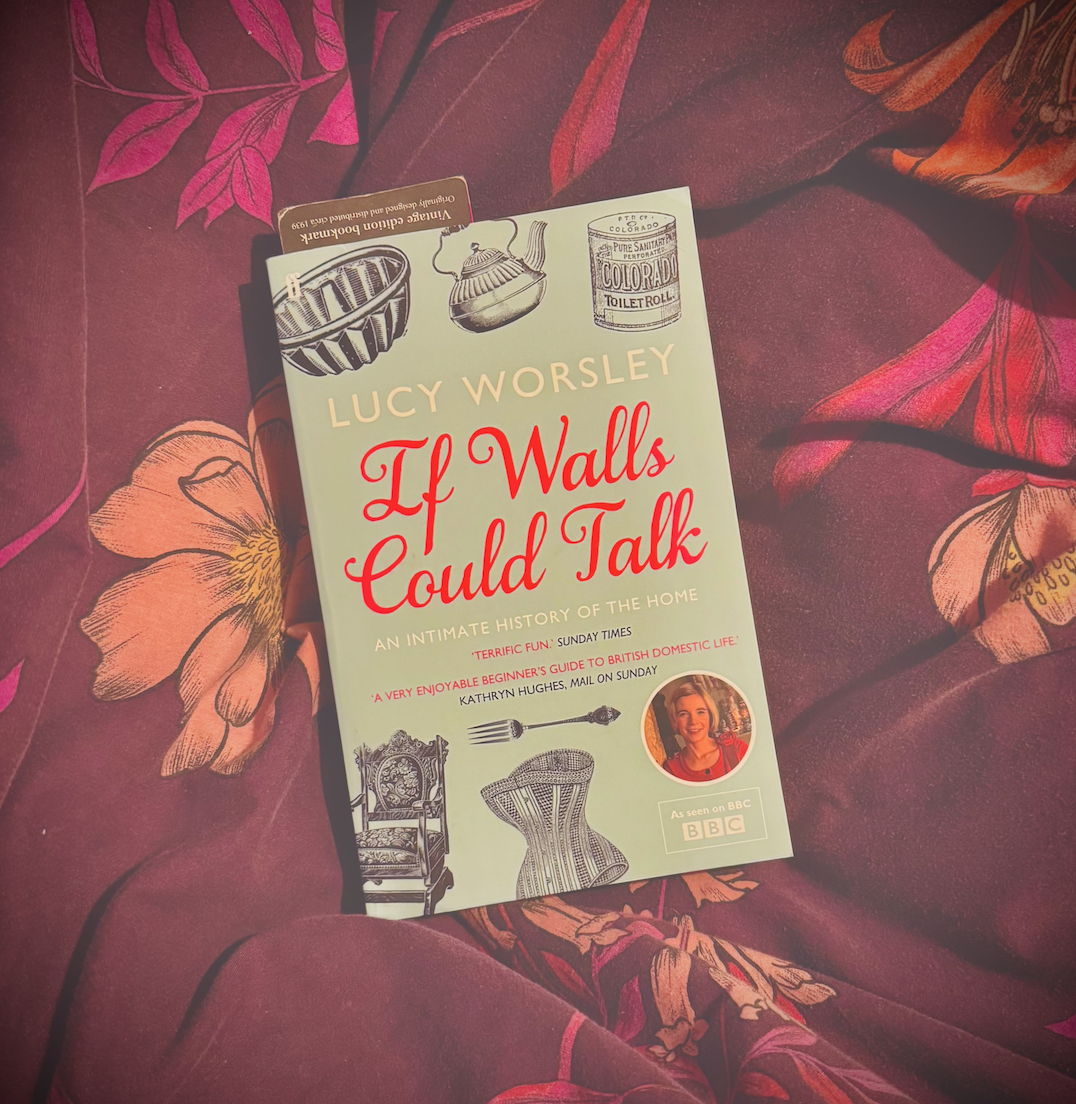
She looks at how people dealt with teeth decaying and went from buying fresh and clean teeth from poor people (who of course, had no access to sugar and so did not have rotten teeth) to replacing one's teeth with porcelain as it was easier to maintain and cheaper in the long run. You'd be surprised to learn that last practice stopped only after the First World War. Altogether, the section on the bathroom made me giggle yes, but it also let me learn about the ways in which we have become almost in our age, obsessed with our own cleanliness as to ward off sickness. This is something you can explore further in the book The Great Shadow by Susan Wise Bauer which deals with how this obsession was turned into consumerism and culture.
The section regarding the living room has much to offer including what the intial living room was for and how it moved from the Medieval idea to our own. Worsley presents the living room as initially being an informal space in which people would eat, be entertained and also sleep from time to time. This was a Medieval idea and so, the latter eras - thinking they were more refined, changed it into a formal location in which conversation would take place and unless they were being used, chairs were pushed up against the wall so that there was more space to walk and ponder. Fortunately for us though, the living room has made it back to the informal space in which we can eat, watch television and where we might find a friend sleeping on our sofa after a party. Lucy Worsley's detailing of how this has come full circle is always fun to read.
Apart from this though we also have the concept of death returning. Yes, people would die in their beds but then we had the case of the funeral. Many wealthy people would be put on display in their own homes. It's quite morbid to think that the arrangements of grand funerals could have taken weeks and so, instead of just an open coffin funeral, there would be a wax figure of the person representing what they looked like in death. I'm sorry but the smell must have been horrific if a body that has been rotting for weeks is placed in a badly ventilated living room.
Talking about bad smells, Lucy Worsley takes us on a journey through the kitchen. Seasonal food, the author states, was not something that people wanted but it was a complete necessity. The day before refrigerators was dire and food would be going off all the time if it wasn't in season or stored correctly. Of course, the richer households had better and more storage space but they would still only get foods in season. We also have the case that it was the men in rich households that would prepare the food, not the women. I have read somewhere that many domestic duties of cleaning only got switched out during the war time era which is crazy to think about. As we progress through the kitchen, we see decorations, cleaning, preparing food and of course, trying to keep all pungent odours at bay. We also see things like cooking contraptions and fat loss pills (as even in those days when there was less processed food, there was still an ungodly amount of sugar being eaten). It was a truly very interesting section.
Lucy Worsley has done it again. She has produced a fantastic piece of literature which invites the reader to immerse themselves in the experience of the past. It might be shorter than the others but it definitely leaves nothing out in the quality of the book.
About the Creator
Annie Kapur
"Et in Arcadia Ego"
***
I am:
🙋🏽♀️ Annie
📚 Avid Reader
📝 Reviewer and Commentator
🎓 Post-Grad Millennial (M.A)
***
I have:
📖 300K+ reads on Vocal
🦋/X @AnnieWithBooks
📸 ThePrancingPonyBakery
🔗 PrancingPonyBakery.com
***
🏡 UK
Enjoyed the story? Support the Creator.
Subscribe for free to receive all their stories in your feed. You could also become a paid subscriber, letting them know you appreciate their work.
Comments
There are no comments for this story
Be the first to respond and start the conversation.