science
Topics and developments in science and medicine, presented by Futurism.
UNDER THE STARS
As night falls, the bustling city gradually quiets down. When we look up, what comes into view is a vast and boundless starry sky. Whether it is the bright stars or the Milky Way stretching across the heavens, it evokes a profound sense of beauty and mystery. The starry sky is not merely a night view; it is also the starting point of countless stories of human civilization and scientific exploration. Ancient Civilizations and the Starry Sky : Since ancient times, humanity has never ceased to be in awe of and curious about the starry sky. In ancient civilizations, people used observations of the night sky to calculate time, guide farming activities, and develop calendars. The positions and angles of the pyramids built by the ancient Egyptians were related to specific constellations. In ancient Greek mythology, constellations were endowed with rich stories and symbolic meanings. In ancient China, there were detailed records of astrology, and classical texts such as "The Book of Changes" and "The Book of Songs" contained descriptions of the starry sky. In the eyes of ancient people, the starry sky was not only a natural wonder but also a sacred entity. They believed that the movements of the stars were closely related to human fate and could predict the future through astrology. Such beliefs and practices were common in ancient civilizations around the world and became an important part of culture. The Course of Starry Sky Exploration : Human exploration of the starry sky has a long and rich history. From ancient naked-eye observations to modern astronomical telescopes and space probes, each step has unveiled more of the universe's mysteries. Aristotle of ancient Greece proposed the geocentric theory, asserting that the Earth is the center of the universe. This view dominated medieval Europe until the 16th century when Copernicus proposed the heliocentric theory, asserting that the sun is the center of the universe and that Earth and other planets revolve around it. Copernicus's theory was supported and confirmed by scientists such as Galileo and Kepler, eventually replacing the geocentric theory. In the early 20th century, Einstein's theory of relativity further revealed the nature of the universe. With technological advancements, humans began using advanced equipment such as radio telescopes and X-ray telescopes to observe more profound cosmic phenomena. The launch of the Hubble Space Telescope allowed us to see galaxies billions of light-years away, greatly expanding human vision and understanding of the cosmos. Starry Sky and Culture : The starry sky is not only an object of scientific research but also an important part of human culture. In poetry, painting, and music, the starry sky often serves as a source of inspiration. In science fiction novels, movies, and games, themes of the starry sky and cosmic exploration appear frequently. The movie "Interstellar" allows audiences to feel the wonder and unknown aspects of the universe by depicting astronomical phenomena such as black holes and wormholes. In music, many musicians express their yearning and awe for the starry sky through melodies and lyrics. The Starry Sky in Modern Science and Exploration : In recent decades, the exploration of the starry sky has entered a new era with the advent of space travel and advanced technologies. Space agencies like NASA and ESA have launched numerous missions to explore the solar system and beyond. The Hubble Space Telescope, in particular, has provided stunning images and invaluable data about distant galaxies, nebulae, and other celestial phenomena. The International Space Station (ISS) serves as a unique laboratory for studying the effects of microgravity on various scientific experiments, including those related to astronomy. Meanwhile, ambitious projects like the James Webb Space Telescope aim to peer even deeper into the universe, potentially unlocking secrets about the origins of stars, planets, and life itself. The beauty and mystery of the starry sky are always worth our exploration and awe. No matter where we are on Earth, looking up at the vast starry sky, we will feel a deep sense of wonder and tranquility. This endless sky connects the past, present, and future, inspiring our ceaseless pursuit and exploration of the unknown world. The starry sky remains a timeless source of awe, a testament to human curiosity, and a symbol of our enduring quest to unravel the mysteries of the universe.
By Muhammad Talha4 months ago in Futurism
AI Agents Are Becoming Your Coworkers
My friend oversees marketing for a mid-sized logistics firm. She left for a lengthy client meeting two months ago. When she returned to her workstation, three competitor reports were waiting in a shared drive, a campaign brief was in her drafts folder, and her inbox had already been organized by urgency.
By Muhammad Sabeel4 months ago in Futurism
SLEEP SECRET OF THE MOON
Sleep and lunar moon intertwine impacting sleep quality , a realm of scientifi........ In our daily lives, there are moments when fatigue and lack of focus plague us, often attributed to inadequate sleep or poor sleep quality. However, intriguingly, some individuals speculate that their sleep disturbances may be entwined with the celestial dance of the moon. While this notion may seem cloaked in mysticism, it finds validation in scientific inquiry. This article aims to delve into the nexus between sleep patterns and lunar phases, shedding light on the scientific underpinnings of this intriguing phenomenon. To comprehend the interplay between sleep and the moon, it's essential to delve into centuries of scholarly exploration. Despite initial skepticism, the relationship between lunar phases and human behavior has intrigued researchers for generations. While some may dismiss these correlations as mere superstition, empirical investigations have unearthed compelling trends. For instance, certain studies suggest a heightened susceptibility to insomnia during full moons, accompanied by a perceptible decline in sleep quality. Conversely, during crescent moons, individuals may experience swifter sleep onset and improved sleep quality. These findings have ignited curiosity surrounding potential connections between lunar cycles and sleep physiology. In a landmark study published in the prestigious international sleep journal "Sleep" in 2016, researchers examined the sleep patterns of Swiss suburban residents. Their findings unveiled a significant correlation between subjective sleep quality and lunar phases. As the moon approached its fullest phase, individuals reported a perceived reduction in sleep duration, averaging a decrease from 7 hours to 6.8 hours per day, coupled with heightened post-awakening fatigue. This suggests a plausible association between lunar phases and sleep dynamics. Seeking to validate these findings, researchers led by Cajochen from the University of Basel in Switzerland, collaborated with Turányi, a Hungarian scholar, to conduct comprehensive investigations. Their research unveiled prolonged sleep onset times by an average of 5 minutes during proximity to full moons. Moreover, total sleep duration witnessed a decline of 20 minutes, accompanied by a notable 30% reduction in brain wave activity indicative of deep sleep. Concurrently, melatonin secretion, a pivotal hormone facilitating sleep, experienced a decline. Fluctuations in these hormonal levels may exert profound effects on sleep quality and patterns. Furthermore, alterations in lunar phases can impinge upon Earth's natural milieu, manifesting in phenomena such as variations in light intensity and tidal patterns. During full moons, the radiance of moonlight intensifies, potentially infiltrating bedroom sanctuaries and disrupting sleep. Conversely, lunar invisibility begets darker nights, fostering a conducive environment for slumber. While these studies yield compelling insights, discerning the precise relationship between lunar cycles and sleep necessitates further empirical substantiation. Sleep, being a multifaceted phenomenon, is subject to myriad influences encompassing individual disparities, environmental nuances, and psychological variables. Thus, while lunar phases may wield an influence on sleep, attributing all sleep anomalies to lunar dynamics would be overly simplistic. Another salient consideration pertains to the ramifications of contemporary lifestyles on sleep patterns. With the advent of technology and the frenetic pace of modern existence, myriad challenges confront individuals in their quest for restful repose. Prolonged exposure to electronic devices, occupational stressors, and social engagements can disrupt circadian rhythms, impeding the attainment of restorative sleep. Consequently, pragmatic factors necessitate acknowledgment when addressing sleep disturbances. Nevertheless, the nexus between lunar cycles and sleep remains an enthralling domain warranting continued investigation. Enhanced comprehension of lunar influences on sleep could precipitate interventions aimed at optimizing sleep quality. Remedial measures may encompass environmental adjustments, the cultivation of healthier lifestyle habits, and the adoption of strategies conducive to sleep hygiene. In summation, while lunar dynamics may exert an influence on sleep patterns, they constitute but one facet of a multifarious phenomenon. To effectuate meaningful insights, a holistic approach encompassing empirical inquiry and introspective examination is imperative. Through diligent research and introspective scrutiny, we can aspire to unravel the intricacies of sleep disturbances, thus paving the path toward attaining restorative and rejuvenating slumber.
By Muhammad Talha4 months ago in Futurism
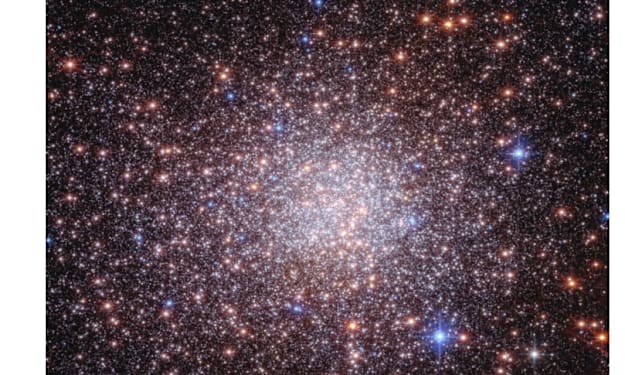
The Most Detailed Image Ever Taken of the Milky Way's Center Reveals More Than 60 Million Stars
Imagine zooming into a single photograph and discovering that every tiny point of light is an individual star. Then imagine doing that again, and again, without ever running out of new stars to explore.
By Holianyk Ihor4 months ago in Futurism
Clean fuel may be made from wet coffee grinds.
Although coffee is one of the most popular beverages in the world, it produces a lot of soggy trash. Even though the leftover damp grounds from each cup still have a lot of stored energy, they typically wind up in the garbage.
By Francis Dami4 months ago in Futurism
The Rise of the AI Protocol Builder: How Machines Are Writing the Rules of Tomorrow. AI-Generated.
The way we make decisions is changing. Across industries — from finance and logistics to education and healthcare, the growing complexity of data, regulations and patient or client needs has pushed human decision-making to its limits. Enter the AI protocol builder, a new class of intelligent system that doesn't just assist professionals, it actively constructs the decision-making frameworks, structured pathways and evidence based recommendations that guide their work.
By Clarity Tx4 months ago in Futurism
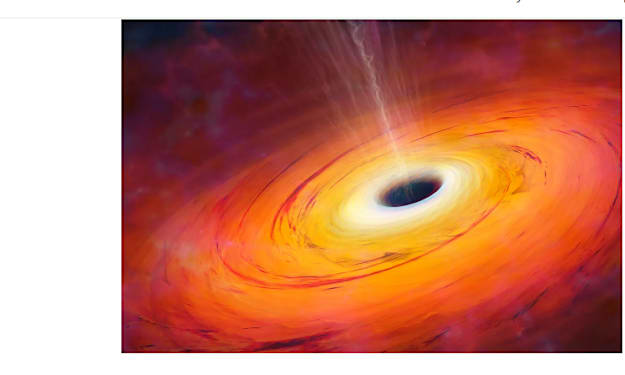
Scientists believed they understood what might be at the center of our galaxy. However, they might have been entirely mistaken the entire time.
In the summer, the constellation Sagittarius is shining as you look south. Its wandering stars take on a variety of forms, such as a spoon and a teapot. The Galactic Center, the Milky Way's core, is located just next to the teapot, near the point where steam would emerge from its spout.
By Francis Dami4 months ago in Futurism
I Replaced My Smartphone with a 2004 Dumbphone. The Experiment Failed, but the Realization Changed Everything.
I bought the Nokia 3310 on eBay for twenty-two dollars. It arrived in a padded envelope that smelled faintly of old cardboard and basement storage. Holding it felt like holding a plastic brick—dense, unapologetic, and completely devoid of the sleek, glass-and-aluminum allure of my iPhone 15.
By abualyaanart4 months ago in Futurism
A piece of the Milky Way fossil shows how our galaxy began.
The Milky Way's center is everything from peaceful. The area is covered in stars, studies are hampered by dust clouds, and the galaxy's early past is still visible throughout its densely populated core.
By Francis Dami4 months ago in Futurism
Which Jobs Are Most at Risk From AI Agents in 2026. AI-Generated.
AI Agentsvs.s Employees: What Jobs Are Actually at Risk? A few years ago, the biggest fear surrounding artificial intelligence was that it would eventually replace human workers. Today, that conversation feels much more immediate.
By Future Lens4 months ago in Futurism