
AI Agents Are Becoming Your Coworkers
What That Actually Means for Your Job

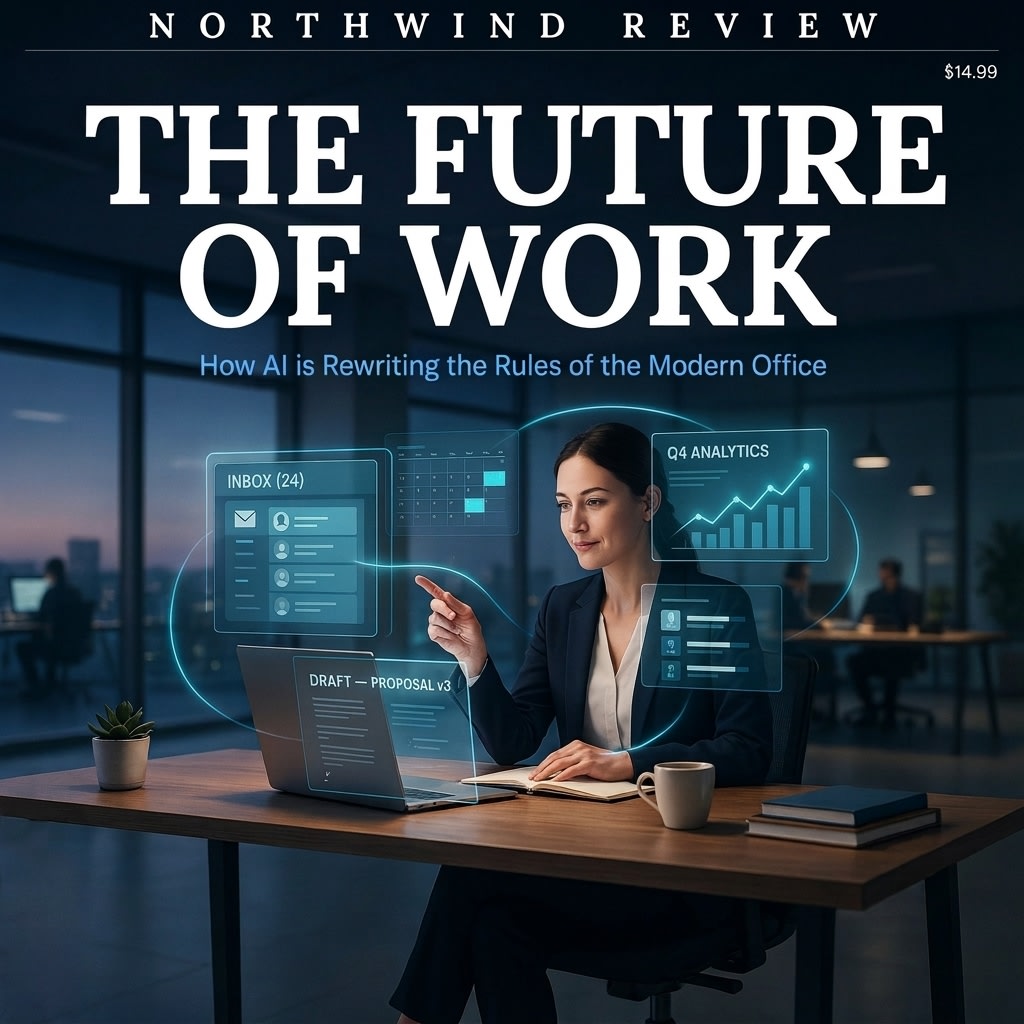
My friend oversees marketing for a mid-sized logistics firm. She left for a lengthy client meeting two months ago. When she returned to her workstation, three competitor reports were waiting in a shared drive, a campaign brief was in her drafts folder, and her inbox had already been organized by urgency.
She hadn't asked anyone to complete that task. She hadn't even mentioned it out loud. While she was sitting in a conference room three floors up, an AI agent that she had set up the previous week had just done it by itself.
That isn't a preview of some far-off future. In 2026, that is merely a Tuesday.
"AI at work" has primarily meant entering a query into a chat window and receiving a response for the previous few years. You inquired, it answered, and the exchange came to an end.
What's happening now is a different animal entirely. AI systems are starting to act — taking multi-step actions across your email, your calendar, your documents, and your software tools, often without being asked twice. They're not just answering questions anymore. They're finishing tasks.
And the people building these systems aren't shy about what they're going for. Microsoft's leadership has talked openly about agents becoming "digital coworkers" rather than digital tools. IBM's research arm found that the vast majority of executives it surveyed now consider this shift — agents handling entire workflows instead of single requests — central to how they'll run their businesses in 2026. This is no longer a niche experiment. The push to place AI next to you is intentional and well-funded.
You're not dreaming if you've been a little concerned about where this is going. However, the change's true form is more intriguing and resilient than the gloomy headlines portray.
From Tools to Teammates: What Actually Changed
The old model of AI was transactional. You'd open a chat, type a prompt, get a paragraph back, and close the tab. Useful, but limited — it couldn't remember what you did yesterday, couldn't take action on its own, and definitely couldn't coordinate with anything else.
The new model is persistent and agentic. These systems stay running. They can read your files, send messages, update spreadsheets, and trigger other software — and they do it across a stretch of time, not just in a single exchange.
Rather than "summarize this document," it would be more appropriate to "monitor these five accounts, flag anything unusual, draft a response, and have it ready for my review by 9 a.m.""
It's Not One Agent. It's a Team of Them.
Here's the part that gets less attention: the agents aren't working alone anymore either. The earliest wave could run a browser or write a snippet of code by itself. The current wave is built to cooperate — one agent gathers data, hands it to another that analyzes it, which hands it to a third that drafts the output. From the human's perspective, you're not managing one assistant. You're managing a small, invisible task force.
That's a genuine structural shift, not a marketing term. It's why companies are suddenly worried about things like agent identity and access control — the same way they worry about what a new hire can see and touch.
Someone must determine what an agent is permitted to do unattended if it has access to your customer database and can send emails on your behalf. That's a genuine discussion taking place within businesses at the moment, and it shows how seriously this is being addressed.
What This Looks Like Day to Day
When you take away the catchphrases, this is what is genuinely occurring in workplaces this year: Customer service representatives who read a ticket, retrieve the customer's order history, write a resolution, and only involve a human when a rule is broken.
Research and reporting agents that gather competitor data, news, or internal metrics and turn them into a formatted brief — the exact thing that used to eat up a Friday afternoon.
Coding agents that don't just suggest a line of code but open a pull request, run the tests, and flag the result for a developer to approve or reject.
Operations agents that watch a system — inventory levels, server health, ad spend — and act before a human even notices something's off.
Notice the pattern. In every case, the agent does the first 80% of the work. A person still makes the final call. That 80/20 split is the actual story of 2026, not "AI replaces workers" but "AI absorbs the repetitive middle of a task and leaves the judgment calls to you."
Which Jobs Feel This First
It's not random which roles get touched first. Agents are strongest at work that's high-volume, digital, and rule-based — the kind of task you could write a checklist for.
First-pass data analysis, scheduling, regular content drafts, customer service lines, and basic code review. If your job involves a lot of "look this up, format it, send it" actions, you'll be the first to detect agents infiltrating your workflow.
That does not imply the elimination of their jobs.
It means the shape of those jobs changes. A support rep who used to handle 40 tickets a day by typing every response themselves might now handle 150 — reviewing and adjusting what an agent already drafted, stepping in personally only for the messy or sensitive cases. Same job title, very different day.
The roles that feel this the least, at least for now, are the ones built on ambiguity, trust, and judgment calls that don't have a clean rulebook — negotiating with a difficult client, making a call when the data is incomplete, deciding what a brand should stand for. Agents can feed you information for those decisions. They can't make the decision and own the consequences.
What This Means for You
Here's where it gets practical, because reading about a trend doesn't help you unless you do something with it.
Become the Person Who Directs the Agents
The most valuable skill right now isn't "knowing how to use AI." Almost everyone will know that within a year or two. The more durable skill is knowing how to set up a task well enough that an agent can run with it, and knowing how to spot when its output is wrong. That's an editorial skill, not a technical one. If you've ever managed an intern or trained a new hire, you already have the instinct for it — you're just applying it to software now.
Treat Agents Like You'd Treat a Smart but Unaccountable Junior Colleague
Give them clear context. Check their work before it goes out the door. Don't hand them anything where a mistake would be expensive or irreversible without a human glancing at it first. Plenty of early agent failures haven't been because the technology is bad — they've been because someone trusted the output without reading it.
Double Down on What Doesn't Show Up in a Prompt
Relationship-building, reading a room, making a hard call with incomplete information, taking responsibility when something goes sideways — none of that gets automated away anytime soon.
You're in a better position than the headlines indicate if your role already largely relies on those factors. If not, now is the time to consciously begin developing that aspect of your skill set.
Get Specific Instead of Generic
Over the past year, there has been a significant increase in the demand for AI-related talents among freelancers; yet, the highest earners aren't general "AI experts."
They're people who pair a real domain — healthcare, legal, logistics, design — with fluency in directing AI tools inside that domain. A generalist who can "use AI" is replaceable by the next generalist. A specialist who knows both their field and how to deploy agents inside it is much harder to swap out.
The Real Risk Isn't Replacement. It's Standing Still.
The scariest version of this story is "the robots are taking our jobs." The more accurate version is quieter and, honestly, more useful to think about: companies are going to expect more output per person, agent-assisted or not. The person who learns to direct three workflows through an agent will look more productive than the person doing one task by hand — even if their actual skill and judgment are identical.
That's the shift worth paying attention to. Not whether AI agents are coming.
They've already arrived. While everyone else is still debating whether or not they are reliable, the true question is whether you are learning how to collaborate with them.
Important Lessons
• In 2026, AI agents will perform multi-step activities rather than only responding to individual queries.
• Multiple agents increasingly cooperate on a task, functioning like an invisible support team.
• Roles built on repetitive, rule-based digital work are changing shape first — not disappearing, but restructuring.
• Directing and evaluating AI output—rather than just creating your own work—is the most valuable new talent.
• For the time being, judgment, fostering relationships, and accountability are still very much human.
• The bigger career risk is staying static while expectations around output quietly rise around you.
Where This Leaves Us
My friend in marketing didn't lose her job to that AI agent. Her job just looks different now — less time spent on the grunt work, more time spent on strategy and the conversations that actually need a human in the room. That's a trade most people would take, once they get past the initial discomfort of watching software do something they used to do by hand.
Whether that trade feels good or unsettling probably depends on how much of your current role lives in that repetitive middle ground — and how ready you are to move toward the parts of the job that still need a person.
Have you begun collaborating with an AI agent yet? Tell me what surprised you about it, whether it was positive or negative.
About the Creator
Muhammad Sabeel
I write not for silence, but for the echo—where mystery lingers, hearts awaken, and every story dares to leave a mark
Enjoyed the story? Support the Creator.
Subscribe for free to receive all their stories in your feed.
Comments
There are no comments for this story
Be the first to respond and start the conversation.