
I Replaced My Smartphone with a 2004 Dumbphone. The Experiment Failed, but the Realization Changed Everything.
What a month of forced digital isolation taught me about the difference between staying connected and being present.

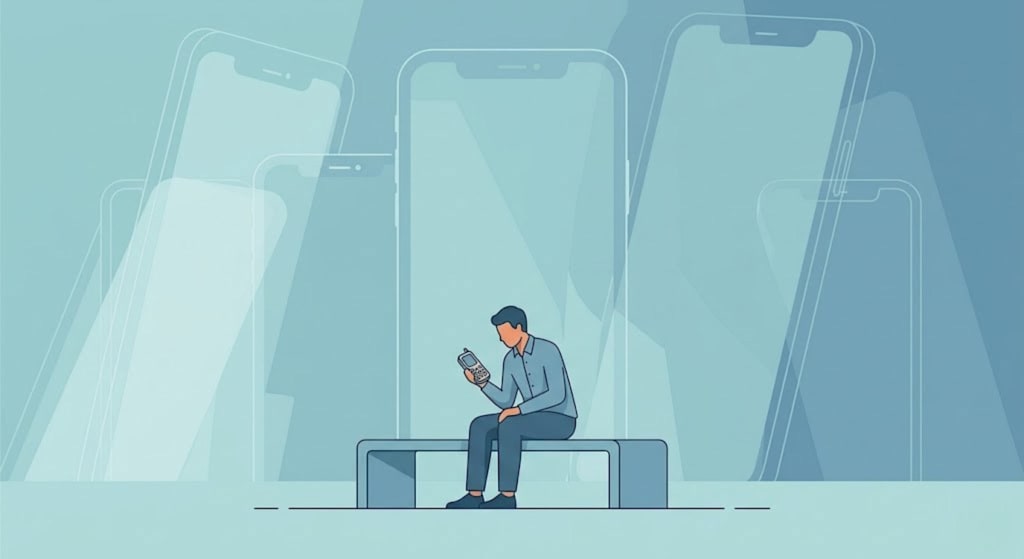
I bought the Nokia 3310 on eBay for twenty-two dollars.
It arrived in a padded envelope that smelled faintly of old cardboard and basement storage. Holding it felt like holding a plastic brick—dense, unapologetic, and completely devoid of the sleek, glass-and-aluminum allure of my iPhone 15.
My assumption was simple, bordering on arrogant: remove the frictionless portal to the world’s dopamine supply, and I would instantly transform into a hyper-focused, deeply mindful version of myself.
I envisioned mornings spent sipping black coffee while staring thoughtfully out the window, afternoons of uninterrupted deep work, and evenings reading classic literature. I thought my screen-induced anxiety would evaporate within forty-eight hours.
I was completely wrong.
The Reality of Digital Withdrawal
The first three days weren't peaceful; they were excruciating.
I found myself reaching for my empty right pocket every four to six minutes, a phantom limb syndrome for the digital age. When my hand met empty space, a micro-dose of cortisol spiked through my chest.
By day five, the logistical nightmare began to unfold.
I couldn’t scan the QR code to view the menu at my local diner. I couldn’t call an Uber when a sudden downpour trapped me two miles from home. I had to print out physical map directions to find a dentist appointment, only to realize midway through the drive that a new construction detour had made the route completely obsolete.
I felt like an alien trying to navigate an ecosystem that had evolved past my biological capacity to survive
Then, on the second Tuesday, the experiment took a turn that I never anticipated.
The Glitch in the Nostalgia
I was sitting on the subway, staring at the ad for a mattress company because I had nothing else to look at. Everyone else was bowed, faces illuminated by the familiar blue glow.
I expected to feel a sense of smug superiority. Instead, I felt a crushing, suffocating sense of loneliness.
I realized that my smartphone hadn't just been a tool for distraction; it had been my safety blanket against social awkwardness. Without it, I was exposed.
I decided to lean into the discomfort and do what we used to do in 2004: I struck up a conversation with the person sitting next to me, a guy in his late twenties wearing a faded denim jacket.
"Rough commute today," I said, offering a weak smile.
He pulled out one of his wireless earbuds, gave me a look of profound suspicion and mild alarm, said, "Yeah," and immediately put the earbud back in.
The romanticized vision of a connected, pre-smartphone society was a myth. The world had moved on, and my forced nostalgia wasn’t changing the culture—it was just isolating me from it.
The Mirage of "Dumb" Tech
By week three, I noticed a strange paradox.
Because T9 texting on a physical keypad is an exercise in agonizing patience, I stopped texting people back. My communication dropped by 80%.
I thought this would free up my mental bandwidth. Instead, the lack of quick check-ins with my partner, my sister, and my closest friends created a low-grade, constant state of worry. I was missing out on spontaneous dinner plans, inside jokes in the group chat, and urgent updates about my mother’s health.
That’s when I stumbled onto the true contradiction of the "dumbphone" movement.
I was spending more time planning my day, fighting with logistics, and worrying about what I was missing than I ever did when I could just glance at a screen for three seconds. My cognitive load hadn't decreased; it had shifted from managing information to managing friction.
The problem wasn't the technology itself. The problem was my relationship with friction.
The Architecture of the Loop
We blame tech companies for building addictive interfaces—and they do—but we rarely look at why we run to them.
The smartphone is a mirror. When we look into it, we don't just see apps; we see our own inability to sit with our thoughts for more than thirty seconds.
By stripping away the smartphone, I hadn't cured my addiction to distraction; I had just taken away the easiest syringe. My brain simply found other ways to fracture its attention, from obsessive pacing to compulsively cleaning my kitchen counters three times a day.
True digital agency isn't about running away to a cabin in the woods or buying a retro device from two decades ago. That’s just lifestyle branding.
It’s about building a tolerance for boredom.
The Path Forward
When the thirty days ended, I didn't keep using the Nokia. I put it in a drawer, walked to my desk, and turned my iPhone back on.
But I didn't go back to the way things were.
I didn't download social media apps back onto my phone. I turned off every single notification except for direct phone calls and text messages from real human beings. I converted my screen to grayscale, stripping the icons of their engineered psychological appeal.
We are entering a future where our attention will be the most valuable commodity on earth, guarded or stolen by increasingly sophisticated artificial intelligence.
If we rely on radical, total abstinence to save us, we will fail. The world demands our participation, and that participation happens through a glass screen.
The solution isn't to become a luddite. It’s to become boring.
If you can learn to sit in a room alone, staring at a blank wall without the urge to reach for a pocket-sized dopamine machine, you possess a superpower that modern society is rapidly losing.
I thought I needed a dumber phone to fix my life. It turns out I just needed to be a little more comfortable with being bored.
About the Creator
abualyaanart
I write thoughtful, experience-driven stories about technology, digital life, and how modern tools quietly shape the way we think, work, and live.
I believe good technology should support life
Abualyaanart
Enjoyed the story? Support the Creator.
Subscribe for free to receive all their stories in your feed.
Comments
There are no comments for this story
Be the first to respond and start the conversation.