
The Most Detailed Image Ever Taken of the Milky Way's Center Reveals More Than 60 Million Stars
Space

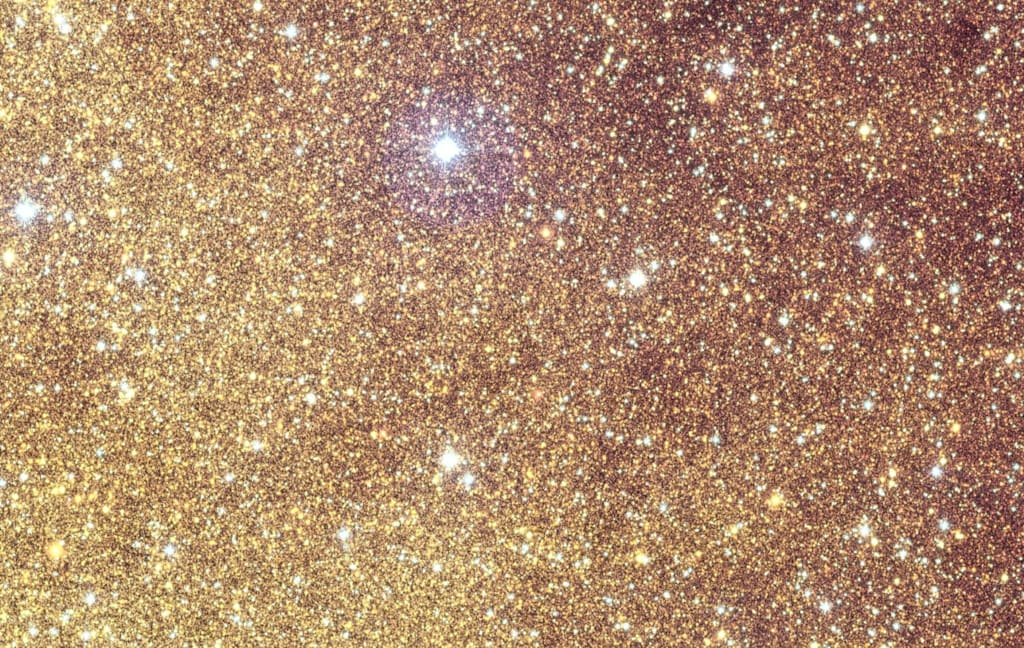
Imagine zooming into a single photograph and discovering that every tiny point of light is an individual star. Then imagine doing that again, and again, without ever running out of new stars to explore.
That is exactly what astronomers experienced when they examined one of the latest images captured by the European Space Agency's Euclid space telescope. The picture contains more than **60 million stars** packed into the central region of our Milky Way galaxy, making it the most detailed view of our galaxy's heart ever produced.
In a month filled with exciting astronomical discoveries, this stands out as one of the most remarkable achievements. While stunning space images appear regularly, this one is much more than a beautiful photograph—it represents a massive scientific leap forward.
Why Is the Center of the Milky Way So Difficult to See?
It may seem strange that we know less about the center of our own galaxy than we do about some galaxies millions of light-years away.
The reason is simple: we're inside the Milky Way.
Earth sits roughly 26,000 light-years from the galactic center, and between us and that region lies an enormous amount of interstellar dust. Unlike the dramatic clouds often shown in artist's illustrations, this dust acts more like an incredibly thick fog, absorbing and scattering visible light before it ever reaches our telescopes.
For decades, astronomers have struggled to look through this cosmic barrier. Even when they could see beyond the dust, another challenge appeared. The center of the Milky Way is unbelievably crowded. Stars are packed together so tightly that many older images blurred thousands of them into what looked like a single bright glow.
Separating those stars into individual objects has been one of astronomy's biggest technical challenges.
Euclid Was Built for Something Else
Interestingly, Euclid was never designed specifically to photograph the Milky Way.
Its primary mission is to investigate one of the greatest mysteries in modern cosmology: "dark matter" and "dark energy". Over the next several years, the spacecraft will create the largest three-dimensional map of the Universe ever assembled, helping scientists understand why the Universe is expanding the way it does.
But extraordinary instruments often deliver unexpected discoveries.
Thanks to its highly sensitive cameras and exceptional image quality, Euclid has proven to be an outstanding tool for studying our own galaxy as well.
The new observation of the Milky Way's central region demonstrates just how powerful the telescope really is.
Sixty Million Stars in a Single Image
The numbers alone are staggering.
The newly released image contains more than "60 million individually resolved stars". These aren't computer-generated estimates or artificial enhancements. Every point of light represents a real astronomical object recorded by Euclid's instruments.
As researchers zoomed deeper into different parts of the image, they found that regions appearing almost empty at first glance suddenly filled with countless stars. Every magnified section revealed another layer of extraordinary detail.
Instead of one bright patch, astronomers now see an incredibly rich stellar landscape stretching across the galactic core.
It's a reminder that the Universe often hides its greatest complexity behind what first appears to be simplicity.
Why Scientists Are So Excited
For most people, this image is visually impressive.
For astronomers, it's something even more valuable: an enormous scientific database.
Every star carries information.
Its brightness helps estimate its distance.
Its color reveals its surface temperature.
Its motion tells scientists how it travels around the center of the galaxy.
Its spectrum can reveal its chemical composition and even provide clues about its age.
Now imagine having that information not for thousands of stars—but for tens of millions.
That transforms astronomy from studying individual objects into studying an entire population with unprecedented statistical accuracy.
Instead of asking how one star behaves, researchers can begin identifying patterns across millions of stars, uncovering the hidden history of the Milky Way itself.
Solving Long-Standing Mysteries
Astronomers have debated for decades how the central bulge of our galaxy formed.
Some theories suggest it developed rapidly during the Milky Way's earliest years.
Others argue that it grew gradually over billions of years through repeated mergers and continuous star formation.
Until now, the available observations weren't detailed enough to clearly favor one explanation over another.
Euclid changes that.
With millions of precisely measured stars, researchers can reconstruct stellar motions, identify ancient stellar populations, and trace how different parts of the galactic center evolved over cosmic time.
The telescope is also expected to uncover many rare and unusual objects hidden among the dense stellar population.
These could include previously unknown star clusters, variable stars, compact stellar remnants, and other exotic systems that were impossible to distinguish in earlier observations.
Scientists are especially interested in how these stars interact with "Sagittarius A", the supermassive black hole located at the very center of the Milky Way.
Understanding the environment around this black hole may reveal new insights into how galaxies evolve throughout the Universe.
This Is Only the Beginning
Perhaps the most exciting part is that this extraordinary image represents only a tiny fraction of Euclid's mission.
The spacecraft is expected to operate for approximately six years, surveying nearly one-third of the entire sky.
By the end of its mission, Euclid will observe billions of galaxies and countless stars, generating one of the largest astronomical datasets ever collected.
The sheer amount of information will be so enormous that astronomers increasingly rely on artificial intelligence and advanced machine-learning systems to help identify interesting objects hidden within the data.
Human researchers simply cannot examine every image manually anymore.
In many ways, Euclid is opening a completely new era of astronomy—one where discoveries may emerge not only from powerful telescopes, but also from sophisticated algorithms capable of finding patterns invisible to the human eye.
Looking at Our Galactic Home in a New Way
It's easy to admire this image simply because it's beautiful.
But its real importance goes much deeper.
Only a few decades ago, the center of our own galaxy remained largely mysterious, concealed behind vast clouds of cosmic dust. Today, we can examine that same region with astonishing clarity and identify tens of millions of individual stars.
Every major telescope changes the way humanity sees the Universe.
Some revealed planets around distant stars.
Others showed us galaxies formed shortly after the Big Bang.
Now Euclid is allowing us to explore our own galactic neighborhood with a level of detail that previous generations of astronomers could barely imagine.
Somewhere among those 60 million stars may be objects unlike anything we've seen before—new classes of stellar systems, rare cosmic phenomena, or clues that challenge our current understanding of how galaxies form and evolve.
Sometimes the biggest scientific breakthroughs don't begin with a dramatic announcement.
Sometimes they begin with a single image, filled with millions of tiny points of light, quietly waiting to tell the story of our galaxy.
About the Creator
Holianyk Ihor
Exploring the cosmos and seeking answers to universal questions. Astrophotographer capturing planets and deep sky wonders. Let’s look at the stars together.
Enjoyed the story? Support the Creator.
Subscribe for free to receive all their stories in your feed.
Comments
There are no comments for this story
Be the first to respond and start the conversation.