science
Topics and developments in science and medicine, presented by Futurism.
Medicine Is Learning to See Tomorrow
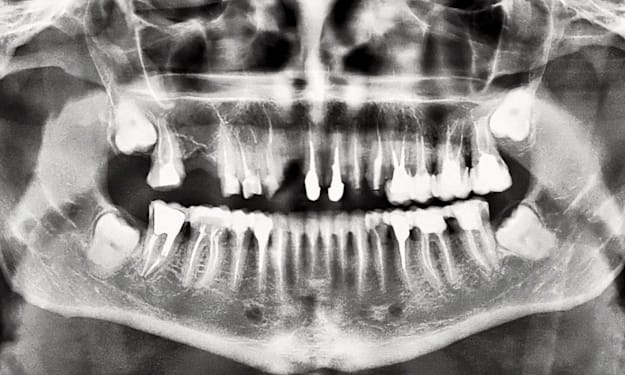
The doctor used to be the person in the room who knew the most about your body. That arrangement is changing. The change can be hard to see because much of it has no visible machinery. A microphone sits somewhere in an examination room. Software listens to the conversation and prepares the medical note. A watch records a heartbeat during the day and sends its rhythm elsewhere. Blood tests, scans, genetic information and years of medical records can be fed into computer models that attempt to describe a person as a changing biological system.
By Nolan Reed2 months ago in Futurism
The HPV vaccine story. Top Story - September 2026.
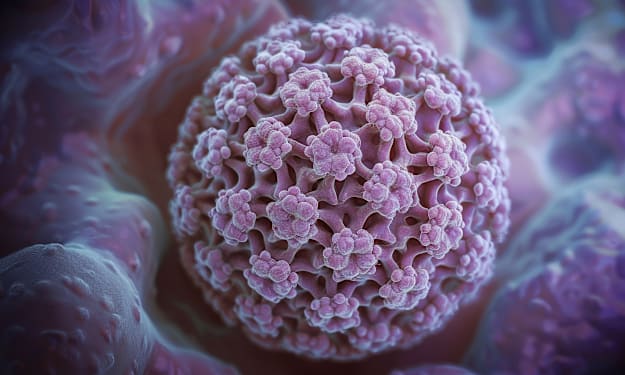
Fun fact! There was the exact same number of eight year old girls in Sweden on 1st January 1994 as 9 year old girls on 1st January 1995. Put simply – none of them died that year. They all got to celebrate a 9th birthday. Isn’t that beautiful? It’s a statistical anomaly – and has not happened before or since, but I love this statistic. [1] It holds an optimism about an imagined future. Accidents, negligence, crime and disease will always exist, but sometimes we can outwit them.
By Rachel Robbins2 months ago in Futurism
The Unassuming Companion on My Finger
I bought the ring during a phase when I convinced myself optimizing my sleep would fix everything wrong in my life. It came in a small white box that felt more like packaging for a piece of jewelry than a medical device, and honestly, that was part of the appeal. I slid it on, half expecting some dramatic wave of self-awareness, and instead spent the first week mostly annoyed that it kept vibrating to tell me I'd sat still too long. Three years later, I still wear it every day, and somewhere along the way it quietly rewired how I think about my own body, which feels like a strange thing to admit about a piece of titanium the size of a wedding band.
By Nolan Reed2 months ago in Futurism
My Blood Has a Live Feed
There is a disc, adhesive, the size of a coin, worn on the back of my arm like a small moon in permanent orbit around the body it studies. Beneath its surface a filament thinner than a hair reaches into the fluid between the cells and, every few minutes, samples the sugar dissolved there. I wear one of these on my own arm right now, and the strangeness of it still catches me some mornings. The device speaks continuously to a screen elsewhere in the room. What it reports is a number, and that number carries the private arithmetic of a body's own chemistry, made visible to itself for the first time in the history of the species.
By Nolan Reed2 months ago in Futurism
The Greatest Blind Spot in Physics: Why the Michelson-Morley Experiment Lied to Us and Science Still Hasn't Noticed
Modern physics prides itself on its exactness and empirical rigor. Every new theoretical framework must pass through the uncompromising sieve of dozens of independent tests, calibrations, and peer reviews. But how is it possible that the entire foundation of 20th-century physics rests on a single experiment from 1887 whose basic epistemological premise was never logically calibrated?
By Pavel Konečný2 months ago in Futurism
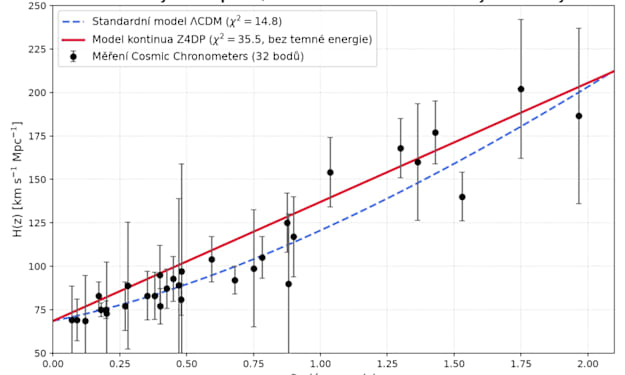
Is Dark Energy Just an Optical Illusion? How 1,590 Supernovae Point to a Superfluid Universe
For decades, cosmology has rested on a dramatic foundation: the universe was born 13.8 billion years ago in a Big Bang and has been expanding ever since. In 1998, when astronomers looked at distant Type Ia supernovae and found them dimmer than expected, the standard model added an even wilder twist: the expansion isn't just happening, it is accelerating.
By Pavel Konečný2 months ago in Futurism
Artemis IV as a Test of a New Biological Hypothesis: Does Earth’s Rotation Govern the Structural Stability of Life?
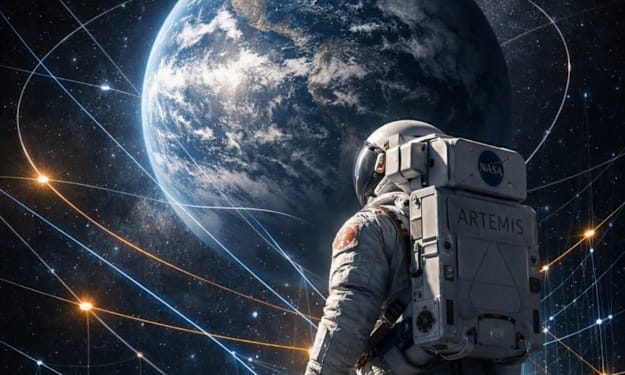
Introduction: Artemis as a Natural Planetary Experiment Preparations for NASA’s Artemis program are bringing space biology to a fundamental crossroad. Standard space medicine models evaluate human physiological risks almost exclusively through two known parameters: cumulative ionizing radiation doses and microgravity-induced mechanical unloading.
By Pavel Konečný2 months ago in Futurism
Our Wonder Drug. Honorable Mention in Already Here Challenge. Top Story - August 2026.
Emily has had a difficult life dealing with Cystic Fibrosis every day. She was born on Friday, the 13th of January, 1984. At two days of age, she had to be moved from the hospital I was in after a C-Section to the Yale New Haven NICU. At three days of age, she required surgery to clear her bowels. She was diagnosed with Meconium Ileus which is usually a symptom of Cystic Fibrosis. At six months of age, she was sweat tested to check her sodium levels. 40 would be a negative result, 40-60 would be borderline and over 60 would mean Cystic Fibrosis. Her results came in at 106.
By Barbara Gode Wiles2 months ago in Futurism